


PROVINCIAL GOVERNMENTS RECORD SIGNIFICANT PROGRESS IN AUDIT PERFORMANCE AND FINANCIAL ACCOUNTABILITY

Minister for MPGIS, Hon. Lazarus Rina
Honiara, Solomon Islands – The latest audit opinions released by the Office of the Auditor General (OAG) for the 2022/23 financial year reveal continued improvement in financial management and accountability across provincial governments, with Central Province and Choiseul Province securing unqualified audit opinions, the highest standard of financial reporting and accountability.
The results reflect more than a decade of sustained reform, capacity building, compliance enforcement, and institutional strengthening led by provincial governments with support from the Ministry of Provincial Government and Institutional Strengthening (MPGIS) and the Provincial Governance Strengthening Programme (PGSP).
Understanding Audit Opinions
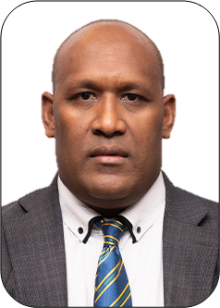
Permanent Secretary for MPGIS, Dr. Derek Futaiasi
For members of the public, an audit opinion is an independent assessment by the Auditor General on whether a government’s financial statements present a true and fair view of how public funds have been managed.
There are four main types of audit opinions:
Unqualified Audit Opinion (Clean Audit Report)
An unqualified opinion is the highest form of audit opinion. It means the financial statements are reliable, complete, comply with accounting standards and legal requirements, and that sufficient evidence was made available to the auditors. This is a strong indicator of sound financial management, transparency, accountability, and effective internal controls.
Qualified Audit Opinion
A qualified opinion means the financial statements are generally reliable but contain certain weaknesses, errors, omissions, or compliance issues that are significant but not widespread. While improvement is still required, a qualified opinion indicates that a government has made considerable progress and is operating at a much higher standard than entities receiving disclaimer or adverse opinions.
Disclaimer of Opinion
A disclaimer opinion means the auditor was unable to form an opinion because sufficient financial records, evidence, or documentation were not available for examination. This is generally regarded as a serious indication of weaknesses in financial reporting systems, record keeping, and compliance mechanisms.
Adverse Audit Opinion
An adverse opinion is issued when the auditor concludes that the financial statements are materially incorrect and do not fairly represent the financial position of the organization. This is the most serious audit outcome and indicates major problems with financial reporting and accountability.
Central Province Maintains Five Consecutive Years of Clean Audit Reports

Provincial Secretary for Central, Allen Daonga
Central Province continues to be a national leader in provincial financial management. From 2012/13 to 2016/17, the province consistently received disclaimer audit opinions. However, in 2017/18 it achieved a significant breakthrough by securing its first qualified audit opinion. The following year, 2018/19, the province achieved its first-ever unqualified audit opinion. Since then, Central Province has maintained an unqualified audit opinion for:
- 2018/19; 2019/20; 2020/21; 2021/22; 2022/23
This achievement demonstrates sustained commitment to financial discipline, compliance, and sound governance practices. While the province has already submitted its 2024/25 financial statements on time, the audit opinion for that year is still awaited.
Choiseul Province Achieves Historic First Unqualified Audit Opinion

Provincial Secretary for Choiseul, Geoffrey Pakipota
One of the most significant achievements in the 2022/23 audit results is the performance of Choiseul Province. For more than a decade, from 2012 through 2021/22, Choiseul consistently received qualified audit opinions. The 2022/23 audit has now elevated the province to an unqualified audit opinion for the first time in its history.
This milestone reflects years of dedication and determination by provincial leaders and public officers to strengthen accountability systems and financial reporting standards. The achievement demonstrates that continuous improvement and commitment to reform can eventually lead to the highest levels of public sector accountability.
Isabel Province Experiences a Temporary Setback
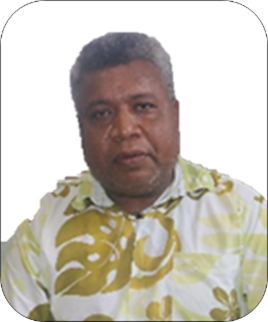
Provincial Secretary for Isabel, John Lokumana
Isabel Province was the first province in Solomon Islands to achieve an unqualified audit opinion, accomplishing this landmark feat in 2017/18. The province’s audit history shows remarkable progress:
- Disclaimer opinions from 2012/13 to 2014/15.
- Qualified opinions in 2015/16 and 2016/17.
- Unqualified opinions from 2017/18; 2018/19; 2019/20; 2020/21 to 2021/22.
- However, the 2022/23 audit opinion declined to qualified status.
While this represents a setback, the province’s previous record demonstrates its capacity to achieve and maintain clean audits. Strengthened technical support, compliance enforcement, and management commitment will be important in helping Isabel regain its unqualified status.
Western Province Demonstrates Resilience

Credit is attributed to former Provincial Secretary for Western, late Patrick Toiraena
Western Province’s audit journey has been marked by both challenges and recovery. The province first graduated from disclaimer status in 2012/13 by securing a qualified opinion and remained qualified in 2013/14. It returned to disclaimer status in 2014/15, regained qualified status in 2015/16, and then received an adverse opinion in 2016/17.
Learning from these experiences, Western Province strengthened its systems and has maintained qualified audit opinions continuously from 2017/18 through to 2022/23. This consistency highlights the positive impact of compliance measures, capacity building initiatives, and institutional strengthening.
Temotu Province Continues Positive Progress

Provincial Secretary for Temotu, Casper Tuplo
Temotu Province remained on disclaimer audit opinions from 2012 until 2018/19. A major breakthrough occurred in 2019/20 when the province secured its first qualified audit opinion. Since then, Temotu has successfully maintained qualified status for four consecutive years.
MPGIS and Temotu Provincial Government continue to work together to strengthen internal controls, financial compliance, and reporting systems, with the goal of achieving an unqualified audit opinion in the future.
Guadalcanal Province Reaches Major Milestone

Provincial Secretary for Guadalcanal, Maesac Suia
Guadalcanal Province recorded one of its most significant achievements by securing a qualified audit opinion for the 2022/23 financial statements. This represents the province’s graduation from disclaimer status and signals important improvements in financial management and reporting.
With an increasing number of qualified officers now serving within the province, together with ongoing on-the-job training, mentoring, and technical support provided through PGSP and MPGIS headquarters, Guadalcanal is well positioned to continue improving its audit performance.
Remaining Provincial Audit Reports Awaited
The audit reports for Malaita, Rennell and Bellona (Renbel), and Makira-Ulawa Provinces for the 2022/23 financial year are yet to be released by the Office of the Auditor General.
Historically, these provinces have received disclaimer audit opinions from 2012 through 2021/22. However, given the improvements occurring across the provincial government system, there is optimism that their audit outcomes may also show positive progress once released. Importantly, these provinces have consistently submitted their annual financial statements to the Office of the Auditor General as required under the Provincial Government Act 1997.
Significance of Improved Audit Opinions
Improved audit opinions are more than accounting achievements. They are indicators of stronger governance, greater transparency, and improved stewardship of public resources. When provinces improve their audit opinions, it demonstrates:
- Better management of public funds.
- Improved compliance with laws and regulations.
- Stronger internal control systems.
- More reliable financial reporting.
- Greater public confidence.
- Increased confidence from central government and development partners.
- Most importantly, improved financial accountability strengthens the ability of provincial governments to deliver services and development programs to their communities.
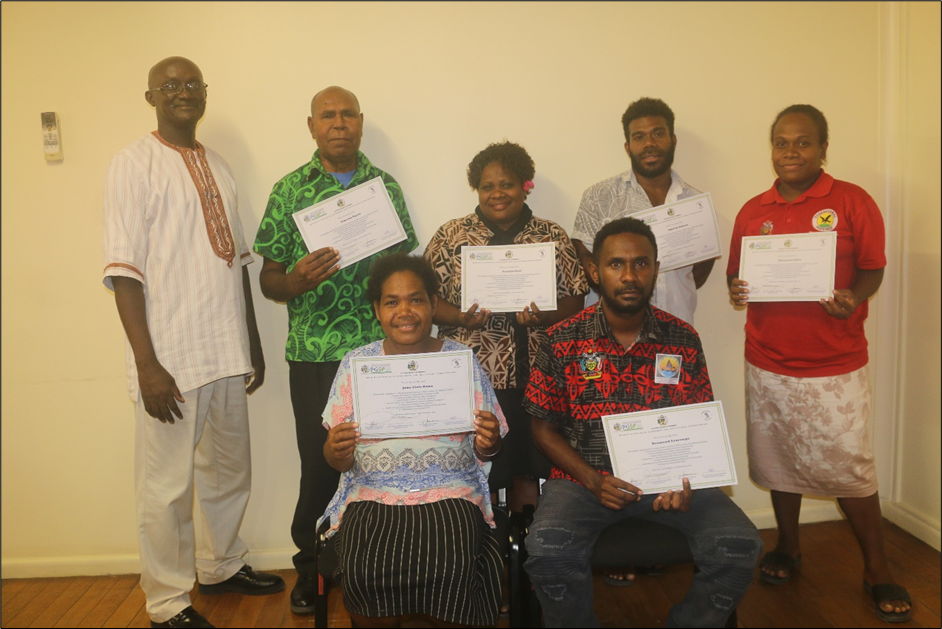
Officers of Guadalcanal Provincial Treasury with the trainer, CTA-PGSP/PM-IEDCR, Momodou Lamin Sawaneh, and former PS for Guadalcanal Province, Timothy Ngele, with their IPSAS certificates after the training in 2021 at GP HQ
The Transformation of Provincial Financial Management
- The progress achieved over the past 15 years is even more remarkable when viewed as the historical challenges facing provincial governments.
- According to findings from earlier assessments, between 1993 and 2007/08 the nine provincial governments produced only two financial statements out of 135 reports required under the Provincial Government Act 1997.
- Although approximately SBD222 million in grants were provided to provinces during that period, only about 14 percent was adequately accounted for before PGSP and PCDF were established by the government in 2008/9.
- For 15 years, provinces struggled to produce credible budgets, annual work plans, procurement systems, investment plans, financial reports, and compliance mechanisms required to manage public resources effectively. As a result, confidence in provincial governments was low, and provinces largely received recurrent grants only because of concerns regarding their ability to manage development funding.
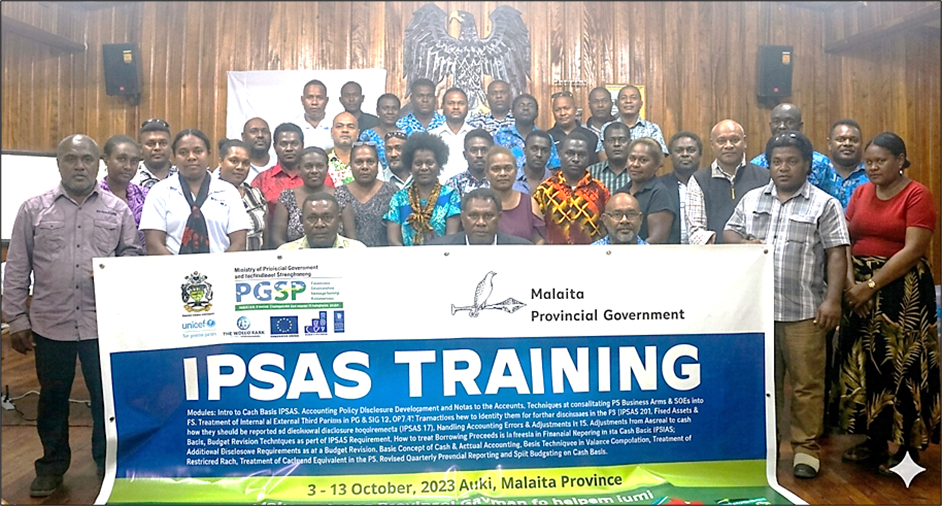
Provincial Treasures, Provincial Accountant Specialists, Provincial Capacity Development Advisors, and Officers from the Office of the Auditor General, and MPGIS pose for a group photo with Malaita and Ministry officials, at Malaita Assembly Chamber in 2023
Impact of the Provincial Governance Strengthening Programme (PGSP)
The introduction of the Provincial Governance Strengthening Programme (PGSP), together with reforms led by MPGIS through Provincial Capacity Development Fund (PCDF) performance-based grant system, (supported by donor partners and SIG) has played a critical role in reversing this trend. Among the key achievements recorded between 2008 and 2018 were:
- Approximately SBD 405 million of PCDF from donor and Solomon Islands Government (SIG) grants have been fully reported and accounted for. Through these funds, more than 1,700 projects have been delivered, creating employment opportunities for over 11,000 young people in the construction industry. Importantly, these funds have circulated within our communities, as every contractor awarded projects under the Provincial Capacity Development Fund (PCDF) has been a local contractor from the Solomon Islands.
- Approximately SBD918 million in recurrent grants transferred to provinces from 2008/9 were fully reported and audited.
- Approximately SBD675 millions of own source revenue collected and accounted by the nine provinces have been reported and audited since PGSP started in 2008/9.
- About 135 financial reports were produced and submitted for audit over a 15-year period.
- All financial statements have been submitted to the OAG on time though improvements are required in terms of quality.
- All provincial governments were audited annually though OAG is a bit behind with audits due to capacity issues at OAG.
- Audit reports were tabled in provincial assemblies in compliance with the Provincial Government Act (PGA) 1997 and the Standing Orders of the provincial governments.
- These outcomes represent a major turnaround from previous decades and demonstrate the effectiveness of sustained institutional support.
Continuous Capacity Building Driving Success
The steady improvement in provincial audit performance has not occurred by chance.
It has been supported by continuous capacity building initiatives, technical assistance, compliance monitoring, mentoring, and on-the-job training provided by officers from MPGIS headquarters and the Provincial Governance Strengthening Programme (PGSP). Provincial finance officers, administrative staff, planners, and managers have benefited from practical coaching, hands-on support, strengthened financial systems, and continuous professional development.
These interventions have helped provinces build the technical competence required to prepare financial statements, comply with financial regulations, improve internal controls, and respond effectively to audit findings.
Looking Forward
The 2022/23 audit outcomes demonstrate that provincial governments are continuing to move in the right direction.
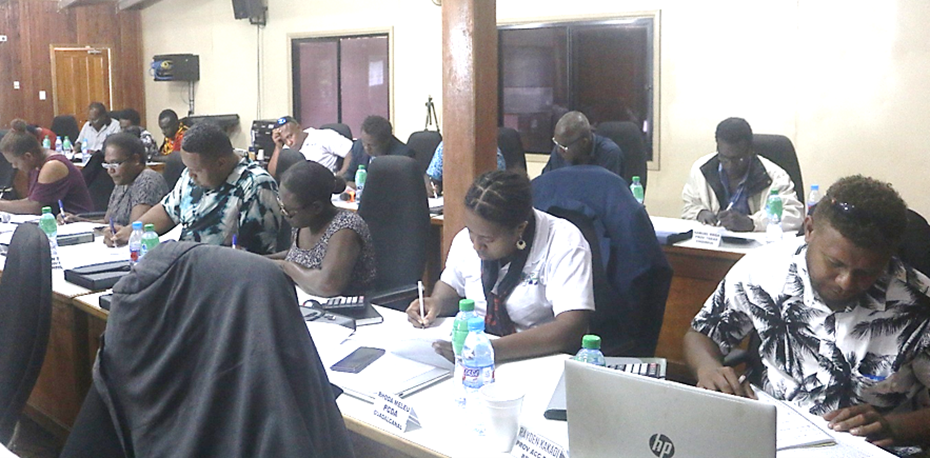
Provincial participants at Malaita Assembly in 2021 IPSAS Training
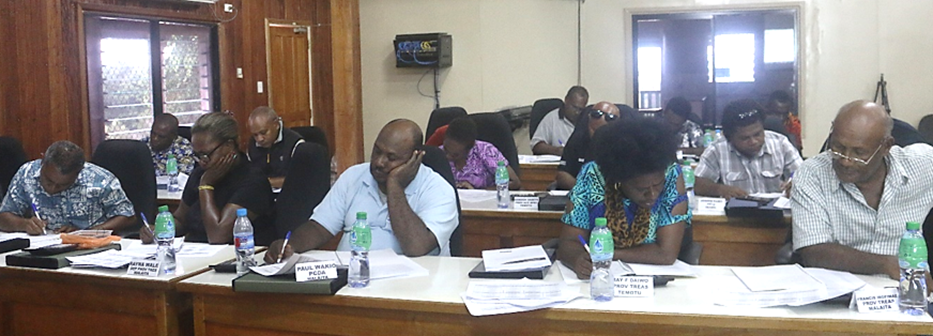
Provincial participants during IPSAS training in 2021
The achievements of Central and Choiseul Provinces, the historic progress of Guadalcanal and Temotu Provinces, and the continued improvements across other provinces provide strong evidence that consistent investment in governance reform, institutional strengthening, and human resource development is delivering results.
MPGIS with the support of Solomon Islands Government remains committed to working alongside provincial governments through the Provincial Governance Strengthening Programme (PGSP) and the donor partners of World Bank and the United Nations Capital Development Fund to ensure all provinces continue progressing toward unqualified audit opinions and stronger public accountability for the benefit of all Solomon Islanders. End///
For more information contact:
- Derek Futaiasi, Permanent Secretary of MPGIS and the Chairman of PGSP Steering Committee – Joint Oversight Committee.
- MPGIS:Ph: 42111
- The CTA-PGSP/PM-IEDCR, Momodou Lamin Sawaneh
MPGIS, Ph: 42115/42118
Email: smomodou@mpgis.gov.sb
About PGSP and PCDF:
The Provincial Governance Strengthening Programme (PGSP) is a Solomon Islands Government (SIG) initiative based within the Ministry of Provincial Government and Institutional Strengthening (MPGIS) and supported by development partners. The programme was established to break the vicious cycle of “No Capacity, No Responsibility, No Resources” in which provincial governments had been trapped for decades.
A Public Financial Management Improvement Programme survey, funded by RAMSI and conducted across all provinces, found that awareness of the Provincial Financial Management Ordinances (FMO) was extremely poor. The survey also revealed a lack of commitment to accountability for public funds, low morale and confidence among provincial treasury staff, inadequate supervision from MPGIS at the time, and significant political interference in provincial administrative and financial decision-making.
In response to these challenges, the Solomon Islands Government introduced the Provincial Capacity Development Fund (PCDF), a performance-based grant funding mechanism designed to support and strengthen provincial governments. The PCDF provides an incentive for provinces to deliver services in compliance with their financial regulations, ordinances, and the Provincial Government Act (PGA). Access to funding is linked to meeting a set of minimum conditions and performance measures, thereby promoting accountability, good governance, and improved service delivery at the provincial level.
Huge Improvement
Today the situation in the provinces has changed for the better not only as indicated by the significant progress in audit performance and financial accountability, but in governance and service delivery.