

Solomon Islands Strengthens National Response to Unexploded Ordnance Threat
The Solomon Islands Government is strengthening its national response to the continuing threat posed by unexploded ordnance (UXO), recognising the issue as not only a humanitarian and public safety concern but also a significant national development priority.
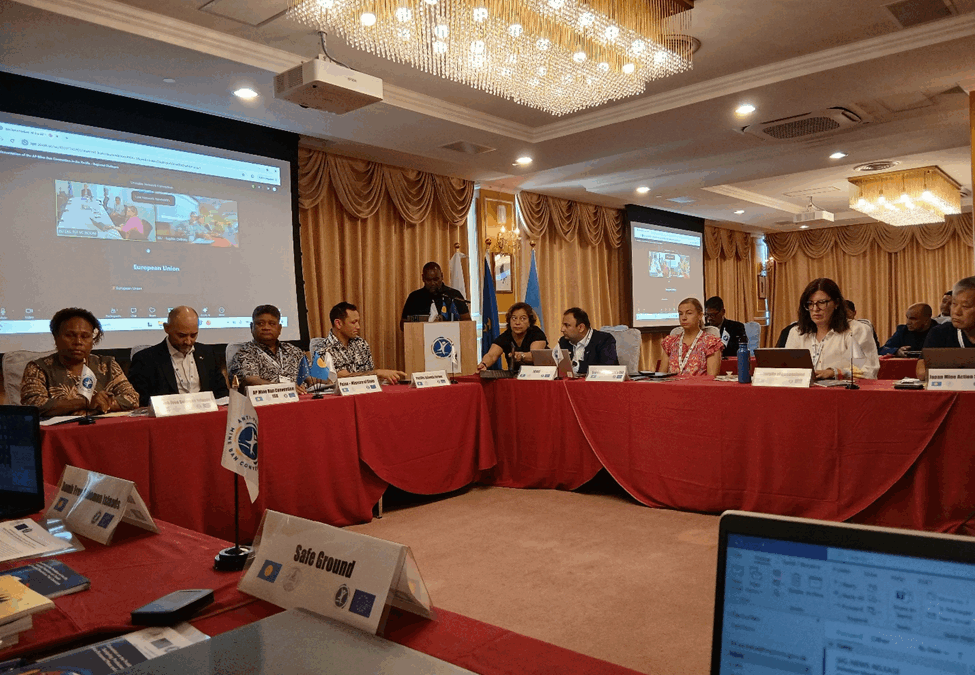
Speaking on the status of UXO in the Solomon Islands at Palau, UXO Director Benzily Kasutaba highlighted the continuing legacy of past conflicts, noting that unexploded ordnance remains a threat to communities, livelihoods, access to land and infrastructure development across the country.
“UXO contamination affects not only public safety, but also access to land, infrastructure development, livelihoods and the wellbeing of future generations,” Mr. Kasutaba said.
Significant progress has been made through the combined efforts of the Government, the Royal Solomon Islands Police Force (RSIPF), humanitarian organisations, developers and international partners.
Non-technical surveying is currently being undertaken by the HALO Trust to identify contaminated areas, gather information from communities and establish priorities for further assessment and clearance. Commercial companies are also undertaking UXO clearance through developer-led tender processes for areas required for specific development projects.
However, the RSIPF Explosive Ordnance Disposal (EOD) Department remains the only authorised team responsible for the disposal of UXO and other explosive remnants of war in the Solomon Islands.
To date, 114,560 UXO items have been destroyed, representing a significant achievement while also highlighting the scale of the remaining challenge.
Mr. Kasutaba emphasised that every item safely located and destroyed contributes directly to protecting lives and enabling communities to use land safely.
UXO contamination has significant socioeconomic consequences, particularly where contaminated land restricts development or increases the cost, uncertainty and duration of projects.
Potentially contaminated areas can delay or complicate the construction of roads and bridges, airports and ports, schools, hospitals and houses, telecommunications and energy infrastructure, as well as agricultural, tourism and resource projects.
Clearing contaminated land therefore goes beyond removing explosive hazards. It also supports national development by making land safer and more accessible, reducing project delays and providing greater certainty for investors, communities and traditional landowners.
For rural and remote communities, safe access to land and natural resources is particularly important. Suspected or confirmed contamination can prevent communities from safely accessing gardens, plantations, fishing areas, water sources, transport routes and community facilities.
UXO clearance can consequently contribute to improved livelihoods, agricultural production and rural economic development.
The Government is also emphasizing explosive ordnance risk education as an important measure while contaminated areas remain.
The HALO Trust is conducting risk education programmes in communities, while Solomon Islands Telecommunications Company has supported public safety messaging by distributing UXO awareness messages through its SIM platform.
The RSIPF EOD Team also conducts awareness programmes in schools, government ministries and communities, with particular attention to children and young people who may encounter dangerous items without understanding the risks.
Mr. Kasutaba stressed the need for stronger and sustained support for risk education, particularly for vulnerable groups and communities in remote areas. He said awareness programmes should be continuous, community-based and delivered in ways that are appropriate to local languages and cultural settings, while being linked to reliable reporting and response mechanisms.
Solomon Islands is also working to strengthen its national framework for UXO management and support implementation of its obligations under the Anti-Personnel Mine Ban Convention.
The Government is developing several national instruments, including:
- A National UXO Bill;
- A National UXO Policy;
- National UXO Standards;
- A Land Release Policy;
- An Accreditation Policy;
- A Quality Assurance Policy; and
- A UXO Information Management Policy.
These measures are intended to clarify responsibilities, strengthen coordination and technical safety standards, and ensure that UXO activities are properly managed and documented.
Priorities for the coming year include developing a National UXO Strategy and regulations to support the proposed National UXO Act.
Mr. Kasutaba emphasised that the UXO challenge cannot be addressed by one organisation alone.
A whole-of-government and whole-of-community approach is required, supported by development partners, humanitarian organisations, technical agencies and affected communities.
Key priorities include strengthening the capacity of the RSIPF EOD Department, expanding non-technical and technical surveying, improving coordination of clearance activities, increasing risk education, strengthening UXO information management, supporting national legislation and policies, and ensuring that traditional landowners and affected communities are properly consulted and involved.
Regional cooperation will also remain important, with Pacific countries facing similar challenges associated with the legacy of past conflicts. Sharing technical knowledge, operational experience, lessons learned and good practices can help strengthen national responses across the region.
While more than 114,000 UXO items have been destroyed, the continuing presence of explosive remnants of war means that significant work remains.
The Government remains committed to protecting communities, releasing land for safe use and strengthening national capacity to manage UXO responsibly.
Mr. Kasutaba acknowledged the contributions of the HALO Trust, Solomon Islands Telecommunications Company, the RSIPF EOD Department, development partners and other organisations supporting UXO management in Solomon Islands.
“Let us continue working together to ensure that communities can live, work and develop safely, free from the fear and danger of unexploded ordnance.”
-MPNSCS Press