

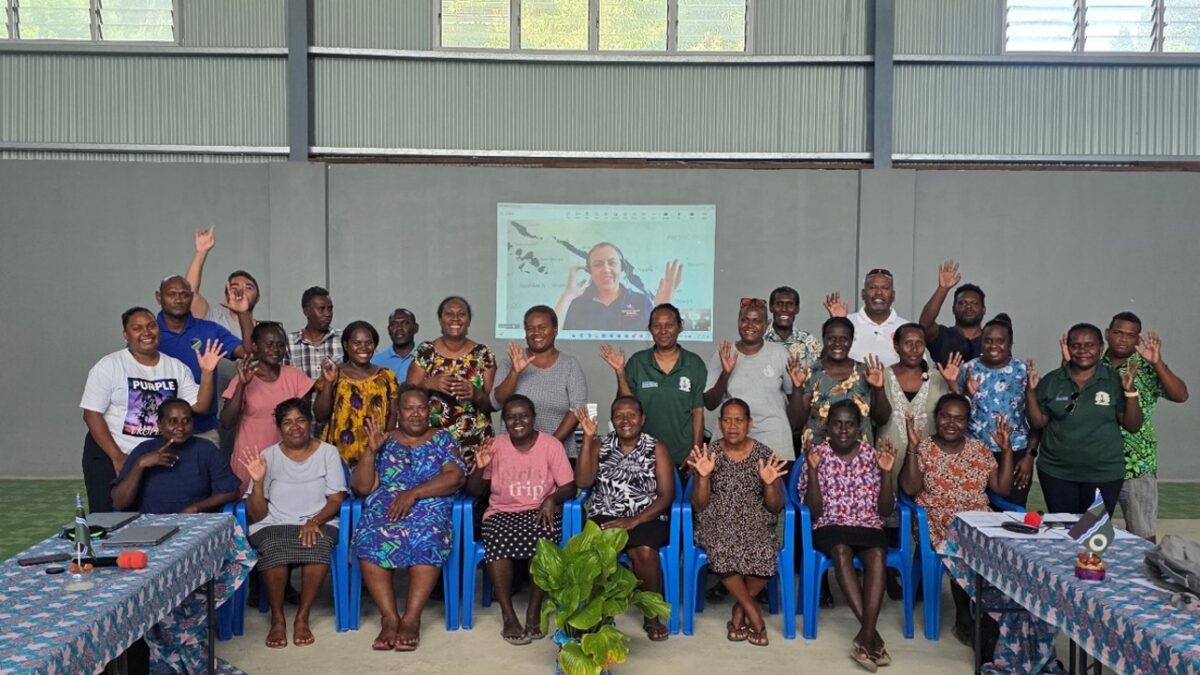
Group photo of participants of the Sign Language Training in Gizo, Western Province
Health Workers Gain Sign Language Skills to Support Deaf GBV Survivors in Western Province
1 October 2026
Frontline healthcare workers, service providers, police officers, representatives from the Provincial Council of Women, and the Solomon Islands Planned Parenthood Association (SIPPA) have completed Introductory Sign Language Training in Gizo, strengthening their ability to provide accessible, disability-inclusive, and survivor-centred care for Deaf survivors and people who are hard of hearing.
Similar training was delivered recently for staff at the National Referral Hospital (NRH) and Honiara City Council (HCC), marking an important step in extending disability-inclusive practices to provincial health services.
Delivered by the Solomon Islands Deaf Association (SIDA) and supported by Australia, the training equipped 25 frontline health workers and service providers with practical sign language skills to improve communication, assessment, treatment, and referral services for Deaf survivors and people who are hard of hearing.
Over three days, participants learned the fundamentals of Solomon Islands Sign Language (SISL), including the alphabet, numbers, medical, family-related, and everyday vocabulary relevant to healthcare settings. Participants also practised practical conversations and applied their skills through role-play scenarios based on real-life healthcare situations.
Opening the training, Dr Dickson Boara, Western Provincial Health Director, welcomed the initiative and emphasised the importance of ensuring that no survivor is excluded from accessing essential services because of communication barriers.
“Everyone deserves access to quality healthcare and support services,” said Dr Boara.
This training strengthens our ability to provide inclusive, survivor-centred care through effective communication.”
Australian High Commissioner Jeff Roach highlighted the importance of ensuring services are accessible to all survivors.
“This training is about people. By building the skills and confidence of frontline health workers, we can help ensure Deaf survivors and people who are hard of hearing receive the care, support and respect they deserve,” High Commissioner Roach said.
“Working alongside MHMS, Australia is supporting a more inclusive health system where everyone can access quality services, regardless of disability or communication barriers.”
The training focused on practical communication skills to support Deaf and hard of hearing survivors of gender-based violence, helping make services more accessible, respectful, and survivor-centred.
The knowledge and skills developed through the training will contribute to improved health outcomes, greater social inclusion, and more accessible services for survivors of gender-based violence and those with hearing impairment across Western Province.
The initiative also reinforces a broader commitment to disability inclusion, recognising that accessible and equitable services are fundamental to effective healthcare systems.
People with disabilities experience higher rates of gender-based violence globally and often face additional barriers when seeking healthcare and support. For Deaf survivors and people who are hard of hearing, communication barriers can hinder accurate assessment, timely treatment, and appropriate referrals, making accessible communication essential to delivering quality, survivor-centred care.
Stanford Fakaokokava, Registered Nurse at the Gizo Hospital, said the training had transformed the way he viewed inclusive healthcare.
“The experience changed my perspective as a health worker,” said Mr Fakaokokava.
“I learned the importance of advocating for safe and inclusive services for people with disabilities, including those who are Deaf or hard of hearing. It highlighted the need for effective communication and ensuring that every person feels welcome when accessing health services.
“The training also helped me better understand, as a health worker, how to support people with disabilities by providing the services they need and ensuring they feel respected, valued, and understood.”
The training forms part of ongoing Australian support to MHMS to strengthen disability-inclusive healthcare and ensure survivors of gender-based violence receive quality, accessible, and survivor-centred services.
ENDS
Media enquiries:
Andrew Muratore, Australian High Commission,7607 148
Ms Esther Nuria, MHMS Communications Unit, 7178181