

Solomon Islands Strengthens UXO Risk Reduction Through Successful Geneva Study Tour and Workshop
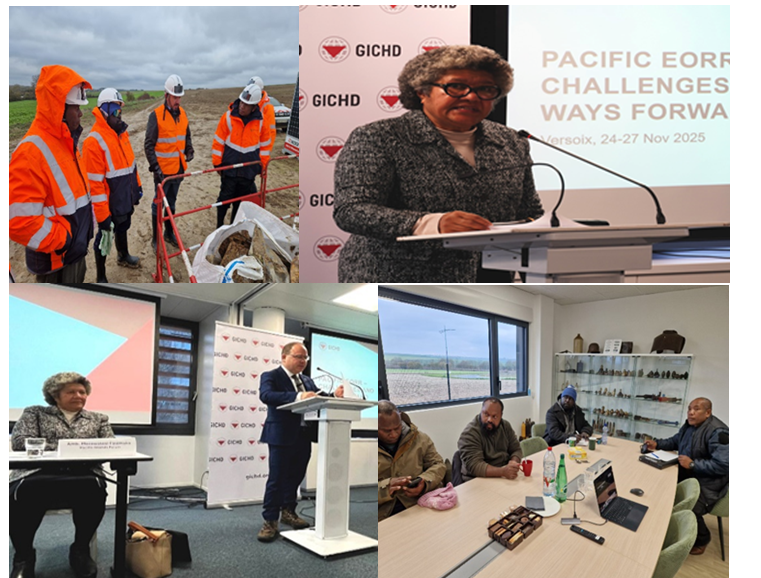
Honiara – The National UXO Division of the Ministry of Police, National Security and Correctional Services announces the successful completion of a landmark study tour and workshop on Explosive Ordnance Risk Reduction (EORR) in the Pacific Region, held from November 17 to 29, 2025, in Switzerland and France. Supported by the Geneva International Centre for Humanitarian Demining (GICHD), the initiative gathered representatives from Solomon Islands, Papua New Guinea, and GICHD to address persistent UXO contamination challenges from World War II.
The program featured study visits to the Swiss EOD (Explosive Ordnance Division) Centre in Spiez, Switzerland, and Deminetec operations in Arras, France, followed by a three-day workshop in Versoix, Switzerland. Participants gained insights into advanced EOD practices, including Swiss military protocols, commercial clearance techniques, transparent reporting mechanisms, and legal frameworks for UXO management. A courtesy call to GICHD headquarters in Geneva explored future collaboration, including a potential Memorandum of Understanding (MOU) for capacity building and national strategy development.
Director National UXO, Mr. Benzily Kasutaba, presented Solomon Islands’ priorities, highlighting the new National UXO Department, staff recruitment, policy development, and operational challenges with systems like IMSMA Core. Deputy Director EOD of the Royal Solomon Islands Police Force (RSIPF), Mr. Ansa Puaraua, outlined RSIPF’s capabilities and technical approaches to UXO incidents. High-level remarks from GICHD Director Ambassador Tobias Privitelli and Pacific Islands Forum Ambassador Merewalesi Falemaka underscored the links to human security and sustainable development.
The report calls for national actions like implementing UXO standards, enhancing IMSMA Core systems, formalizing EORE programs tailored to local communities, and developing a public UXO reporting app. It urges regional cooperation through MOUs with GICHD, donor commitments from partners like Australia, New Zealand, USA, and Japan, and integrating UXO into development planning. Participants emphasized government liability provisions for EOD operators in national legislation.
This initiative marks a critical step toward safer communities in Solomon Islands by guiding clearance operations, risk education, and institutional frameworks. The National UXO Division reaffirms its commitment to prioritizing UXO remediation over 80 years post-war.
-MPNSCS Press