

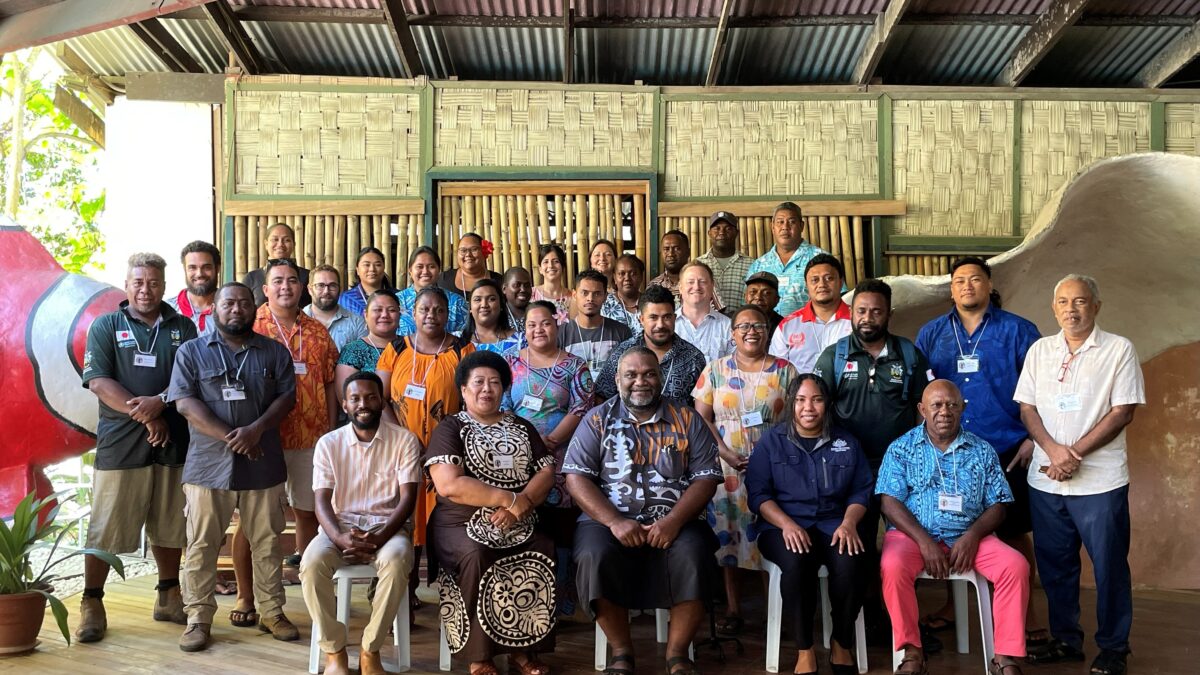
Caption: Participants and faculty in Honiara, Solomon Islands on the opening day of the workshop
Biting back: Uniting Pacific islands against mosquitoes in Honiara
A dengue outbreak across the Pacific earlier this year hit thousands hard and tragically took lives, showing the danger that mosquitoes pose to the region.
This week Pacific health representatives from 16 countries have gathered in Honiara, Solomon Islands, for the 2025 Pacific Mosquito Surveillance Strengthening for Impact (PacMOSSI) practical workshop.
Hosted in partnership with the Solomon Islands Ministry of Health and Medical Services, this training brings together health inspectors, environmental health officers and other experts from across the region to build hands-on skills to tackle the deadly Aedes mosquitoes that can transmit dengue, chikungunya and Zika.
“I love that many Pacific countries can come together to learn and collaborate about mosquitoes as we face the same challenges such as climate change and we share the same environment where mosquitoes thrive”, said Metotagivale Meredith, Entomology Lab Manager, American Samoa Community College.
“It’s really good to share how others fight their diseases and learn about strategies we can bring back and implement into our future work.”
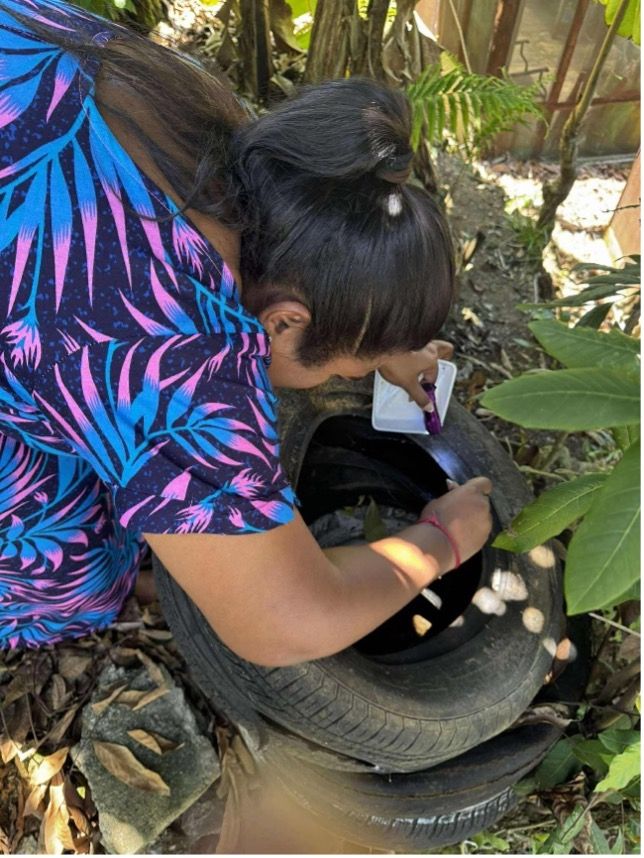
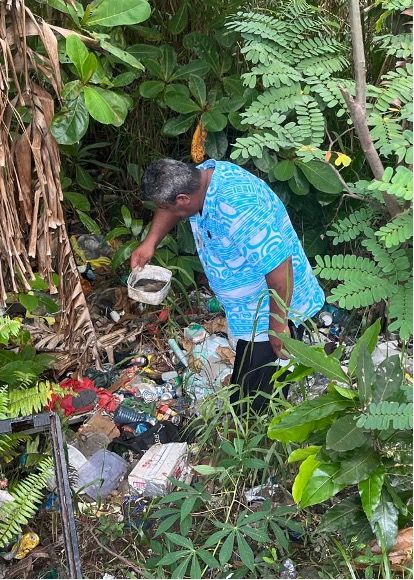
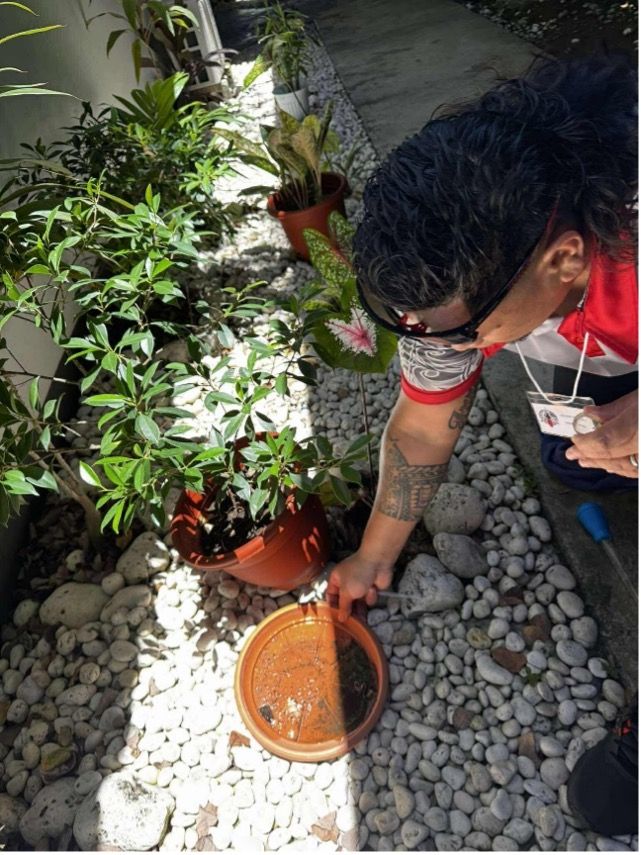
Participants engaged in activities in the classroom, the laboratory and at field sites – learning to catch, identify and analyse mosquitoes – and then apply the information to design control strategies.
Interactive sessions helped foster camaraderie and collaboration between Pacific participants, who face shared threats and challenges from mosquito-borne diseases – and unites them to prevent disease across the region.
All are expected to carry out mosquito surveillance activities upon return to their respective countries.
The workshop is being delivered by PacMOSSI faculty from James Cook University in Cairns, QIMR Berghofer Medical Research Institute in Brisbane, Institut Pasteur New Caledonia in Noumea and the Solomon Islands National University in Honiara.
PacMOSSI also acknowledges the leadership of Mr Albino Bobogare and Mr Charles Butafa from the National Vector Borne Disease Control Programme and Dr Hugo Bugoro and Dr Edgar Pollard from Solomon Islands National University for their partnership and coordination in hosting this event.
Dr Nemia Bainivalu, Deputy Secretary Health Improvement from the Ministry of Health and Medical Services said this week’s workshop titled Aedes Surveillance for Action is both timely and vital.
“Across the Pacific and globally, mosquito-borne diseases such as dengue, Zika, chikungunya are re-emerging threats; intensified by climate change, rapid urbanisation, increased human mobility, and changing rainfall patterns.”
He thanked funders and technical partners for their continued collaboration, leadership, and expertise.
“This partnership demonstrates how science, cooperation, and solidarity can come together to strengthen regional health security.”
PacMOSSI is supported by the Australian Government through Partnerships for a Healthy Region, the French Government, the New Zealand Government and the European Union through the Pacific Community (SPC). Their ongoing support enables collaboration and knowledge sharing to strengthen mosquito surveillance and control capacity and build more resilient public health systems across the Pacific.
For more information, see www.pacmossi.org.
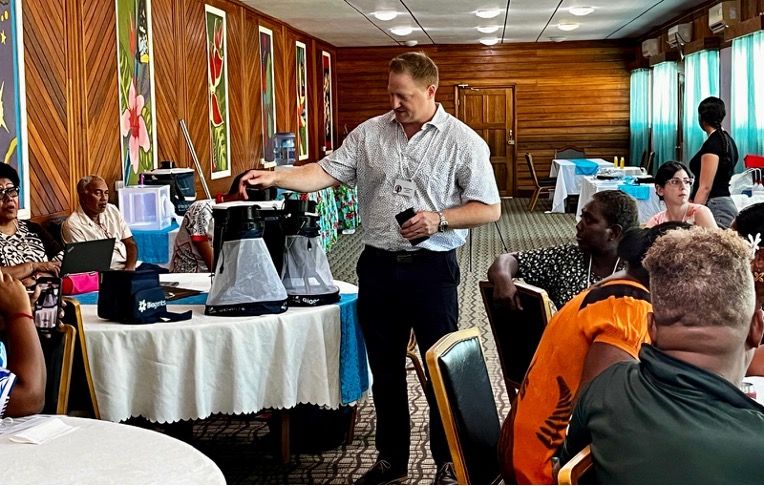
Facilitator Dr Brian Johnson from QIMR Berghofer Institute of Medical Research demonstrates mosquito traps to participants from 16 countries.
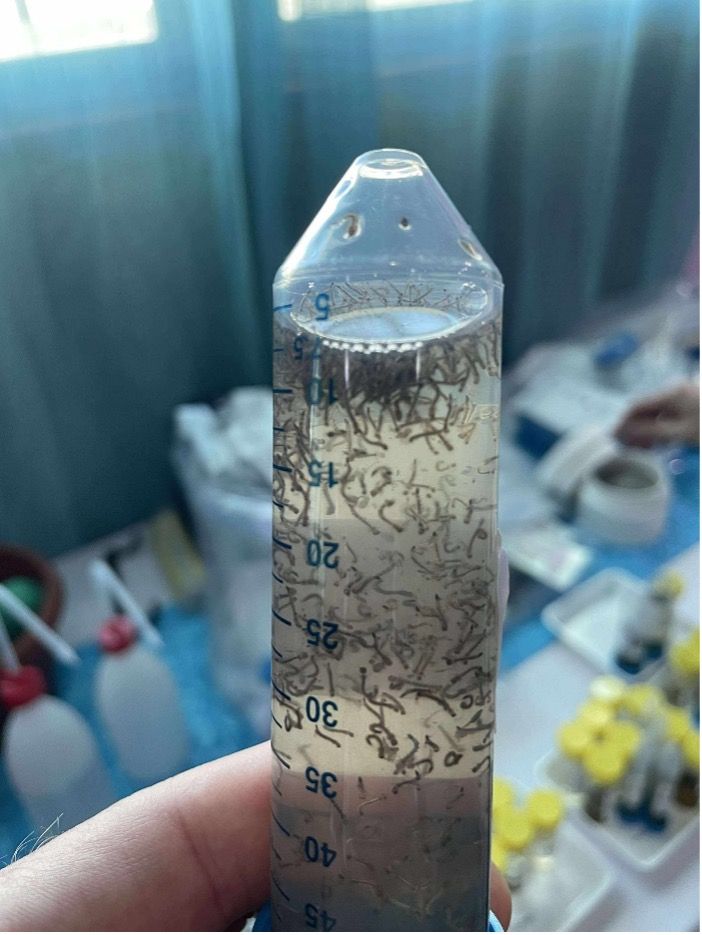
Aedes larvae collected from habitats around Honiara. These will emerge into biting adults that can transmit diseases like dengue, chikungunya and Zika
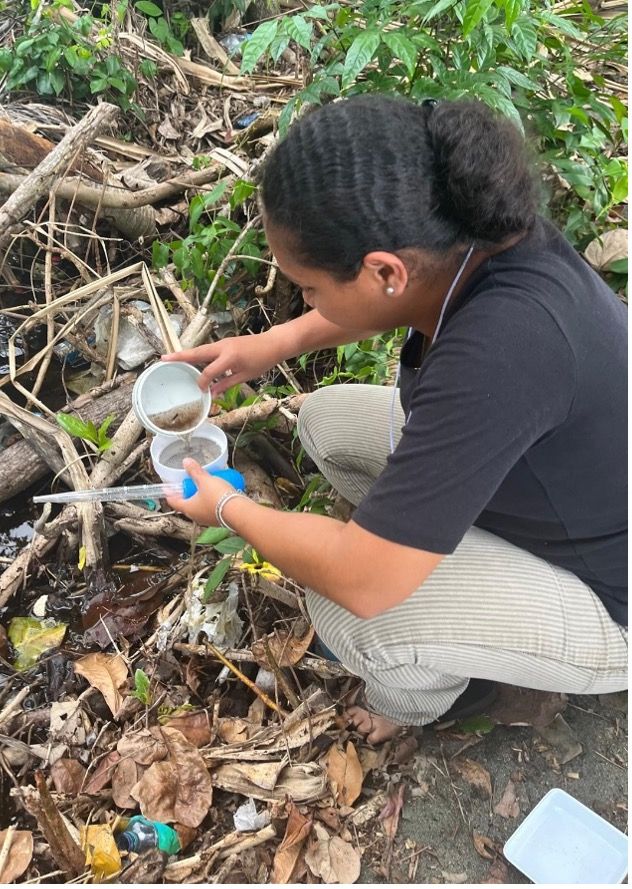
Participants collecting Aedes larvae from habitats like discards, old tyres and plant pot bases found around homes in Honiara.
Contact:
PacMOSSI Media Contacts
Brisbane, Australia: Dr Tessa Knox, tessa.knox@jcu.edu.au, +61415251978
Honiara, Solomon Islands: Ms Elizabeth Habu, elizabeth.habu@jcu.edu.au,
+677 76660640
JCU Media Contacts:
Rohan O’Neil, JCU Acting Head of Media and Communications, 0419 791 564, rohan.oneil@jcu.edu.au