

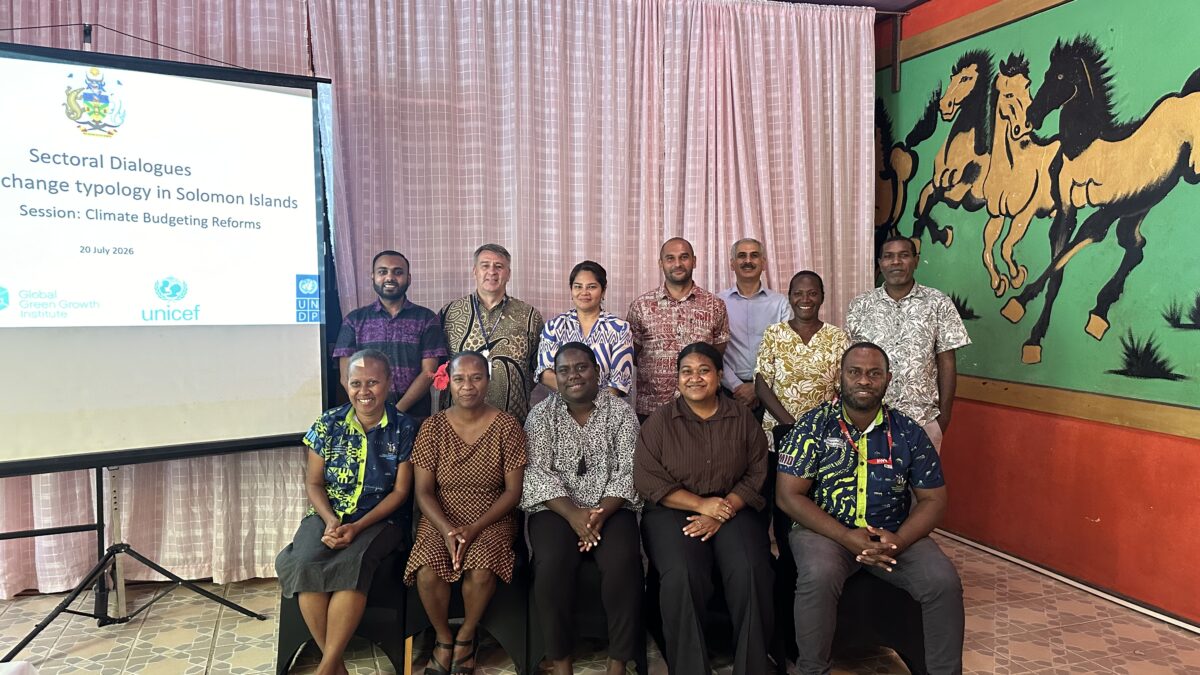
Group photo
Solomon Islands Strengthens Climate Finance Transparency Through New National Typology
HONIARA, Solomon Islands — July 29, 2026 — The Solomon Islands Government (SIG) is strengthening its commitment to climate-responsive Public Financial Management (PFM) by developing a national Climate Change Typology, a critical step in the “Roadmap for Improving Access to Climate Finance and Public Spending 2022–2027”. From July 20–24, 2026, the Ministry of Environment, Climate Change, Disaster Management and Meteorology (MECDM), the Ministry of Finance and Treasury (MoFT), and the Ministry of National Planning and Development Coordination (MNPDC) convened the second in a series of consultative dialogues to establish this nationally agreed framework.
Led by an Inter-Ministerial Technical Working Group, this reform adopts a whole-of-government approach to integrate climate considerations into the national budget. The development of the Climate Change Typology provides a shared methodology that allows various ministries to apply uniform criteria when assessing climate-related expenditures. By establishing a robust Climate Budget Tagging system, the government can more effectively identify and analyze public spending that contributes to national climate objectives, thereby enhancing the transparency, credibility, and effectiveness of climate finance reporting.
The recent dialogues were designed as interactive sessions, combining high-level policy discussions with hands-on technical exercises. This initiative is supported by a broad range of international partners, including the United Nations Development Programme (UNDP) through its Gov4Res Programme, the Asian Development Bank (ADB), and UNICEF, which highlighted the vital links between climate action and child-responsive budgeting. Additional technical insights were provided by the Capacity Building Initiative for Transparency (CBIT) regarding national Measurement, Reporting and Verification (MRV) systems, and the Global Green Growth Institute (GGGI) concerning the National Adaptation Plan (NAP).
To ensure the typology is practical and accurate, the draft framework was tested through sector-focused consultations with the Ministry of Infrastructure Development (MID) and the Ministry of Health and Medical Services (MHMS). Discussions with MID focused on integrating climate risks into infrastructure planning, while sessions with MHMS explored how resilient health policies contribute to national climate goals. These participating ministries provided practical feedback by applying the draft classification framework to actual sector plans and budget allocations.
The Inter-Ministerial Technical Working Group will review the outcomes of these consultations during its next quarterly meeting. This meeting will also serve to determine the priority sectors for the next round of consultations as the Solomon Islands continues to refine its climate finance architecture.
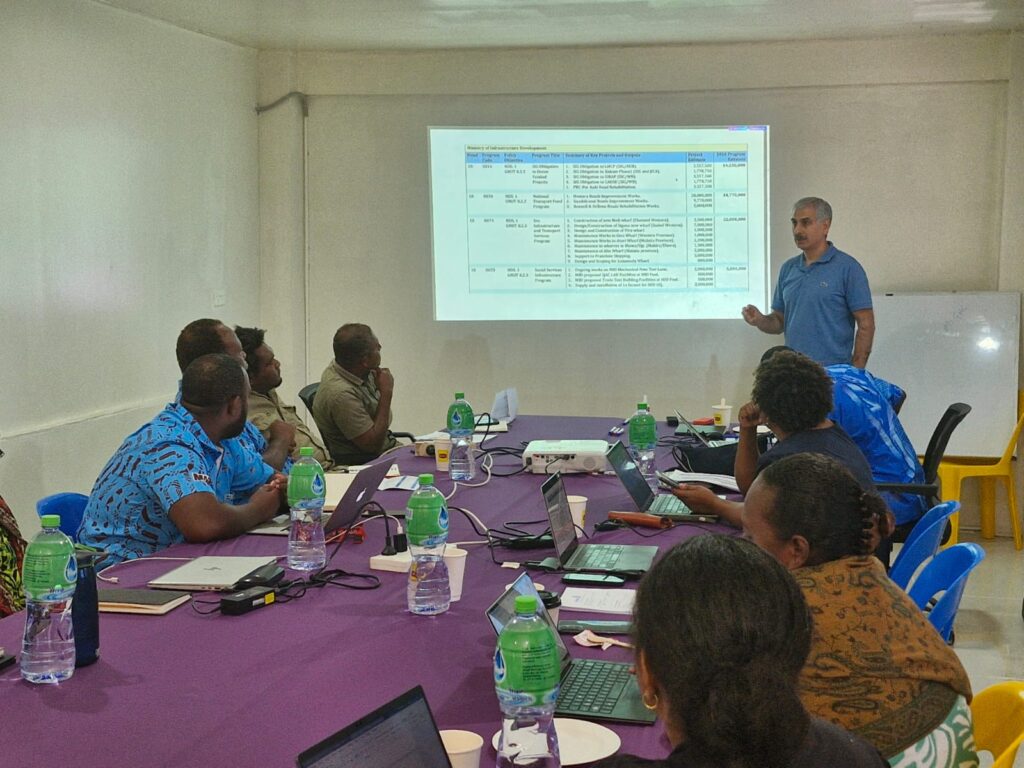
Deep dive session with the MID
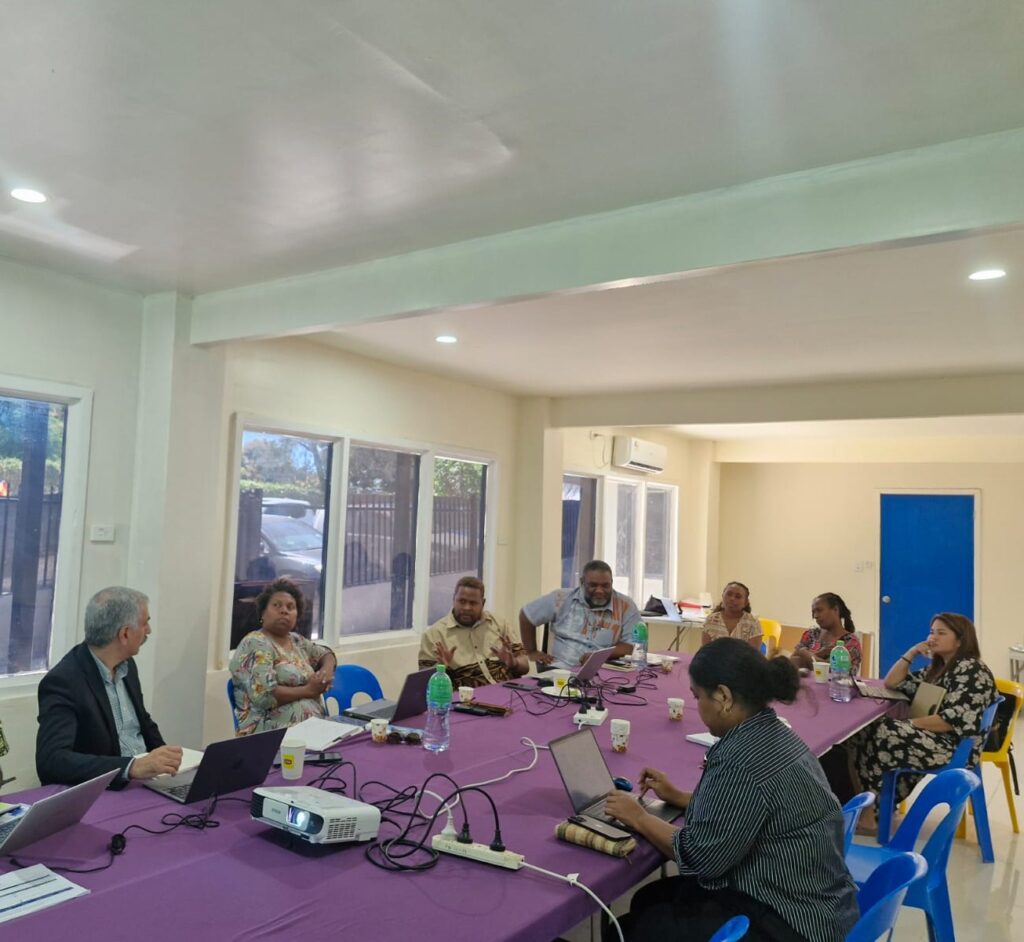
Deep dive session with the MHMS