

Solomon Islands Strengthens Capacity for Agriculture and Land-Use Greenhouse Gas Reporting
TAMBOKO, GUADALCANAL, Solomon Islands | 26 October 2026
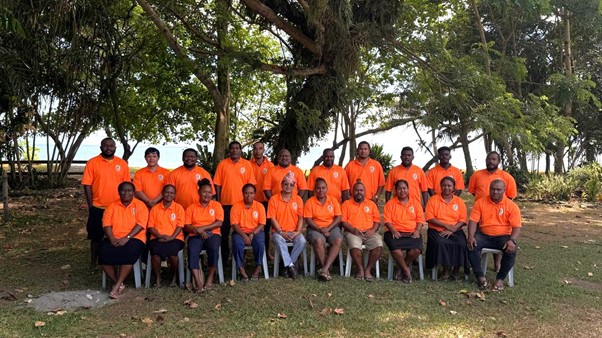
The Ministry of Environment, Climate Change, Disaster Management and Meteorology (MECDM), in partnership with the Capacity Building for Transparency (CIBIT) Project, is strengthening national capacity for greenhouse gas (GHG) emissions reporting and climate transparency through a five-day training workshop held at Ginger Beach Retreat, Tamboko, Northwest Guadalcanal, from 26 to 30 October 2026.
The training is supported under the Global Environment Facility (GEF)-funded Capacity-Building Initiative for Transparency (CBIT) project and is facilitated by the CBIT Project Technical Assistant . and the Climate Change Division (CCD) within MECDM.
The workshop brings together technical officers and relevant stakeholders from government ministries and institutions to strengthen national capacity for preparing accurate and reliable greenhouse gas inventories, with particular emphasis on the Agriculture, Forestry and Other Land Use (AFOLU) sectors.
Speaking on behalf of the Director of the Climate Change Division (CCD), Chris Teva, Chief NBS of CCD-MECDM, delivered the opening remarks, highlighting the importance of strengthening technical capacity, inter-agency coordination and information-sharing to improve national greenhouse gas reporting and climate transparency.
He acknowledged the participants for their commitment to the training and encouraged them to actively engage in the sessions and apply the knowledge gained to support Solomon Islands’ climate change commitments and reporting obligations.
The training builds on Solomon Islands’ submission of its First Biennial Transparency Report (BTR1) to the United Nations Framework Convention on Climate Change (UNFCCC). The BTR1 process identified areas requiring further improvement, including the availability and quality of emissions data, inventory methodologies, quality assurance and control, and data management.
Through practical exercises and technical sessions, participants are being trained to apply the Intergovernmental Panel on Climate Change (IPCC) 2006 Guidelines for National Greenhouse Gas Inventories and use the IPCC Inventory Software to estimate greenhouse gas emissions and removals.
The workshop focuses on key agricultural activities, including livestock emissions and agricultural soils, as well as land-use change, forest carbon stocks, commercial logging, mangroves and other coastal wetlands. These areas are particularly important for Solomon Islands, where extensive forest cover plays a significant role in removing carbon dioxide from the atmosphere.
Participants will also work on completing Common Reporting Tables (CRTs), identifying data gaps, improving inventory quality and developing sector-specific improvement plans to support the preparation of the country’s Second Biennial Transparency Report (BTR2).
The training further supports the alignment of national greenhouse gas inventory data with Solomon Islands’ Nationally Determined Contribution (NDC 3.0) for 2025–2035, helping strengthen the monitoring of progress towards the country’s climate mitigation commitments.
Through this initiative, MECDM and the CIBIT Project Team are supporting Solomon Islands to improve its capacity to monitor greenhouse gas emissions and removals, track progress towards its Nationally Determined Contribution (NDC) commitments, and meet its international climate reporting obligations under the Paris Agreement and UNFCCC.
The workshop marks another important step in strengthening Solomon Islands’ national climate transparency system and its capacity to meet international reporting obligations under the Paris Agreement.
ENDS.