

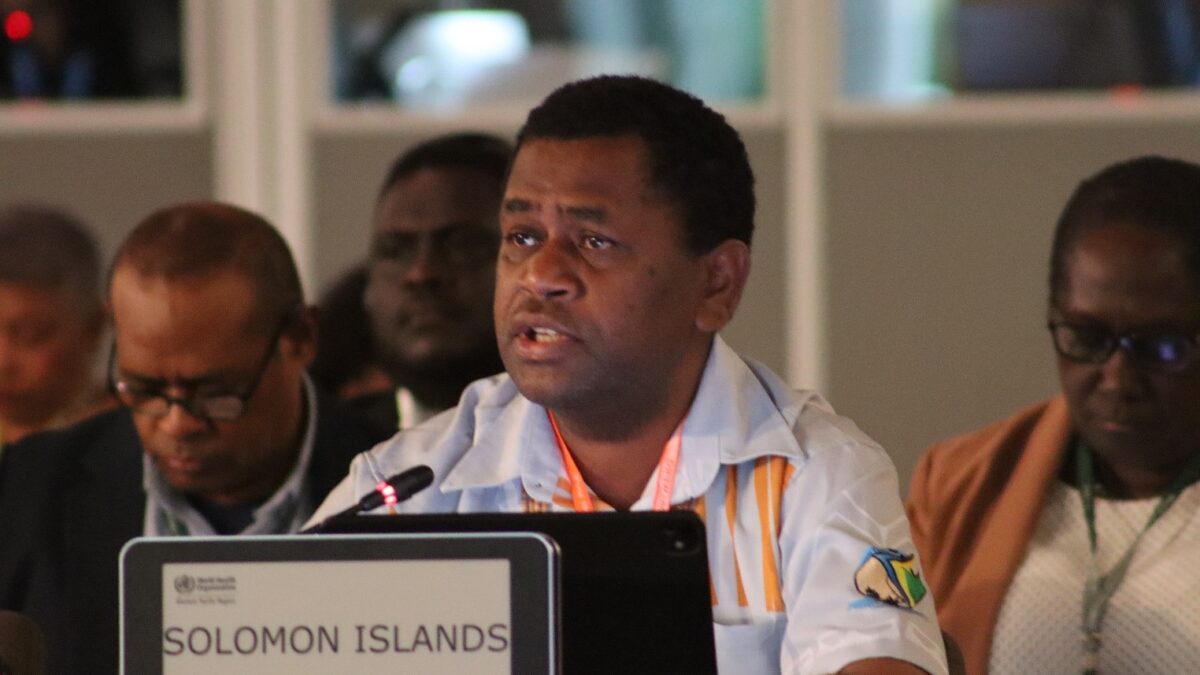
Health Minister Dr. Paul Popora Bosawai speaking during his intervention to the global alcohol action plan
SOLOMON ISLANDS REAFFIRMS COMMITMENT TO ALIGN WITH THE REGIONAL GOAL OF REDUCING PER CAPITA ACLCOHOL CONSUMPTION BY 20 PERCENT BY 2030
The Solomon Islands Ministry of Health and Medical Services (MHMS) Minister, Honourable Dr. Paul Popora Bosawai strongly supports and reaffirms Solomon Islands commitment to align with the regional goal of reducing per capita alcohol consumption by 20 percent by 2030.
The Health Minister Dr. Bosawai reaffirms this support to the draft regional plan for Accelerating Implementation of the World Health Organization Global Alcohol Action Plan 2022-2030 at the Western Pacific Region, 76th Regional Committee Meeting (CRM) on 22 October 2025 in Nandi, Fiji.
The World Health Organization (WHO) Global Action Plan 2022-2030 on alcohol control sets out a coordinated, international response to the growing challenges posed by alcohol use. This plan aims to reduce the harmful effects of alcohol on individuals and societies by promoting effective policies and interventions. It provides a roadmap for countries, public health professionals, and policymakers to work together in addressing alcohol-related harms.
“Solomon Islands Government, expresses appreciation to the World Health Organization and the Secretariat for their continued leadership in advancing alcohol control across the Western Pacific Region. We welcome the opportunity to contribute to the draft regional plan for Accelerating Implementation of the WHO Global Alcohol Action Plan 2022–2030, and reaffirm our commitment to align with the regional goal of reducing per capita alcohol consumption by 20 percent by 2030, relative to 2010 levels.
“Solomon Islands recognizes that the harmful use of alcohol poses a significant public health, social, and safety challenge, closely linked with non-communicable diseases (NCDs), injuries, violence, and mental health concerns. Alcohol use, both licit and illicit, remains widespread, with homebrew and kwaso (locally distilled alcohol) contributing substantially to alcohol-related harms, particularly among youth through early initiation and binge drinking”, said Dr. Bosawai.
He acknowledged the policy and implementation gaps, including the amendment of Liquor Act with stronger regulation of advertising and marketing, strengthening drink-driving laws and control over unrecorded and informal alcohol production. Geographic barriers and limited human resources and capacity further constrain effective regulation and enforcement, particularly in rural and remote areas.
He outlined Solomon Islands commits to the following priority actions:
- Integrate Alcohol Control into multisectoral and aligned National NCD Policy and Roadmap.
- Strengthen legislation to include minimum legal drinking age, marketing restrictions, health warnings, and controls on sales hours and licensing.
- Enhance enforcement of drink-driving laws through lower BAC limits, roadside testing, and stronger sanctions.
- Strengthen enforcement capacity among police, customs, and regulatory authorities.
- Address unrecorded alcohol through community-based strategies, education, and monitoring.
- Implement public awareness campaigns targeting youth, violence prevention, and community health.
- Establish surveillance systems for regular monitoring of consumption and harm indicators.
Thus, Health Minister said to achieve these priorities, Solomon Islands seeks technical, financial, and capacity-building support from WHO and partners—particularly in legal drafting, enforcement, surveillance, and regional coordination among Pacific Island countries.
“We also call for recognition of small island contexts within regional implementation frameworks, with tailored approaches and realistic timelines.
“Finally, as we look ahead, we believe that every community deserves to live free from the harms of alcohol, and that strong, collective action can protect the health, dignity, and future of our people”, said Dr. Bosawai.
He concluded; Solomon Islands reaffirms its solidarity with Member States in accelerating regional progress toward alcohol harm reduction.
Meanwhile, the WHO Global Action Plan 2022-2030 on alcohol control provides a clear, evidence-based framework for reducing alcohol-related harms. Its comprehensive approach—combining policy, prevention, monitoring, and international cooperation—offers a path forward for countries committed to protecting public health. Policymakers and health professionals are urged to implement these recommendations, track progress, and engage in collective action to create safer, healthier societies for all.
Ends///…
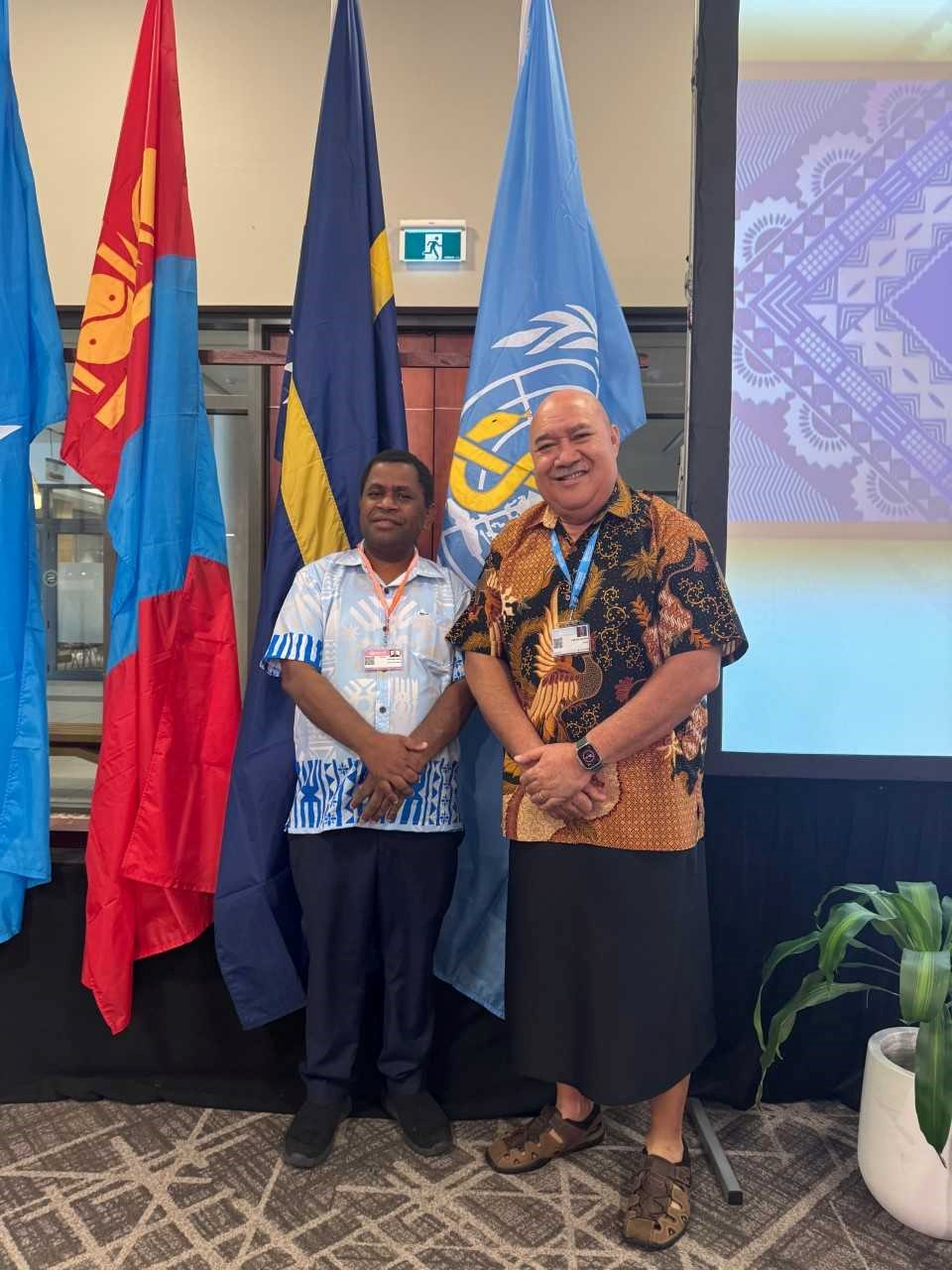
Health Minister Dr. Bosawai and WPRO Regional Director Dr.Saia Piukala in Nandi, Fiji
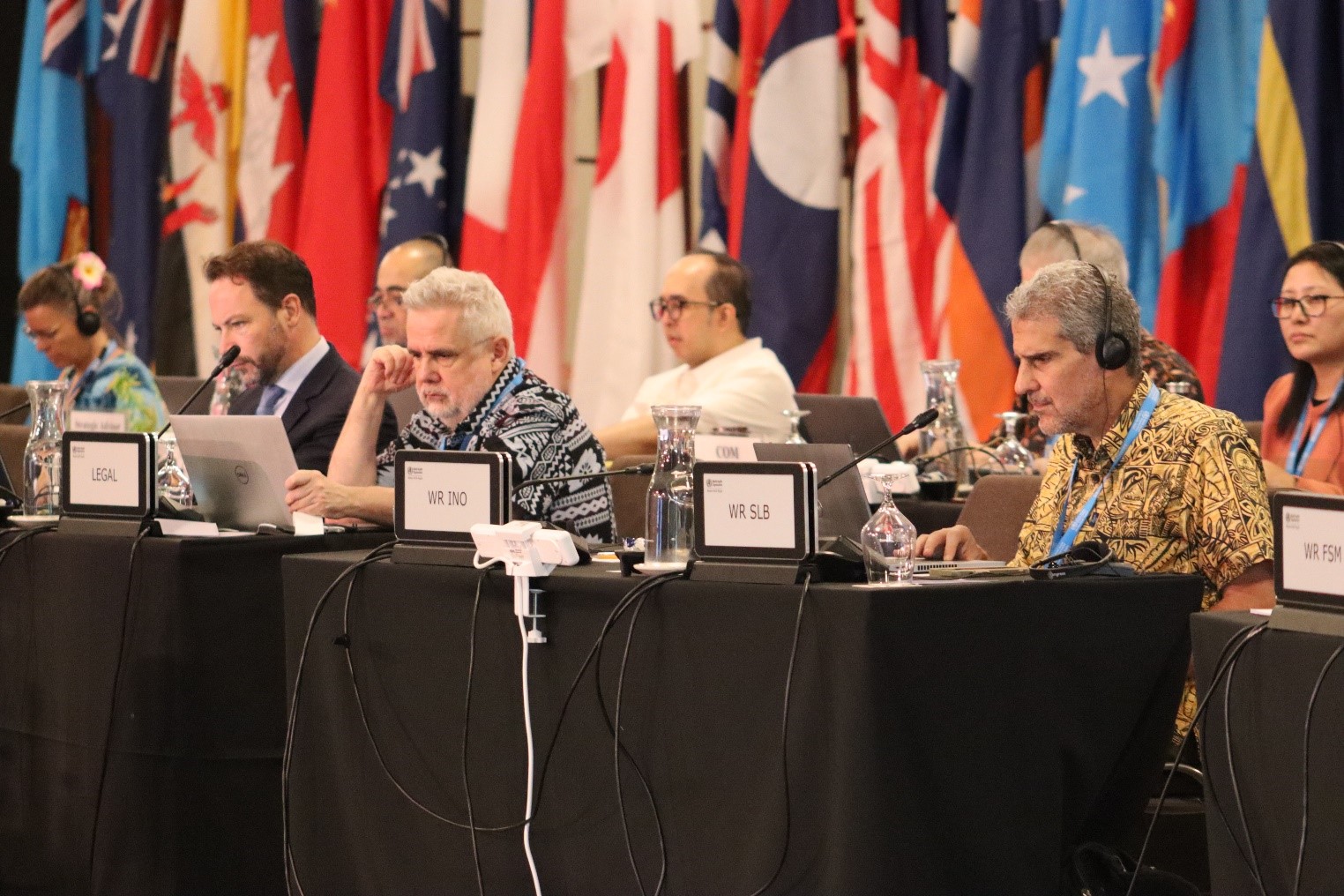
Some of the WHO Country Representatives to Member States during the 76th RCM meeting