

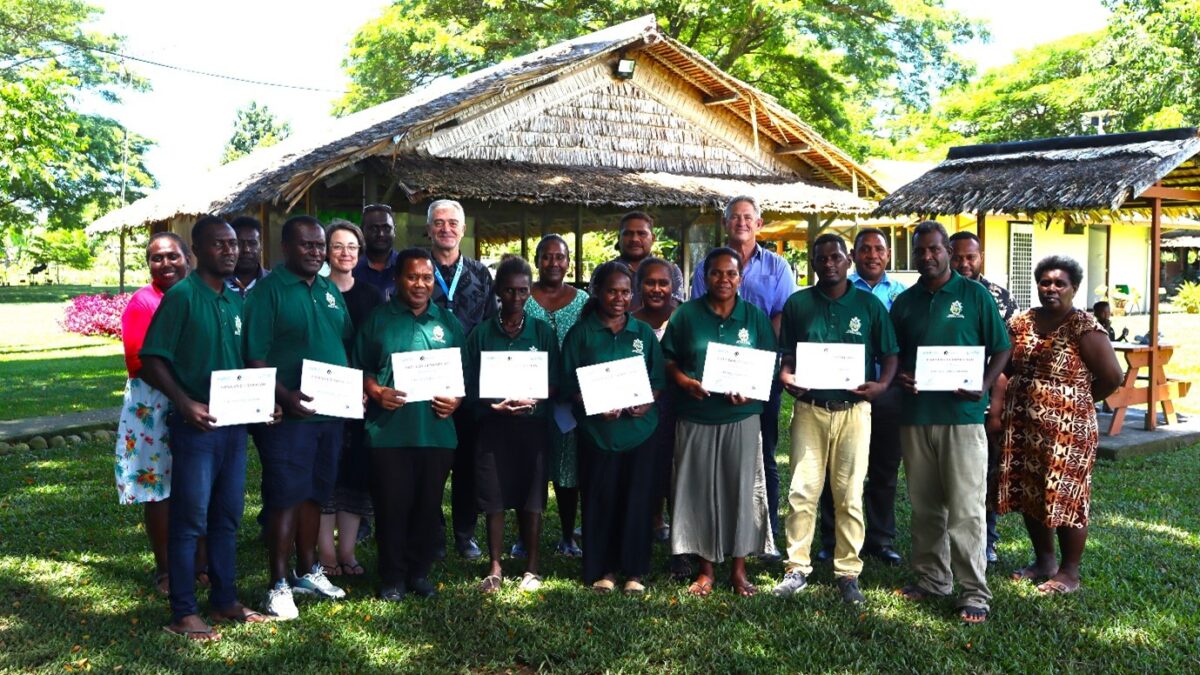
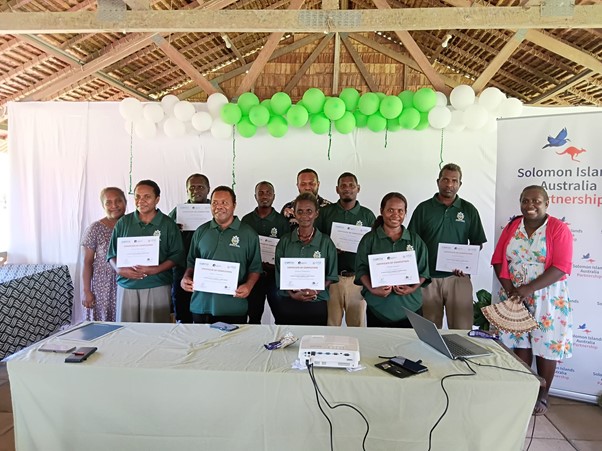
In photo Sols FETP graduates together with MHMS, DFAT, WHO officials.
Solomon Island’s Field Epidemiologists: Protecting Communities from Deadly Diseases
Across Solomon Islands, field epidemiologists are quietly protecting communities from deadly diseases.
This month, the third cohort of the Solomon Islands Field Epidemiology Training Program (Sols FETP) graduates after 10 months of intensive, hands-on training, ready to tackle emerging public health threats.
Fellows in this cohort completed projects addressing health priorities, including improving information collected about malaria, investigating skin abscesses and the use of traditional medicine, strengthening management of syringes and other sharps in hospitals, supporting the use of computer programs to analyse health data, and strengthening early warning systems for detecting disease outbreaks in Solomon Islands.
For the first time, participants also took part in a full-day outbreak simulation, applying their skills in a realistic emergency scenario involving health facilities and community stakeholders.
Sols FETP, delivered by the Ministry of Health and Medical Services and supported by Australia, builds practical skills in collecting data and using it to make informed decisions amongst frontline health workers. This cohort is predominantly composed of nurses working across the health system, including the National Referral Hospital, Honiara City Council, and Choiseul, Central, and Western Provinces.
Training is delivered in Pijin by local public health experts, including experienced faculty and program graduates, with additional support from the Field Epidemiology in Action Team at the University of Newcastle.
“Through this program, frontline workers are learning practical skills to help protect their communities from health threats,” said Australian High Commissioner Jeff Roach.
“Sols FETP is a great example of true partnership – while this lifesaving training is supported by Australia, it’s locally led and leaves Solomon Islands health professionals with skills they’ll keep for life.”
Graduates of Sols FETP have contributed to national public health efforts, supporting Solomon Islands’ response to the COVID-19 pandemic and assisting with preparedness for major events such as the Pacific Games.
Ministry of Health and Medical Services, National Director of Nursing (acting) Mr. Japhet Honimae congratulated the graduates and said he hoped that the graduates of the program will contribute to quality and appropriately used public health surveillance system, that will generate data and information to support public health planning and decisions making both the provincial and national level.
“Field Epidemiology is not always a visible work. It often happens quietly, in remote clinics, in communities facing uncertainty, and moment swift decisions can safe lives. Yet its impact is profound. It is work that prevents outbreaks, strengthens health systems, and ultimately safeguarding the future of our country.”
He acknowledged and thanked the Australian Government for the financial support to the training.
The program is delivered with technical and financial support from Australia as part of the Solomon Islands Australia Health Partnership. The Ministry of Health and Medical Services remains committed to strengthening national health security through workforce development initiatives like Sols FETP.
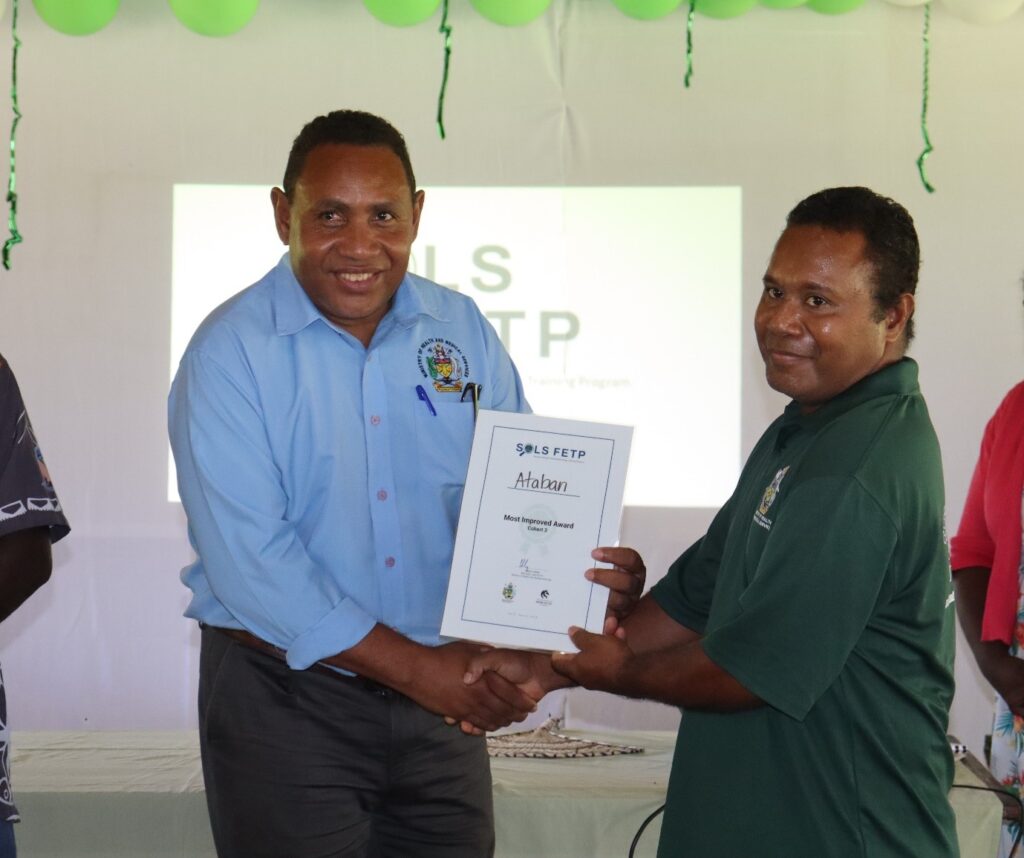
National Nursing Director (acting) Mr. Japhet Honimae presented the certificate of Most Improved Award to AtabanTeimana.
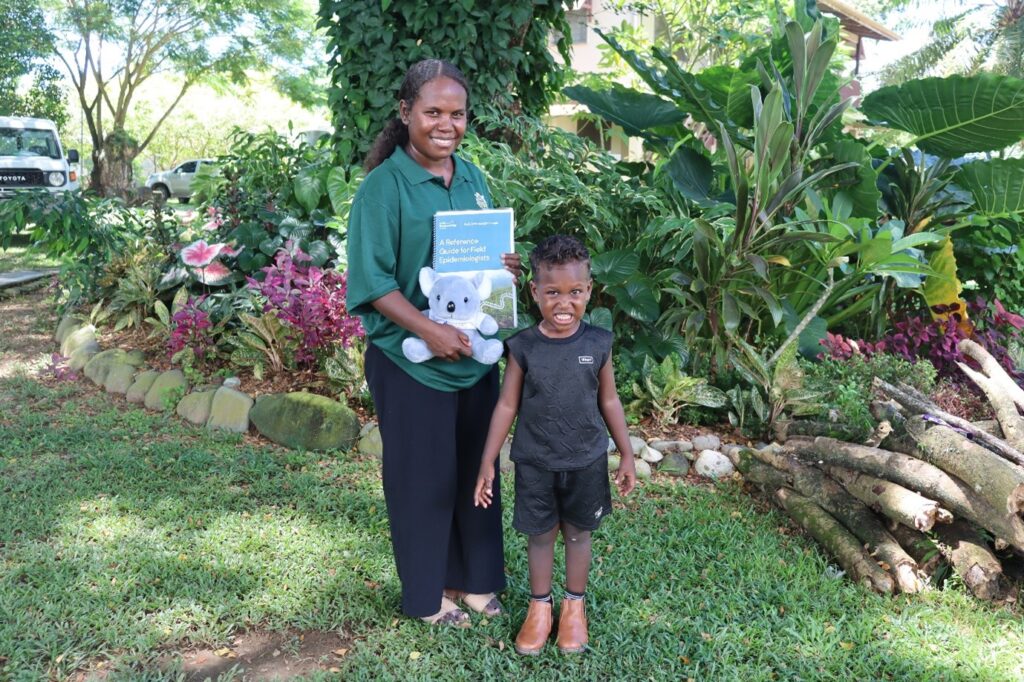
Sols FETP graduate Christol Rakena and her son.
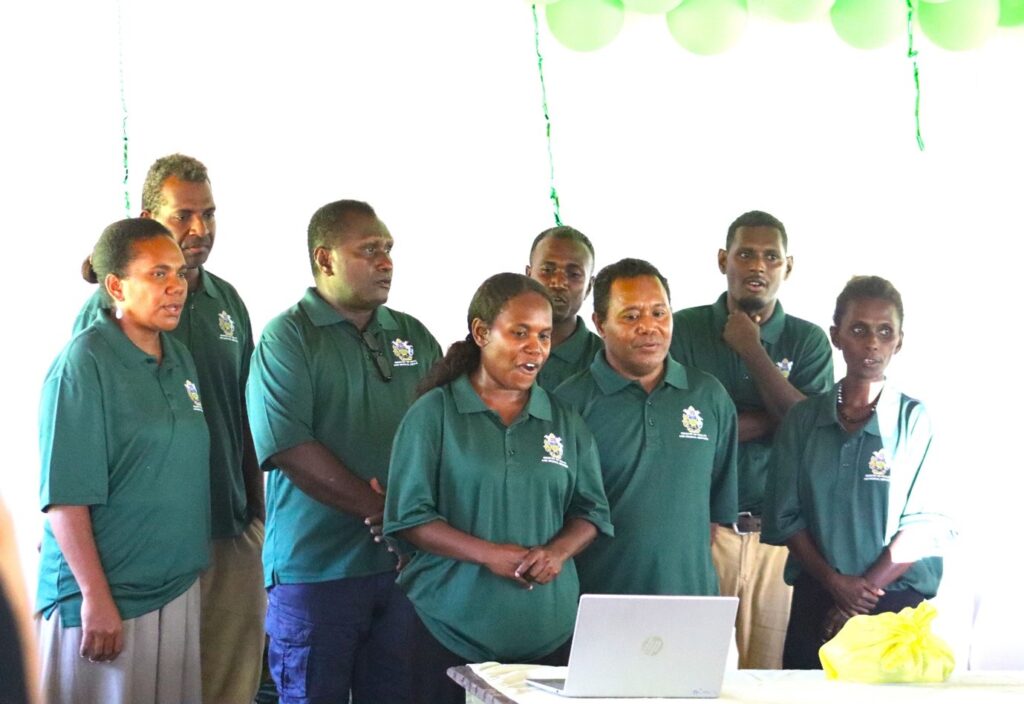
The Sol FETP graduates performs an item at the event.
The Sols FETP graduands and PHESU team.
<<ENDS>>