

Solomon Islands Advances Carbon Trading Policy Through National Validation Workshop
Honiara, Solomon Islands – 1 September 2026 Solomon Islands has taken an important step towards establishing a clear and nationally appropriate framework for participation in carbon markets with the convening of a Carbon Trading Policy Validation Workshop in Honiara.
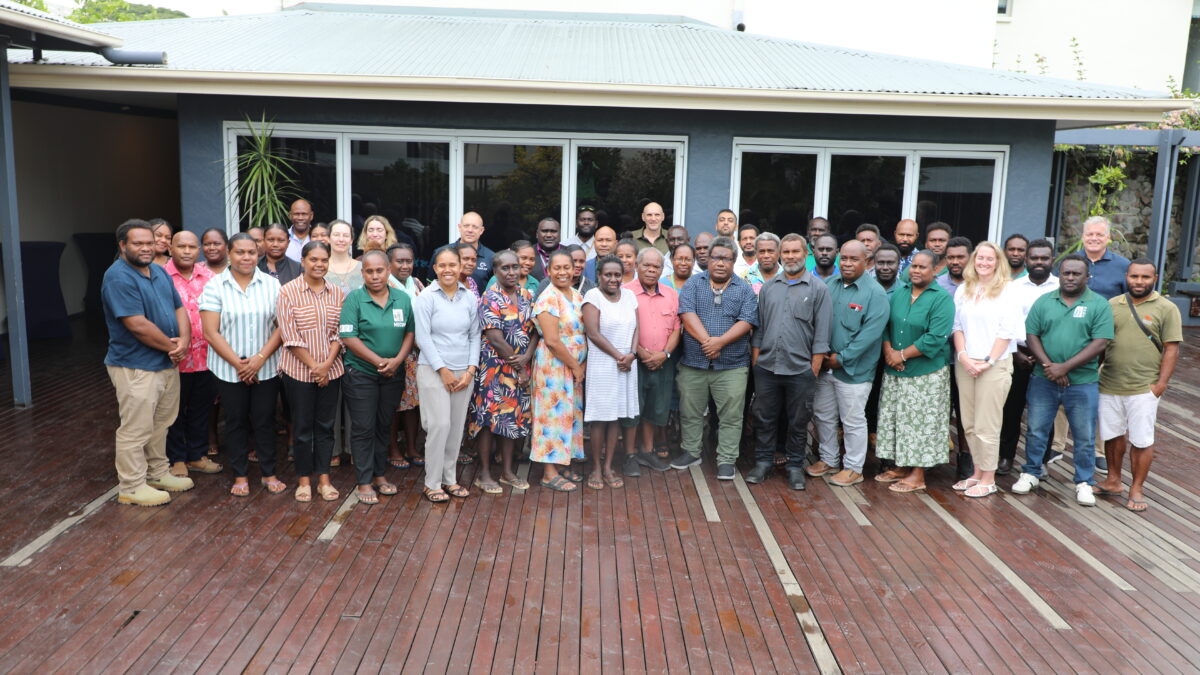
The workshop brings together members of the Project Steering Committee (PSC) and Technical Working Group (TWG), representatives from government ministries and agencies, development partners, civil society organisations, the private sector and other key stakeholders to review and validate the proposed Solomon Islands Carbon Trading Policy – a key priority deliverable for the Ministry of Forestry and Research and the Ministry of Environment, Climate Change, Disaster Management and Meteorology.
The policy development process is being supported through the Low Emission Climate Resilient Development (LECRD) programme, implemented by Global Green Growth Institute (GGGI), with financial support from the Government of New Zealand through the Ministry of Foreign Affairs and Trade (MFAT) and the Government of Ireland through the Department of Foreign Affairs (DFAT).
Speaking at the opening of the workshop, Permanent Secretary for the Ministry of Environment, Climate Change, Disaster Management and Meteorology (MECDM), Mr David Hiriasia reminded participants that carbon trading presents significant opportunities for Solomon Islands, including mobilising climate finance, supporting climate action, strengthening sustainable development and generating benefits for communities and the environment.
He added that, carbon markets present important responsibilities and risks. The policy development process therefore places emphasis on safeguarding national interests, protecting the rights and interests of communities and customary landowners, maintaining environmental integrity, and ensuring that carbon trading is transparent, accountable and aligned with national development priorities.
The workshop follows the completion and approval of the Readiness Capacity Needs Assessment (RCNA), which provides an evidence base on Solomon Islands’ current capacity to participate in carbon markets, identifies existing institutional gaps, opportunities and the measures required to manage associated risks.
The validation workshop provides an opportunity for stakeholders to critically review the draft policy, clarify outstanding issues, test the proposed policy against national circumstances and collectively strengthen the policy direction.
Key areas under consideration include the clarity of institutional roles and responsibilities, consistency with existing laws and national commitments, transparency and accountability, environmental integrity, community interests, benefit sharing, and the meaningful participation of women and other groups that may otherwise be marginalised.
Implementation is also a central consideration. Stakeholders are being encouraged to ensure that the policy provides not only a clear vision but also a realistic pathway for implementation, including the institutional capacity, coordination mechanisms, systems, regulations, safeguards and resources required.
The Project Steering Committee has an important role in providing strategic oversight and institutional coordination, while the Technical Working Group provides technical scrutiny and expertise to identify areas requiring clarification or strengthening.
Carbon trading cuts across multiple sectors, including environment and climate change, finance, forestry, land, energy, transport, agriculture and waste. Strong coordination across government and meaningful engagement with communities, customary landowners, the private sector, development partners and civil society will therefore be essential to the policy’s successful implementation.
The validation process is expected to contribute to the development of a practical, credible and nationally appropriate Carbon Trading Policy capable of supporting Solomon Islands’ climate and development objectives while ensuring long-term benefits for its people and environment.
The workshop marks an important bridge between the assessment of Solomon Islands’ readiness and the development of concrete national policy and institutional arrangements for participation in carbon markets.
ENDS