

SINU, MMERE and Industry Partners Advance Earth Science Diploma Programme Plan
The Solomon Islands National University (SINU), the Ministry of Mines, Energy and Rural Electrification (MMERE), and industry stakeholders have moved a step closer to establishing a Diploma in Earth Science at SINU, with the programme expected to begin in 2027.
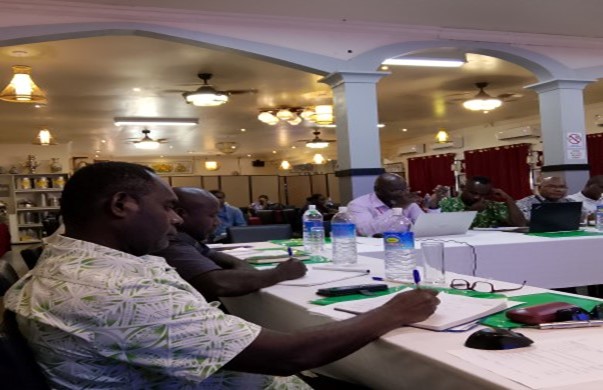
The progress follows a recent stakeholder consultation held as part of SINU’s course development process, bringing together university leaders, government officials, and representatives from the mining sector to discuss the direction and priorities of the proposed programme.
Opening the consultation, Permanent Secretary Dr Christopher Sagapoa described the initiative as an important step towards building local capacity in earth sciences, resource management, and related fields. He said the programme would help meet national workforce needs and contribute to the long-term development of the mining and exploration sector in Solomon Islands.
Dr Sagapoa also stressed the importance of developing a programme that is practical and relevant to the country’s needs, particularly in areas that support government technical services and industry demand.
MMERE was represented by Permanent Secretary Dr Christopher Sagapoa, the Deputy Secretary Corporate, the Deputy Secretary Technical, the Director of the Geological Survey Division, and senior officials from the Ministry’s technical divisions.
SINU’s delegation included Pro Vice Chancellor (Academic) Dr Eric Katovai, Dean of Science and Technology Dr Clyde Puilingi, Manager of the Standards and Quality Office Mr Stanley Houma, and a representative from the Faculty of Fisheries, Agriculture, Forestry and Environment.
The mining sector was represented by Solomon Nickel Mining Limited through Mr Thomas Toba, Community Relations, Corporate and External Affairs Manager.
Discussions during the consultation focused on the key subject areas to be included in the proposed diploma, with participants emphasising that the curriculum must reflect the Solomon Islands context and respond to employment opportunities in government, the extractive sector, and geoscience-related areas.
SINU officials also outlined the academic processes, timelines, and quality requirements needed for the programme to proceed through the University’s approval system.
At the same time, Dr Katovai highlighted challenges relating to infrastructure and resources required to deliver the programme effectively. Participants acknowledged that these issues would need support from Government, together with SINU and other relevant stakeholders, to ensure successful implementation.
The consultation also noted that the initiative will start at diploma level, with the longer-term intention of developing into a Bachelor programme as capacity, infrastructure, and resources improve over time.
As part of the next steps, SINU advised MMERE to nominate officials to serve on the Programme Advisory Committee, which will help guide the programme’s development and maintain its relevance and quality.
The consultation ended with a shared commitment from SINU, MMERE, and industry stakeholders to continue working together to strengthen local capacity in earth sciences for the benefit of Solomon Islands.