

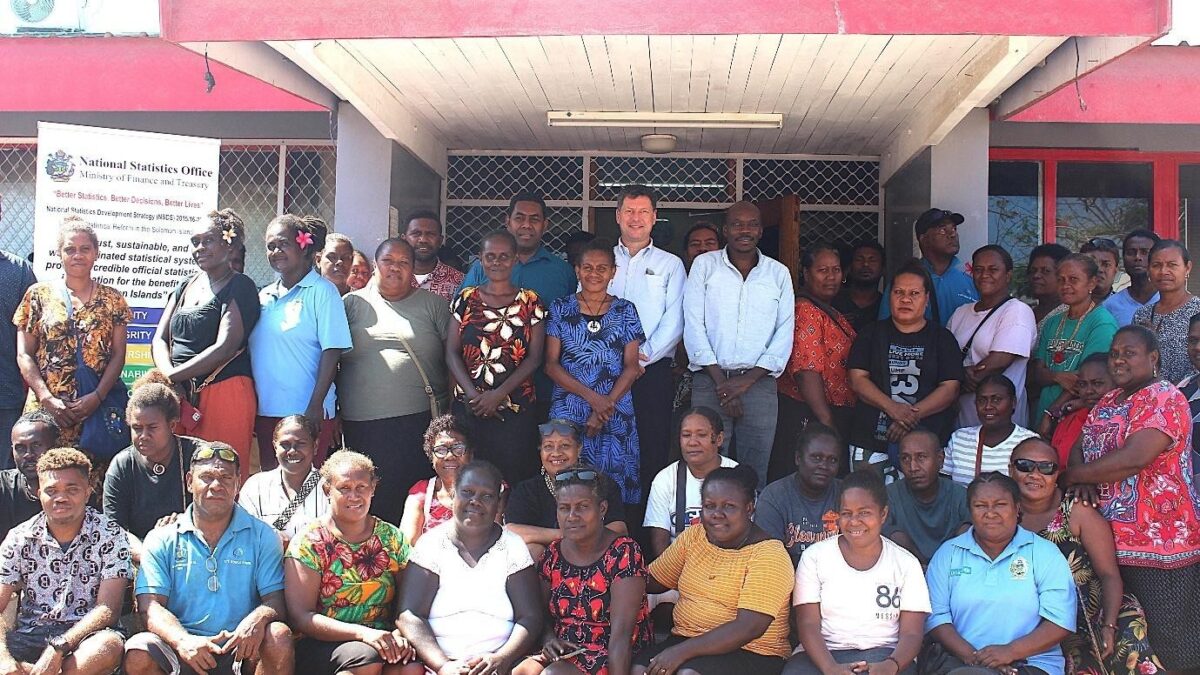
Some of the participants with SINSO and UNICEF representatives.
SINSO begins first MICS training for field workers
A five-week intensive training and practical field test program for survey field workers who will be involved in the country’s inaugural Multiple Indicator Cluster Survey, MICS, has begun and the participants have been urged to make use of tax-payers money wisely.
The Solomon Islands Government is partnering with the UNICEF in the survey, the sixth to be held in the Pacific and the first one for Solomon Islands. The key aims for the MICS include;
- Collect data on health, nutrition, education, child protection, water and sanitation, human capital, and overall well-being of children, women, and men.
- Strengthen national capacity in data collection, processing, analysis, and reporting.
- Provide evidence to inform policy and decision-making, particularly regarding the rights and needs of children, women, and other vulnerable groups in the Solomon Islands.
The Government Statistician Samson Kanamoli in his opening remarks reiterated the significance of the survey.
“Ladies and gentlemen, this survey is historic in more ways than one. Not only is this the first-ever MICS in Solomon Islands, but it is also the first MICS in the globe to conduct a MICS sample design that overlaps with the HIES. This is a significant achievement, and it demonstrates our commitment to innovation and efficiency in producing quality statistics.
“To all our Enumerators and Supervisors — thank you for your willingness to join this nationwide survey. We know the work ahead is demanding, but we are confident in your ability and commitment. We look forward to your quality of work, because the data we capture will tell the story of our children, our women, and our families across this country.”
Mr Kanamoli said the data will also align with the Government of the day’s policy priorities — good health care, and better education through the free education policy, Strengthening Institutions & Driving Meaningful Legislative Reforms, Children policy, and perhaps will address women policy needs and data gaps. The MICS data will help drive these policies and ensure the country is responding effectively to the Sustainable Development Goals.
Meanwhile, UNICEF’s Country Field Officer Benjamin Grubb highlightedx the bigger role the national government is playing in supporting the survey financially and encouraged the participants to acknowledge it.
“UNICEF is providing technical support and some financial support but the Solomon Islands Government is providing the bulk of the financial cost. And we are grateful.
“When you go out in the field, remember that your government is spending money on you, tax payer’s money. Make use of it wisely.
Concluding the opening program, SINSO advisor Dr. Willie Lahari encouraged the participants to visualise the final report as they collect the information in the field.
He said visualising the end product is important as it will continue to motivate them in the field.
More than ninety field workers including Supervisors, enumerators and measurers are participating in the training.
They will be deployed into the field on completion of the training in the first week of December, taking a break for the Christmas and New Year festivities and resuming field work in January 2027. The survey is scheduled to complete in February.
The MICS is a globally recognized household survey programme developed by UNICEF in 1995. It has since become one of the world’s largest sources of statistically sound and internationally comparable data on the well-being of children and women, and an important source of data for monitoring the Sustainable Development Goals (SDGs).
For Solomon Islands, participating in MICS for the first time represents a significant milestone in strengthening the country’s capacity to produce highquality, internationally comparable data.
The survey will also enable Solomon Islands to compare its results with other Pacific Island countries that have already conducted national MICS surveys, as well as with MICS results from countries and territories around the world.
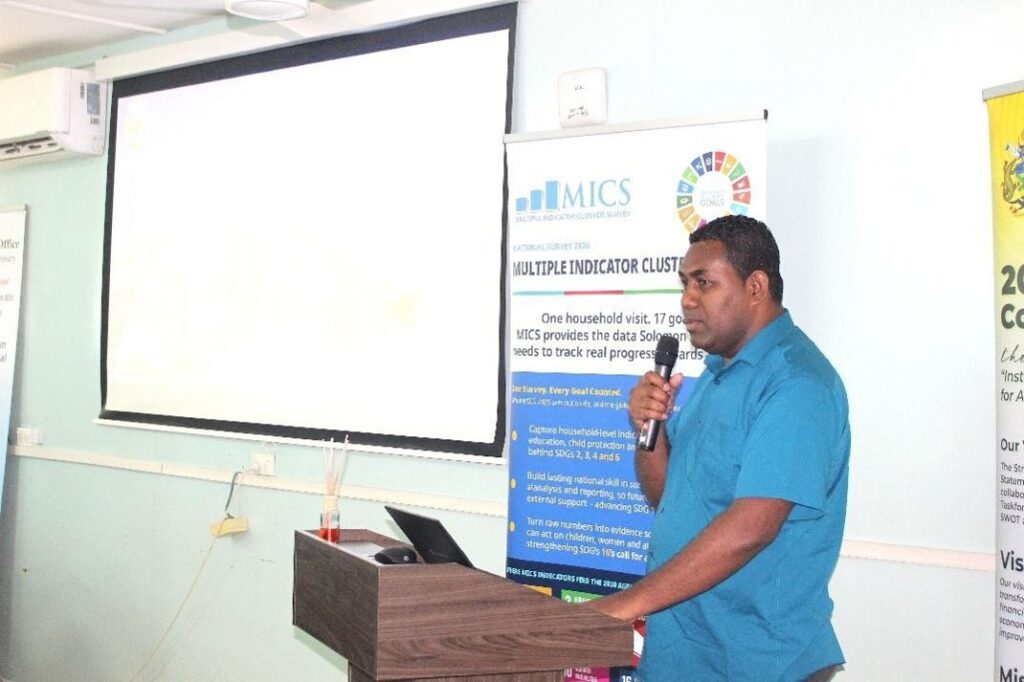
The Government Statistician Samson Kanamoli.
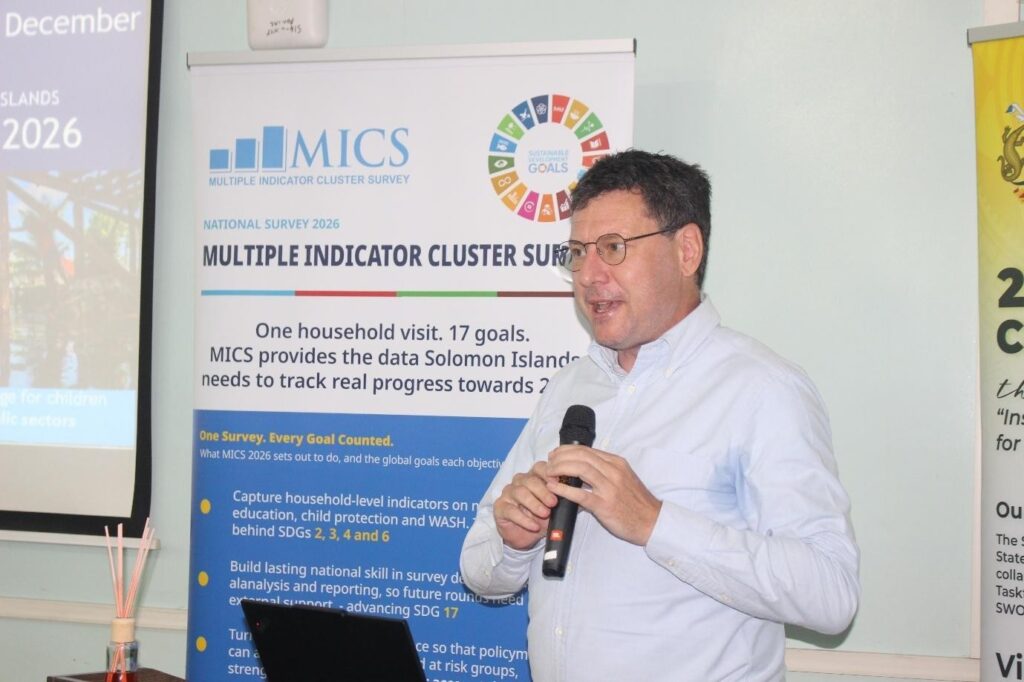
UNICEF Country Field Officer, Benjamin Grubb.
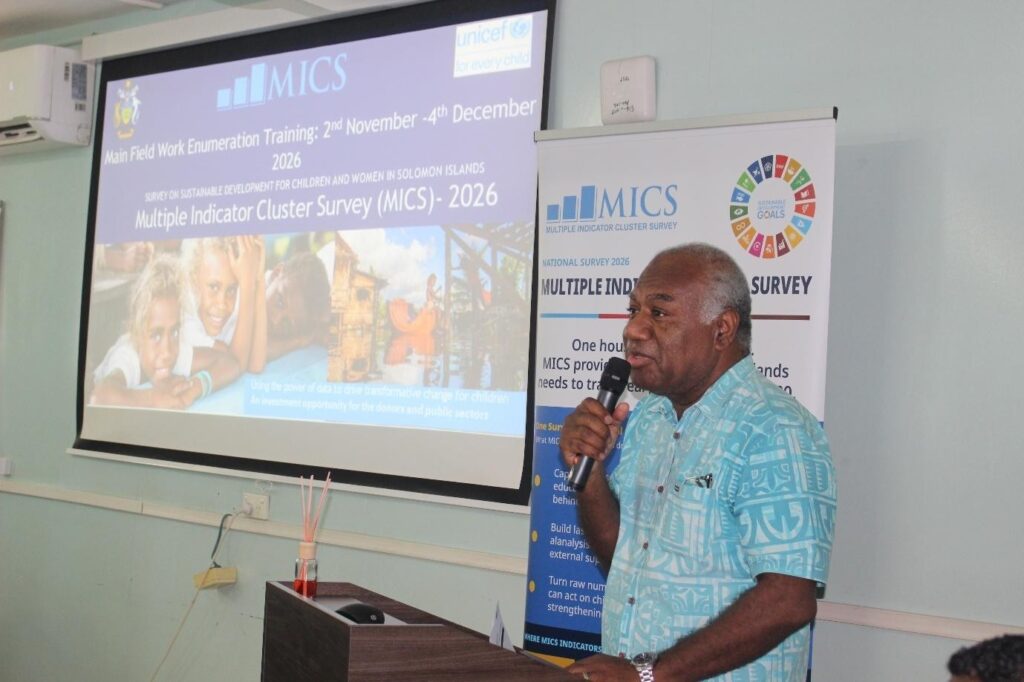
National Statistics Office Advisor Dr.Willie Lahari.