

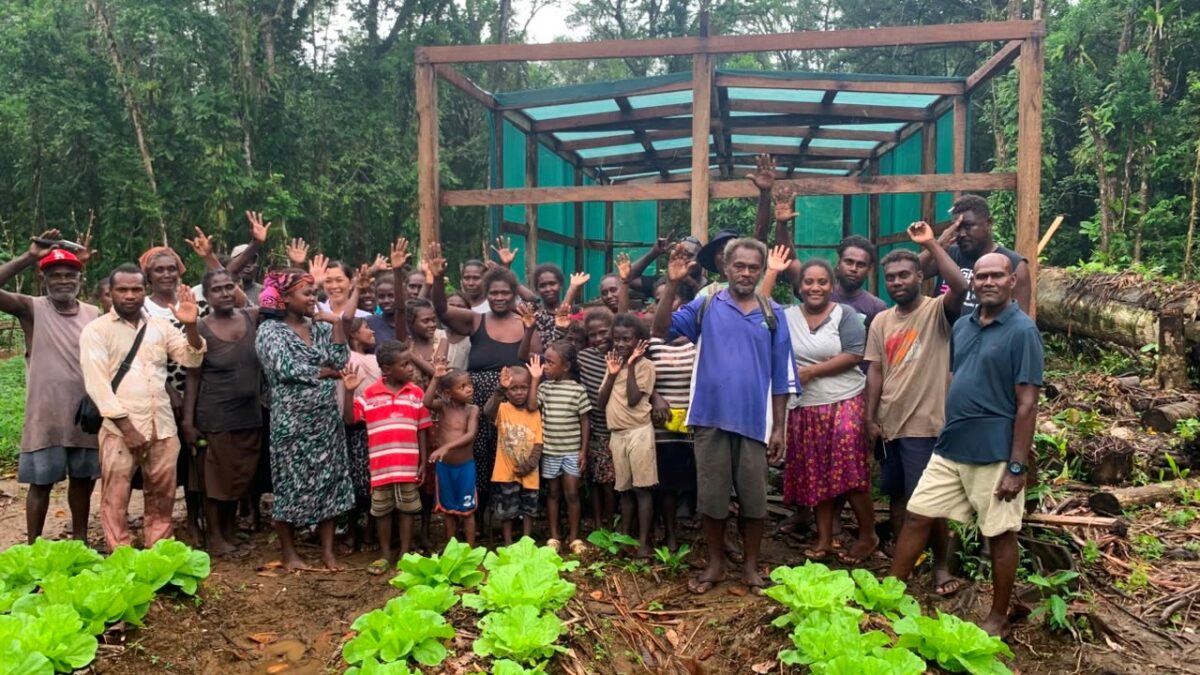
Zaira community of Western Province pose for a group photo with MECDM, SAFE and MAL staff after officers done monitoring of their crops inside their garden.
Safe Project conducts Monitoring, Evaluation and Community training in Zaira Community, Western Province
WESTERN PROVINCE, SOLOMON ISLANDS — 10 September 2026
The Solomon Islands Government, through the Ministry of Environment, Climate Change, Disaster Management and Meteorology (MECDM), is strengthening community and government capacity to protect the country’s unique biodiversity and promote sustainable land and natural resource management in Western Province through the Safeguarding Solomon Islands’ Endemic and Globally Threatened Biodiversity and Ecosystem Services from Key Threats, Particularly Invasive Alien Species and Unsustainable Land Use Practices (SAFE) Project.
The SAFE Project is a Solomon Islands Government initiative under MECDM, funded by the Global Environment Facility (GEF) and implemented in partnership with the United Nations Development Programme (UNDP).
The project recognises that Solomon Islands’ biodiversity and natural resources are fundamental to the livelihoods, culture and wellbeing of its people. However, the country’s ecosystems and native species face increasing threats from invasive alien species, habitat loss, land degradation, unsustainable resource use and climate-related risks.
As part of Component 4 of the SAFE Project, which focuses on knowledge management, awareness, monitoring and evaluation, and gender mainstreaming, a technical monitoring and training mission is being undertaken in Western Province.
The mission includes visits to SAFE Project communities, including Zaira, to provide practical support on nursery management, seedling production, integrated farming and conservation completed as part of the outcome 3 of the project which focused on community participation and improved livelihoods from a nature-based economic pathway that reduce threats from IAS.
The activities build on previous training provided to smallholder farmers during the establishment of community nurseries. The mission also enables officers from the Ministry of Agriculture and Livestock (MAL) to revisit participating farmers, assess progress and provide further technical support where required.
Key areas of support include improving nursery operations, producing and cultivating native plant species, strengthening seedling quality, improving production efficiency and increasing seedling survival rates.
Mr. Luke Mae, Principal Conservation Officer of the Environment and Conservation Division (MECDM), acknowledged the community’s commitment to protecting and managing its natural resources.
Addressing the village chief, church leaders, community elders, women and youth, Mr Mae thanked the community for accepting the SAFE Project and recognised the efforts that led to its selection as one of the project sites.
“Your community has been identified as one of the project sites in Solomon Islands not by mistake, but because of the recognition of your efforts over the past years in protecting and managing the natural resources in your area,” Mr Mae said.
He also highlighted that the opportunity to participate in the SAFE Project should be regarded as a significant benefit for the community, noting that many communities across Solomon Islands also face biodiversity and environmental challenges but have not had the same opportunity to participate in the project.
Mr Mae explained that the SAFE Project aims to protect endemic biodiversity, strengthen ecosystem resilience and promote sustainable livelihoods, particularly by addressing threats such as invasive alien species and unsustainable land-use practices.
He said the support provided to the community, including basis agricultural tools, training on farming practices, seedling production, nursery management, and a nursery along with demonstration plot for crop rotation. These are the things the project has provided previously.
“Our support to your community through the provision of training and agricultural materials for integrated and managed organic farming is a testament to the trust the Ministry and its partners have placed in your community,” Mr Mae said.
He added that the support is intended to help fulfil the broader objective of the SAFE Project: safeguarding threatened biodiversity and ecosystem services from key threats, particularly invasive alien species and unsustainable land-use practices.
Monitoring Progress and Supporting Communities
The visit to the community forms part of the SAFE Project’s implementation and monitoring programme, providing an opportunity for government officers and project partners to observe activities on the ground, assess progress and identify areas where additional support may be required.
He encouraged the community to maintain its commitment and continue applying the sustainable farming techniques learned through SAFE Project training.
He further noted that community-level action contributes to wider national and global efforts
to safeguard biodiversity, ecosystems and the natural environment.
The monitoring and evaluation component of the mission will also help assess progress and identify areas for improvement. Findings from the mission will contribute to the SAFE Project’s monitoring and evaluation reporting for Western Province.
Zaira community, Chief Mr Richard Sidiki expressed his appreciation to the Solomon Islands Government, through MECDM and the SAFE Project, in collaboration with the Ministry of Agriculture and Livestock (MAL), for selecting Zaira as one of the communities to benefit from the agricultural activities.
Mr Sidiki said the training provided through the project, particularly on crop rotation, had already made a positive difference to the community’s farming practices.
He said that, with the knowledge gained through the SAFE Project training, community members can now carry out crop rotation more efficiently, with the timing depending on weather conditions and the type of crops being produced.
The Zaira Chief also highlighted the importance of community cooperation in achieving the results of the project, particularly the completion of the community garden.
Mr Sidiki’s remarks reflected the importance of community ownership and participation in ensuring that the benefits of the SAFE Project are sustained beyond the implementation of individual activities.
Strengthening Conservation and Sustainable Livelihoods
The SAFE Project operates through four interconnected areas:
- Strengthening the enabling framework for biodiversity conservation and a nature-based economy;
- Managing invasive alien species and land degradation risks;
- Promoting community-based integrated ecosystem management; and
- Strengthening knowledge, awareness, monitoring and evaluation, including gender mainstreaming.
By combining government leadership, technical support and community participation, the SAFE Project aims to strengthen local capacity to protect native species, restore degraded ecosystems and promote the sustainable use of natural resources.
The Western Province mission represents another step in the Solomon Islands Government’s broader efforts to safeguard the country’s biodiversity and ecosystems while supporting resilient communities and sustainable livelihoods for present and future generations.
MECDM also thanked the community for its continued cooperation and wished community members well as they move forward with upcoming SAFE Project activities.
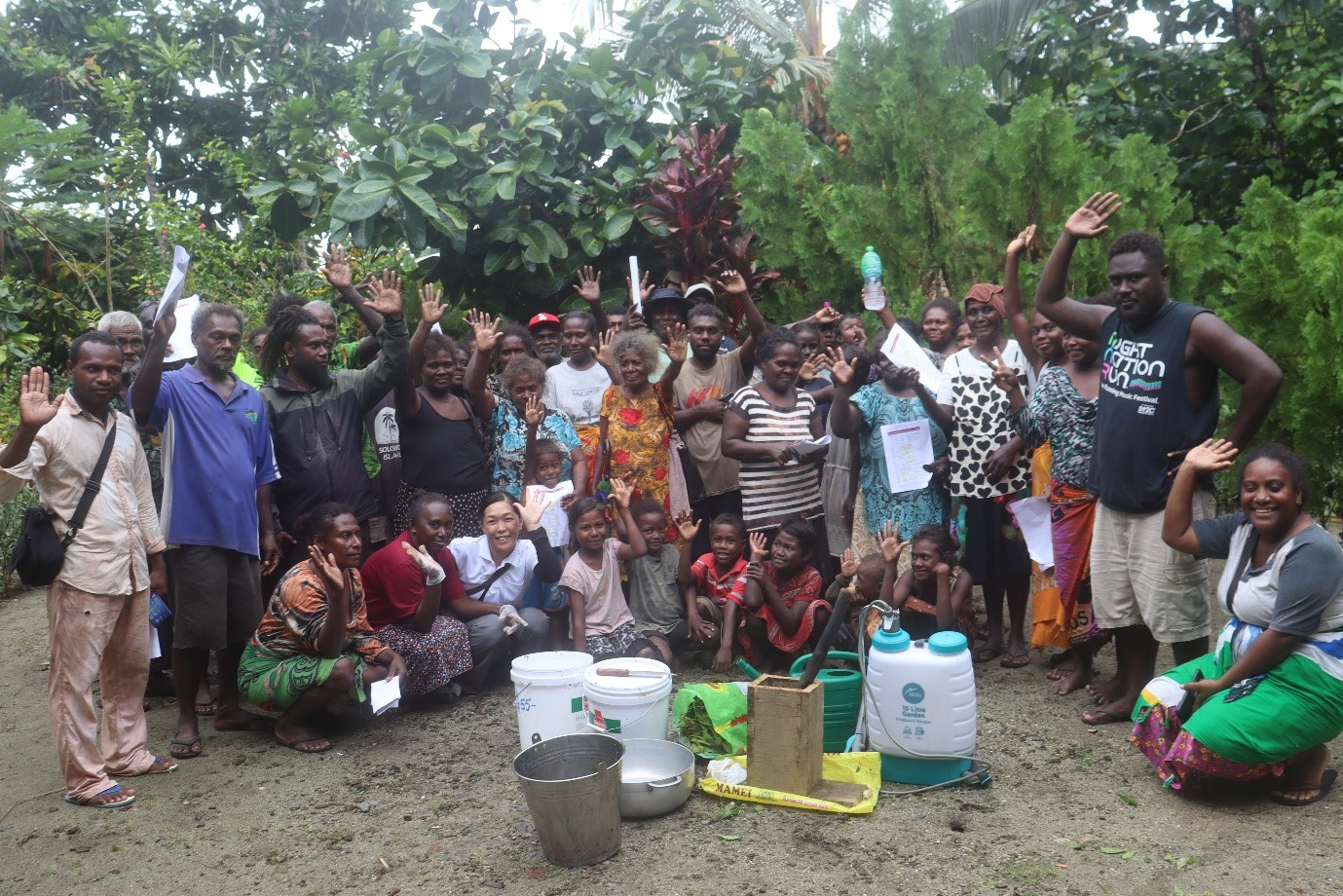
Zaira community with MECDM, SAFE and MAL staff pose for a group photo during the demonstration process of making plant derived pesticide using neem leaves to help them control pest attacking their plants.
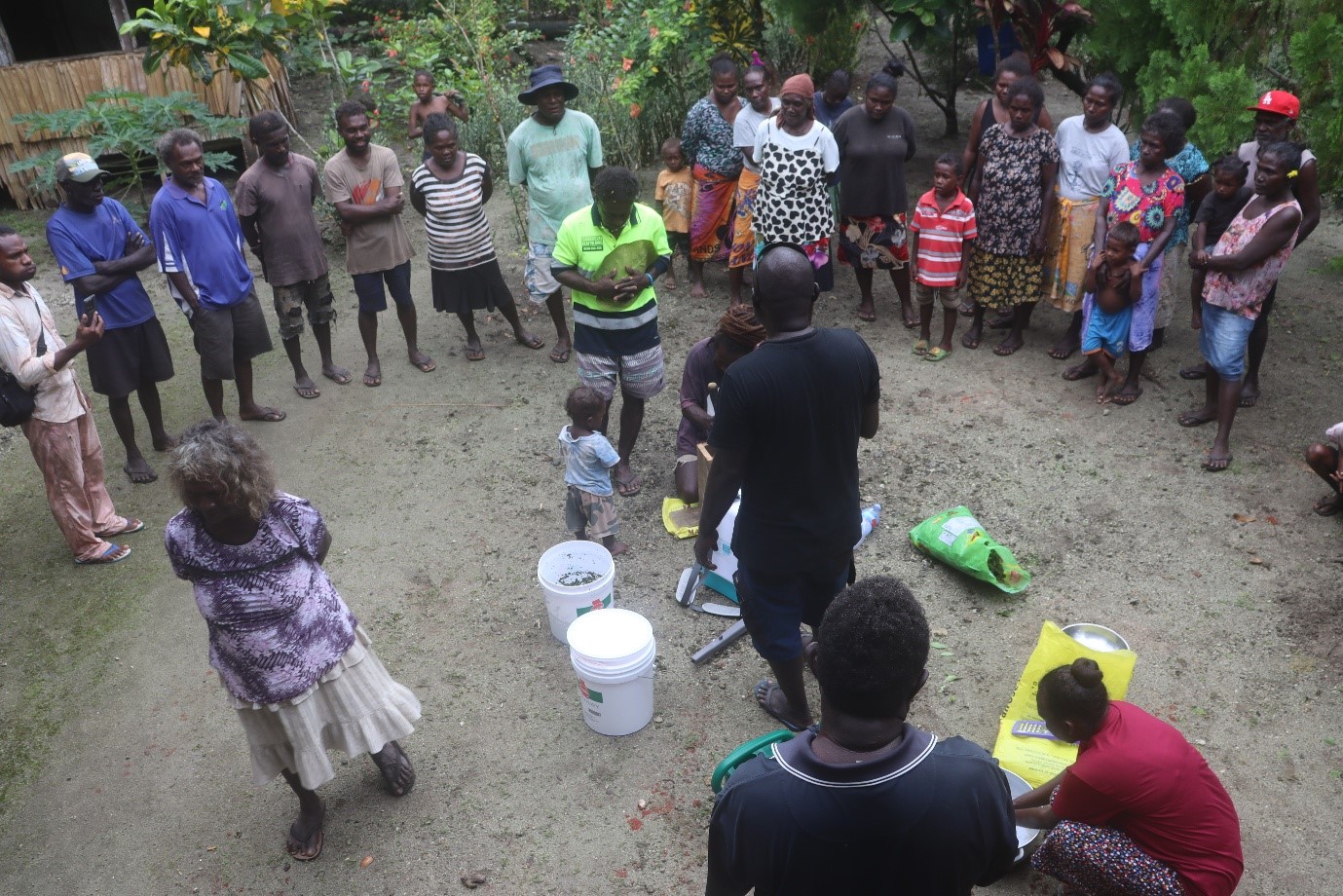
MAL staff demonstration of plant derived pesticide using neem leaves to Zaira community.
ENDS///