

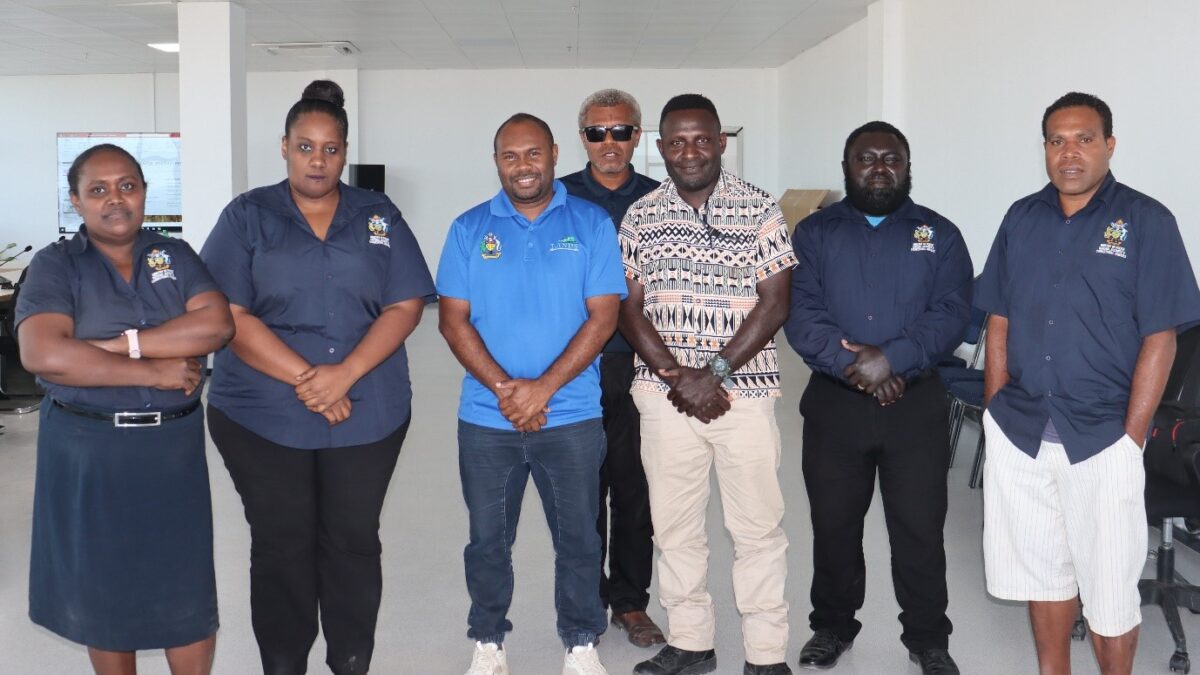
Officials pose for a photo after the presentation.
MLHS Presents Customary Land Recording to MPNSCS
The Ministry of Lands, Housing and Survey delivered a presentation on customary land recording and related land matters to officers of the National Security Division within the Ministry of Police, National Security and Correctional Services yesterday afternoon.
The presentation was conducted by the Land Recording Officer, David Onoi, from the Ministry’s Tribal Land Recording Unit and formed part of efforts to improve understanding of customary land ownership, land rights, land administration and the importance of land recording in the Solomon Islands.
The session covered the legal basis for customary land recording under the Customary Land Records Act 1994, including the recording of customary land rights, interests, genealogies and the boundaries of landholding groups.
Mr. Onoi explained that customary land recording is intended to strengthen customary land rights by formally documenting landholding groups, ownership and use rights, genealogies, boundaries and other relevant information. The process also supports land reform and promotes the proper management and development of customary land.
The presentation outlined the main stages of the land recording process, including the submission of an application, public notification, recording exercises, boundary walks, validation of records, and the completion of the recording process.
Participants were also briefed on the importance of customary land recording in securing land rights, preserving land-related knowledge for future generations, supporting development planning, and addressing land disputes.
The presentation highlighted that land recording differs from customary land acquisition. Under the recording process, land remains recorded in the name of the customary landholding group, while recording officers do not make decisions on ownership claims. Any disagreement is addressed through consensus and appropriate customary dispute-resolution processes.
Mr. Onoi also explained the role of various stakeholders, including relevant government ministries, provincial governments, landholding groups, Houses of Chiefs, churches and development partners.
The presentation noted that disagreements arising during the recording process may initially be addressed by community leaders, elders and chiefs. Where a matter develops into a dispute, it may be referred to the relevant House of Chiefs for further consideration.
The session further highlighted the role of customary land recording in protected areas, including identifying landowners, rights and interests, confirming beneficiaries through genealogies and family trees, mapping boundaries and establishing customary landholding group representatives.
The engagement provided an opportunity for officers of the National Security Division to gain a better understanding of customary land matters and their importance to peace, stability, development and the protection of land rights in the Solomon Islands.
The Ministry of Police, National Security and Correctional Services acknowledged the Ministry of Lands, Housing and Survey for conducting the presentation and sharing important information with its officers.
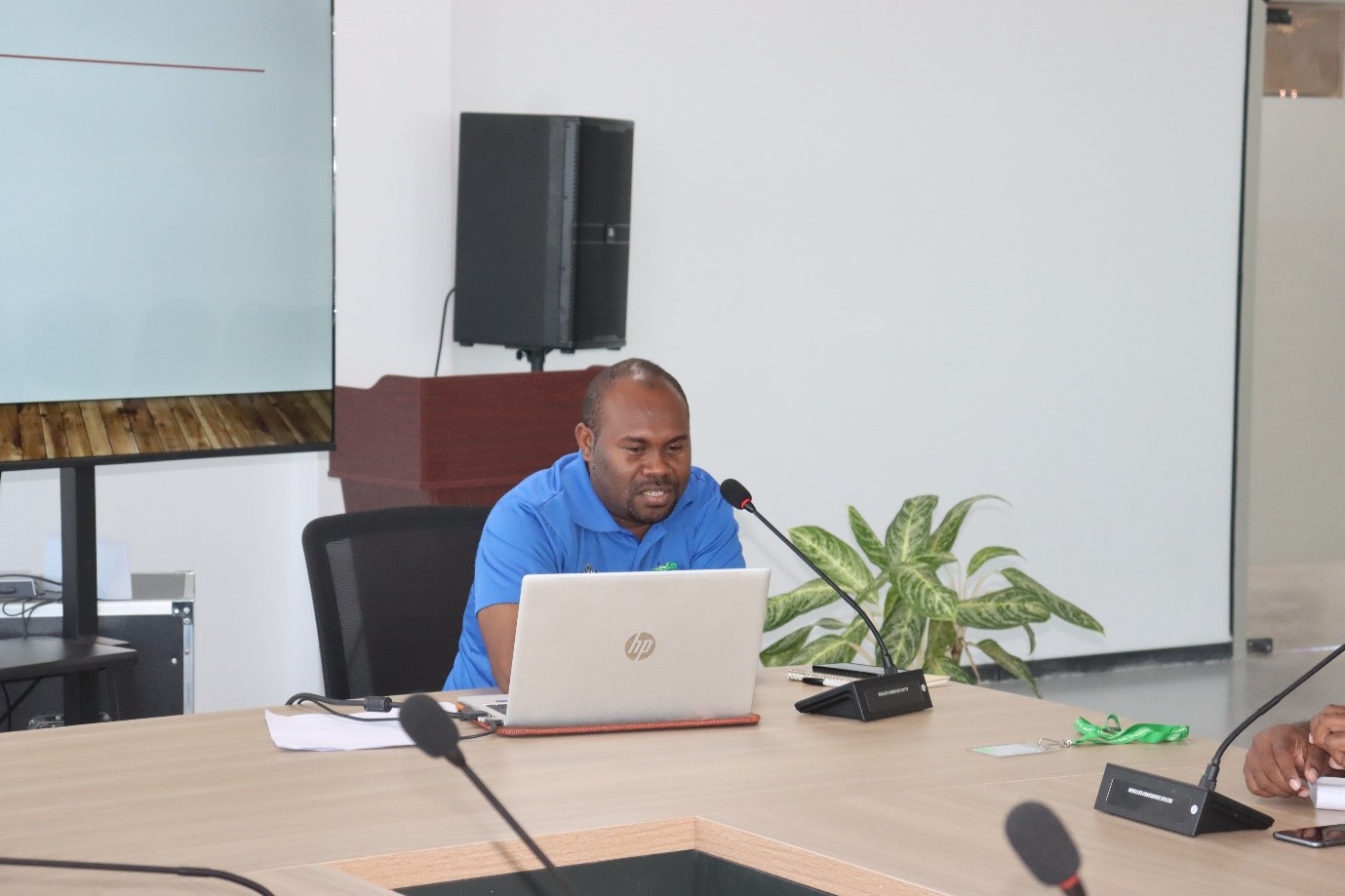
Land Recording Officer, David Onoi, of the Ministry of Lands, Housing and Survey.
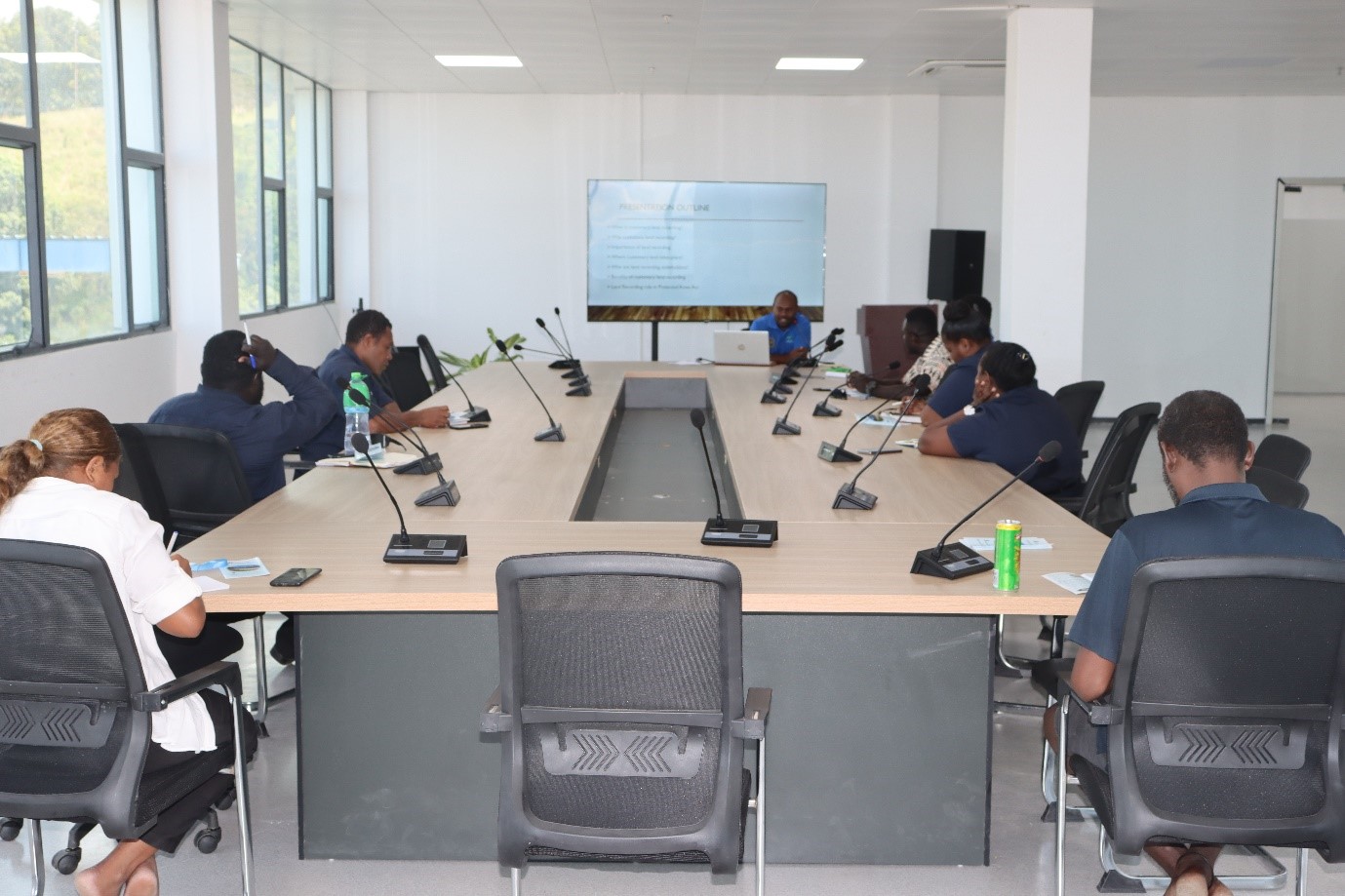
Officials of the Ministry of Police, National Security and Correctional Services attending the presentation.
-MPNSCS Press