

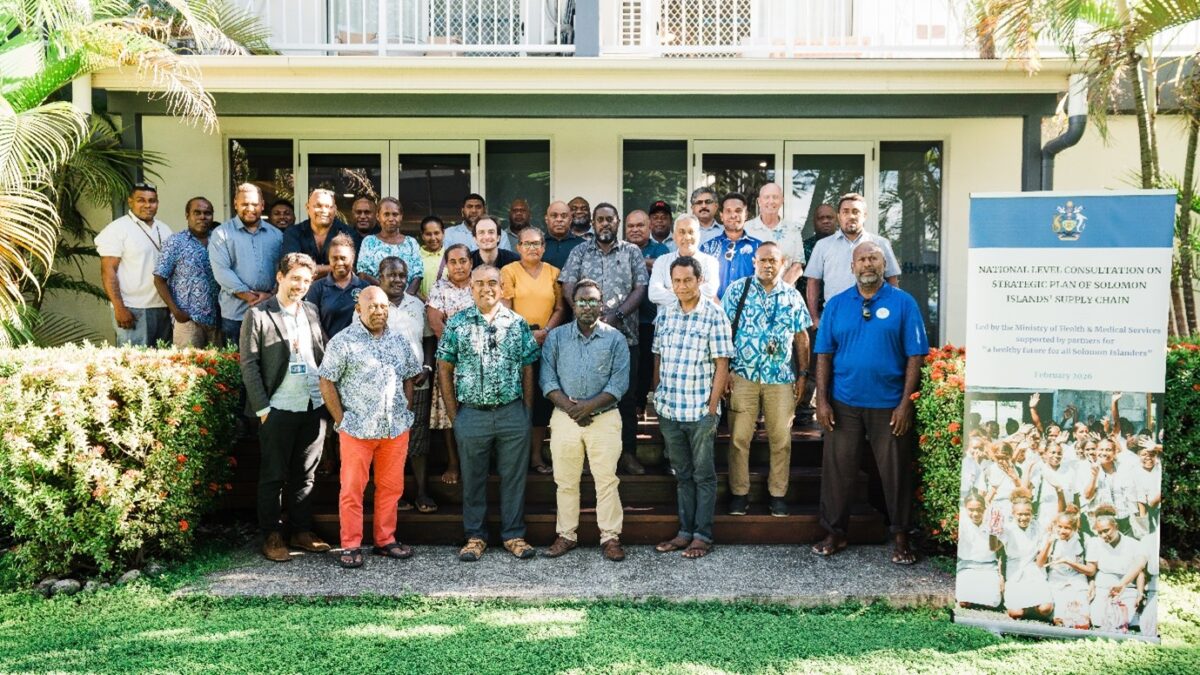
In group photo: MHMS Senior Executive, National and Provincial Heads of Departments, Program Mangers, WHO reps, DFAT reps and World Vision officials and staffs
Ministry of Health Hosts Consultation on Draft Health Supply Chain Policy
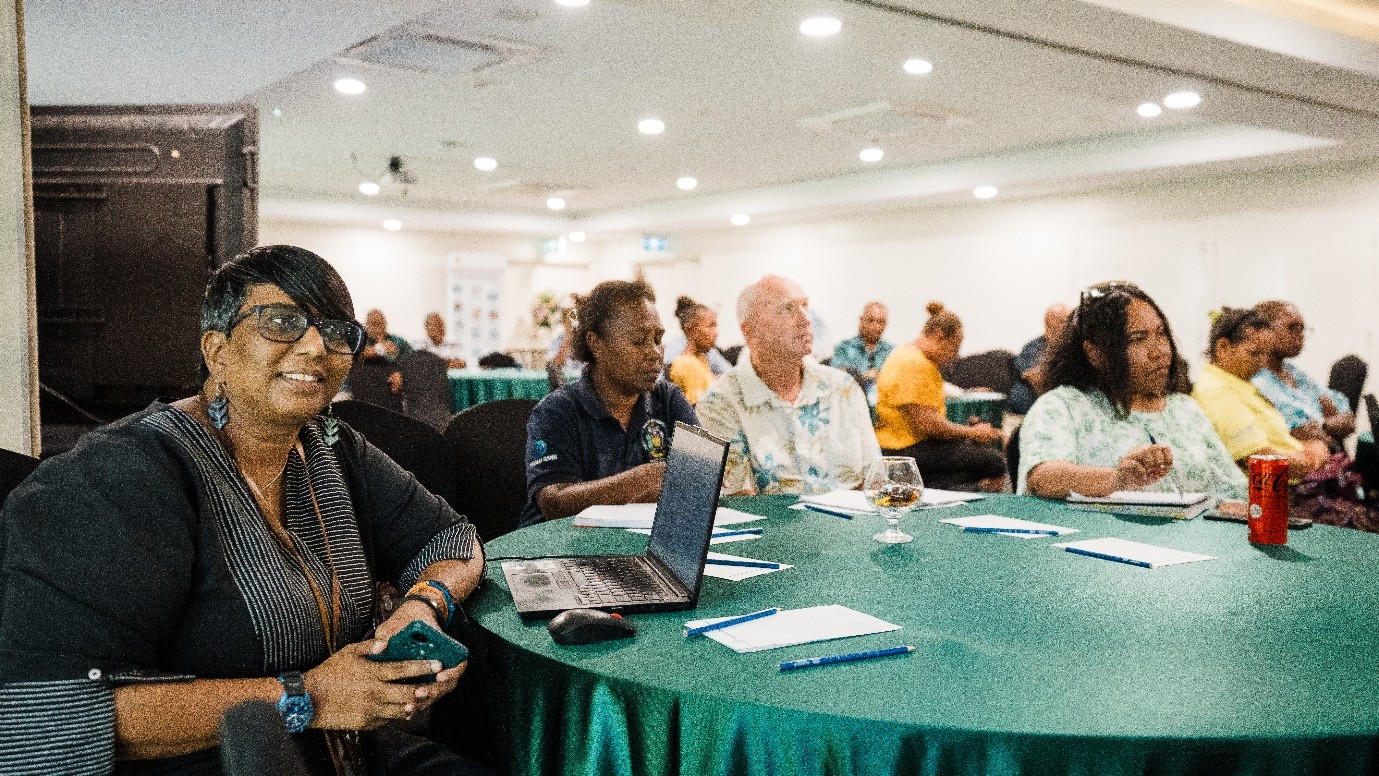
Participants seated at the HSCP consultation
The Ministry of Health and Medical Services (MHMS), in partnership with World Vision Solomon Islands, convened a one-day preliminary consultation on the development of the draft Health Supply Chain Policy.
The consultation aimed to foster inclusive discussions and gather technical guidance ahead of the policy’s endorsement by the Solomon Islands Government.
The initiative to develop the Health Supply Chain Policy began in 2025 and is led by MHMS with support from the Global Fund. Since April 2025, the policy development process has included extensive consultations with operational stakeholders, key donors, and technical partners. A comprehensive desk review of more than 120 documents has been completed, alongside interviews with approximately 60 local and international stakeholders.
The findings will be presented during two in-person workshops to reach consensus. Following this process, the MHMS Senior Executive Management (SEM) will finalize and endorse both the strategic plan and the implementation plan.
Speaking at the consultation, Deputy Secretary Health Care Dr. Gregory Jilini emphasized that the health supply chain is critical to service delivery.
“The health supply chain is not a back-office function; it is a lifeline that directly determines whether patients receive timely and safe care services, especially in remote communities,” Dr. Jilini said.
He noted that when essential health products are unavailable at the point of care, treatment is delayed, trust in public services is weakened, and public resources fail to achieve their intended purpose.
“This policy establishes one integrated, effective and efficient supply chain for all health products, designed to stand the test of time,” he said.
“The policy sets the enduring vision; each strategic plan translates it into prioritised strategic objectives; and each implementation plan delivers those objectives through activities and sub-activities. We are committing to clear stewardship through a national coordination function, a unified Logistics Management Information System and Electronic Logistics Management Information System discipline for traceability, and one accountable operational model built for performance.”
Dr. Jilini further highlighted that the reform will professionalize end-to-end logistics through a state-owned enterprise model and drive economies of scale and continuity of supply through smarter, consolidated procurement.
“Integrated warehousing and a redesigned distribution model must reliably serve every province and every health facility, supported by strengthened peripheral practices and consistent standards. Effective regulation is essential to protect quality and patient safety across both public and private sectors and must be strengthened in capability and enforcement.
“This reform must be implemented with urgency, unity and discipline. If delivered well, it will restore reliability for patients and position Solomon Islands as a leading example in health supply chain performance in the Pacific,” he said.
The preliminary consultation concluded successfully, with the team commencing the strategic plan development workshop on Wednesday 18th February 2026.