

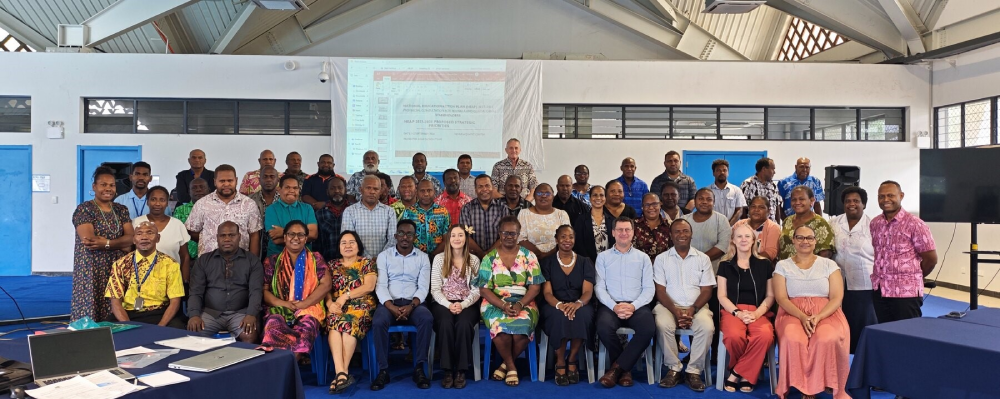
Group photo: Stakeholders attending the launch of the national consultation for the NEAP 2027–2031 at the National Aquatic Centre in Honiara.
MEHRD LAUNCHES NATIONAL CONSULTATION FOR THE 2027–2031 NATIONAL EDUCATION ACTION PLAN
HONIARA, 1 September 2026 – The Ministry of Education and Human Resources Development (MEHRD) today officially launched the national consultation for the development of the National Education Action Plan (NEAP) 2027–2031 at the National Aquatic Centre in Honiara.
The two-day consultation, held from 1–2 September 2026, brings together provincial governments, education providers, school leaders, teachers, student representatives, youth and women, development partners, faith-based organisations, non-government organisations, civil society organisations, MEHRD officials and representatives of the Solomon Islands Government.
The NEAP 2027–2031 will serve as the education sector’s principal five-year implementation plan. It is grounded in a planning framework that links Sustainable Development Goal 4, the Pacific Regional Education Framework, the Solomon Islands National Development Strategy, the Education Strategic Framework 2015–2030, successive National Education Action Plans and MEHRD annual work plans.
Education plan must reflect the voices of the nation
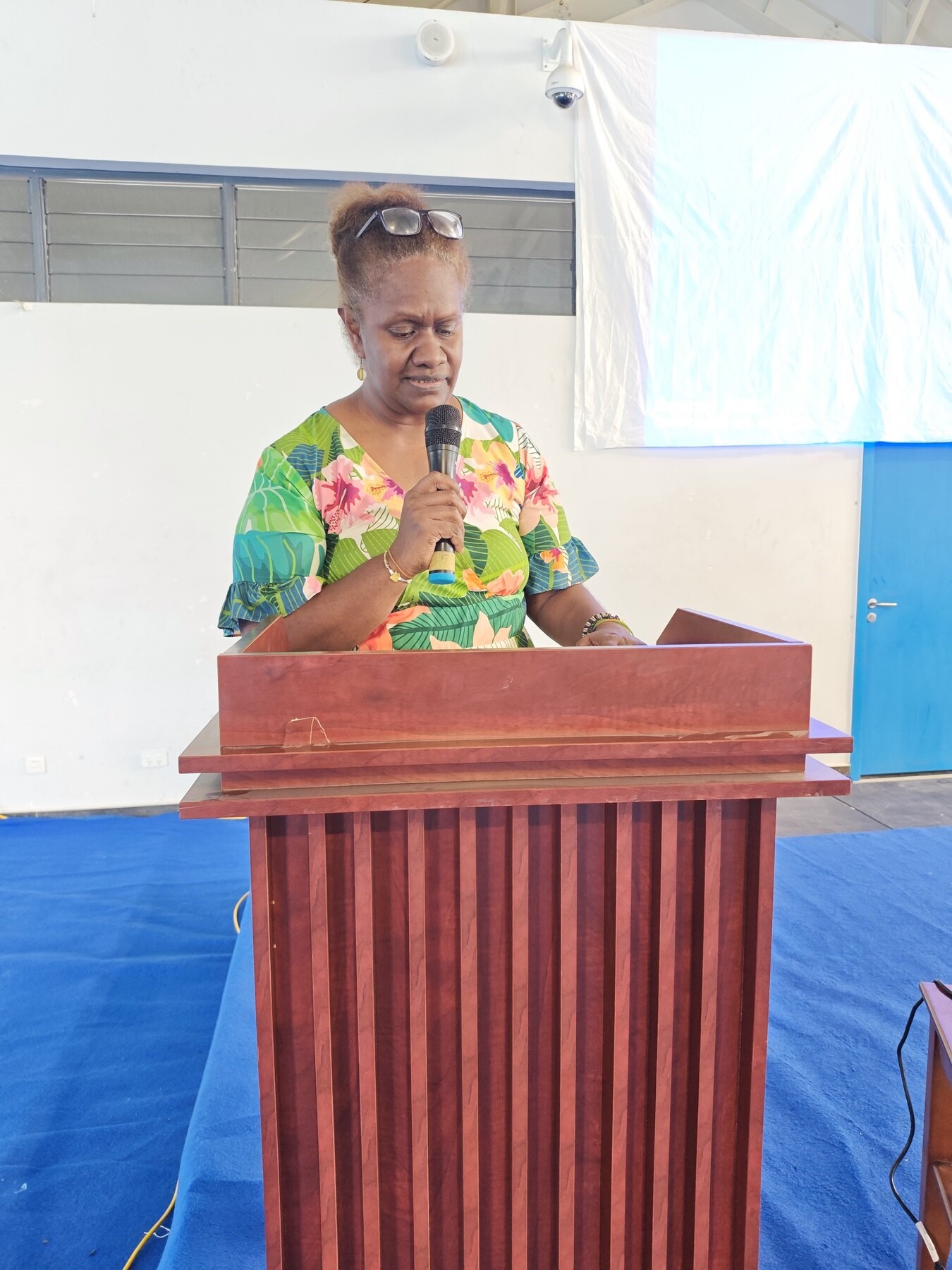
MEHRD Supervising Permanent Secretary Mrs Linda Wate delivers the official opening statement and launches the consultation for the NEAP 2027–2031.
Delivering the official opening statement, MEHRD Supervising Permanent Secretary Mrs Linda Wate said the new NEAP must not be viewed simply as a Ministry document, but as a national education plan belonging to all Solomon Islanders.
She said the plan must reflect the experiences, aspirations, challenges and priorities of the provinces, schools, teachers, learners, families and communities. “We cannot shape the future of education from Honiara alone,” Mrs Wate said.
Mrs Wate encouraged participants to examine honestly the achievements and challenges of the current NEAP 2022–2026 and determine what the education sector should continue, stop or begin doing differently. She stressed that learners must remain at the centre of every discussion and decision.
She also emphasised that inclusion must meaningfully address the needs of children in remote and rural communities, learners with disabilities and additional learning needs, girls and boys, young people at risk of dropping out, and others who experience barriers to quality education.
Provincial ownership, she said, would be essential because education challenges and service-delivery conditions vary significantly between urban centres and remote island communities. The new plan must therefore provide clear national direction while remaining responsive to provincial and local realities.
Mrs Wate called for a practical plan that clearly identifies intended outcomes, responsibilities, resources, timelines and measures of progress. She also urged government, development partners and communities to work towards one national education agenda, one set of priorities and coordinated implementation.
Development partners reaffirm support
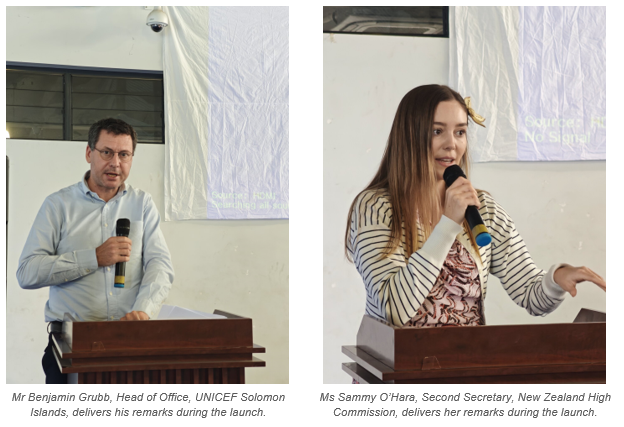
Mr Benjamin Grubb, Head of Office, UNICEF Solomon Islands, addressed the launch and reaffirmed UNICEF’s support for an inclusive, equitable and evidence-informed national education plan centred on the needs, rights and wellbeing of every child.
Ms Sammy O’Hara, Second Secretary, New Zealand High Commission, also addressed participants and reaffirmed New Zealand’s continuing partnership with the Solomon Islands Government and its support for national education priorities.
Consultation to validate and prioritise strategies
During the consultation, participants will consider a consolidated analysis of the education sector, including achievements, continuing challenges and recommendations for improvement. They will review proposed strategic priorities using a “Start–Stop–Continue” approach to identify effective strategies that should continue, approaches that should stop or be revised, missing interventions and priority actions for implementation from 2027.
Participants will also hear the perspectives of students and parents and work towards consensus on the key recommendations to be incorporated into the final NEAP 2027–2031.
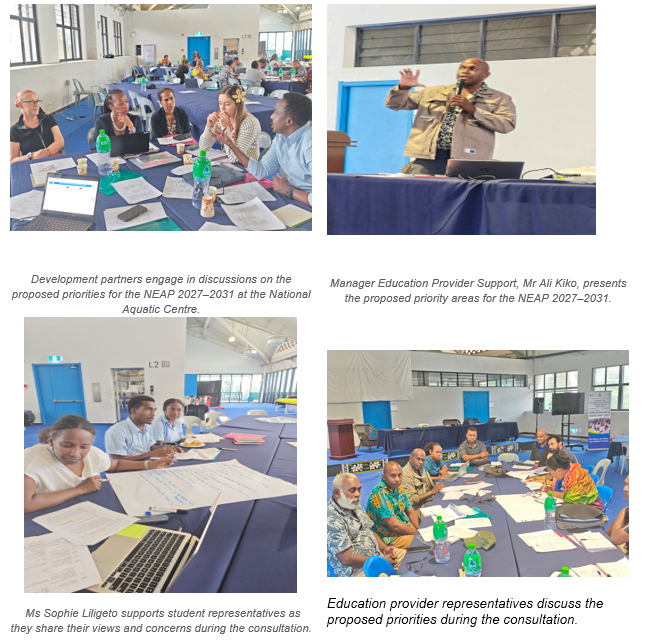
The consultation represents an important opportunity for education stakeholders to collectively shape a practical, achievable and inclusive plan that improves learning and supports the wellbeing of every learner in Solomon Islands.
The workshop will conclude on Wednesday, 2 September 2026.
ENDS////
For media enquiries: Ministry of Education and Human Resources Development (MEHRD)