

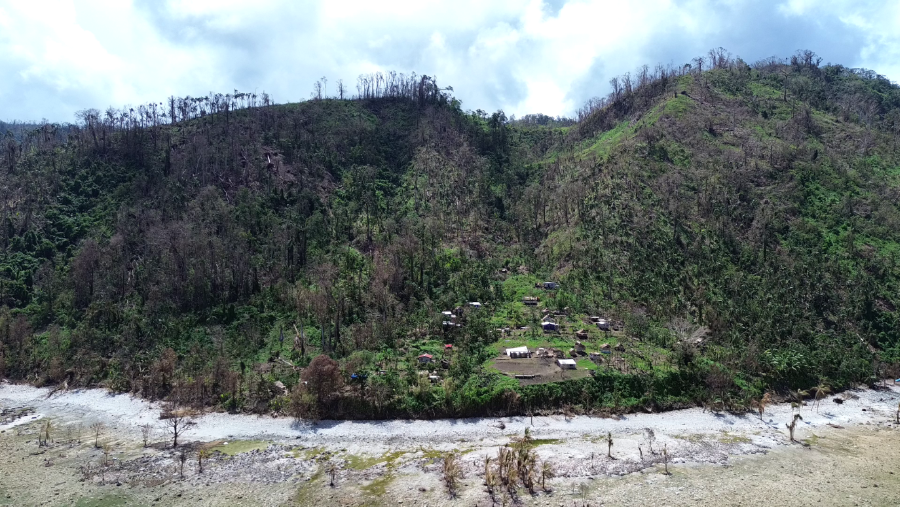
Airel shot of Saevuke village showing the damages to the village and environment following Tropical Cyclone Maila
Initial MALD Assessment Confirms Widespread Agricultural Damage in Areas Heavily Impacted by Tropical Cyclone Maila in Western Province
The Ministry of Agriculture and Livestock Development (MALD) initial assessment of areas affected by Tropical Cyclone Maila in Western Province, confirmed extensive and widespread damage to agricultural livelihoods across coastal communities.
Field evaluations and community reports from Ranggo Island (Saevuke) and Simbo indicate severe destruction of food gardens, fruit trees, and coconut plantations due to powerful winds, storm surges, and significant saltwater intrusion. Field observations and community accounts from Saevuke on Ranggo Island and Simbo show that storm surges, combined with powerful winds, forced seawater inland, destroying vital food sources and income generating crops.
The impact has resulted in the loss of critical food sources and income generating crops for many households that depend on small scale farming and coconut production for both subsistence and trade.
Many villagers depend on small scale farming and coconut production for both subsistence and market sales to Gizo and Honiara.
Susan Liton of Saevuke described the devastation to her community’s livelihood, noting that even resilient coastal gardens were unable to withstand the force of the cyclone.
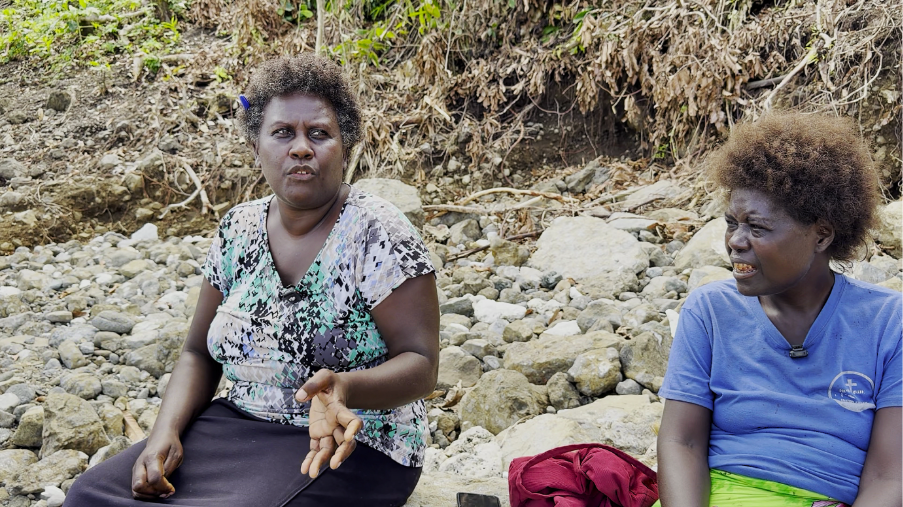
Susan Liton from Saevuke, Ranggo Island
“When the cyclone and waves came, it swept everything off the land. Most of the crops and vegetation we survived on have now been washed away. After the sun came out, we saw that the vegetation had dried up, turned brown, and died,” she said.
The impact has been particularly severe due to the geography of affected areas, where villages are located along steep coastal cliffs. Despite this, waves driven by strong winds reached high elevations, leaving behind salt deposits that continue to damage crops.
While some surviving plants have been replanted, food availability remains limited, with many families now relying on rice, fallen bananas, and seafood gathered from nearby reefs.
In Simbo, villagers reported similar experiences. Nestar Iputu described how the cyclone intensified gradually before bringing destructive conditions inland.
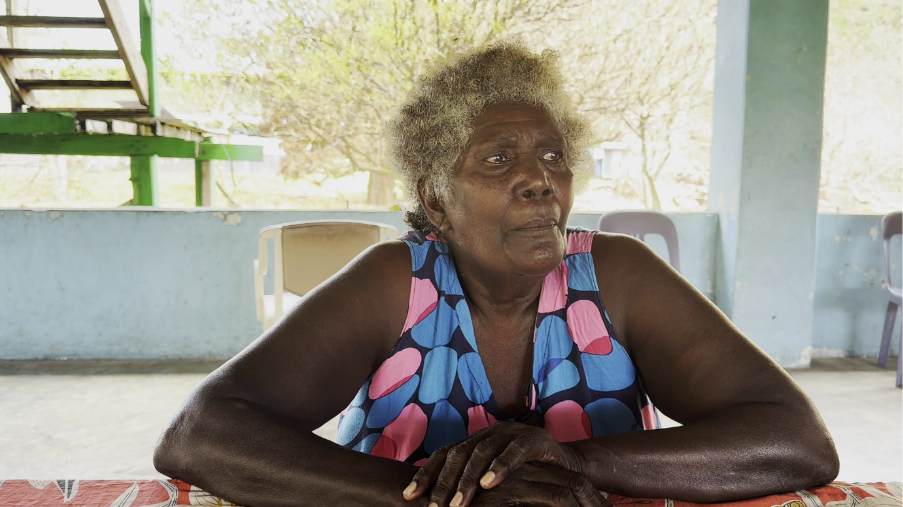
Nestar Iputu from Simbo
“The strong wind came with something that looked like fog, but it was the sea being carried into our gardens and plantations,” she explained. After the cyclone, many plants and trees died, and the crops we tried to harvest were rotten.”
The loss of fertile gardens is raising concerns about food security and nutrition, particularly among families with young children. Simbo’s volcanic soil had previously supported thriving fruit trees and coconut plantations, which also served as the community’s primary source of income. The destruction of these resources has left many households uncertain about their ability to recover economically.
Chris Boti from Simbo emphasized the urgency of agricultural support.
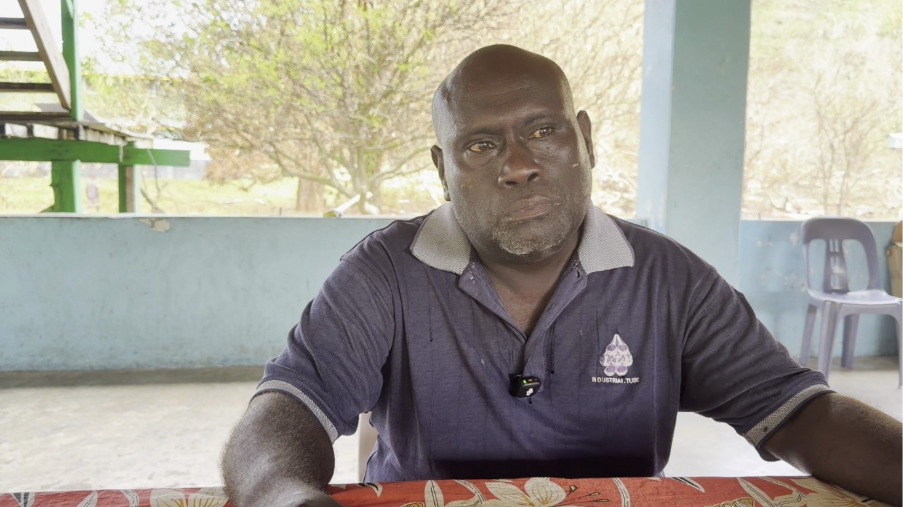
Chris Boti from Simbo
“Within two months, all our gardens will be totally destroyed with nothing edible left,” he said. Planting materials and seeds are our most pressing needs. Our coconut plantations, which are our biggest source of income, is now slowing dying out, in the past week all the coconut trees have turned red and brown in colour,” he said.
Communities are urgently requesting support from responsible government authorities in the form of essential farming and recovery tools. These include chainsaws to clear fallen trees from villages and gardens, as well as hoes, garden knives, and files to support land preparation. Such tools are critical to enable families to restart gardening activities and begin replanting crops.
MALD Extension Services Department Director Andrew Melenolu confirmed extensive agricultural damage across affected coastal zones. He said saltwater intrusion and land erosion have created significant challenges for recovery.
“The surging waves and strong winds have washed away plantation land and damaged crops with saltwater, replanting, especially for coconut plantations, will be difficult and will take time.”
MALD is recommending the mass production and distribution of fruit tree seedlings, including mango, guava, and citrus, to support recovery efforts. Additional assistance, including farming tools and technical support, is expected to be critical as communities begin to rebuild their agricultural livelihoods.
As part of the initial support MALD is supporting communities with the distribution of chainsaws to affected areas.
It is understood that the draft budget under the livelihood sector committee for agriculture recovery and food relief supplies to affected communities in the impacted provinces sits around SBD$45 million.
The draft budget for food relief and recovery is part of the overall response plan of the national government that will be delivered through NDOC.
Ends//
MALD Press Release