

Building Critical Care Capacity: China Medical Team Delivers Central Venous Catheter Training at NRH
Doctor from the 5th China Medical Team have wrapped up a hands-on training programme at the National Referral Hospital (NRH) in Honiara, teaching local clinicians to place femoral central venous catheters and manage critical-care vascular access. The course aims to build a local team that can perform the procedure independently.
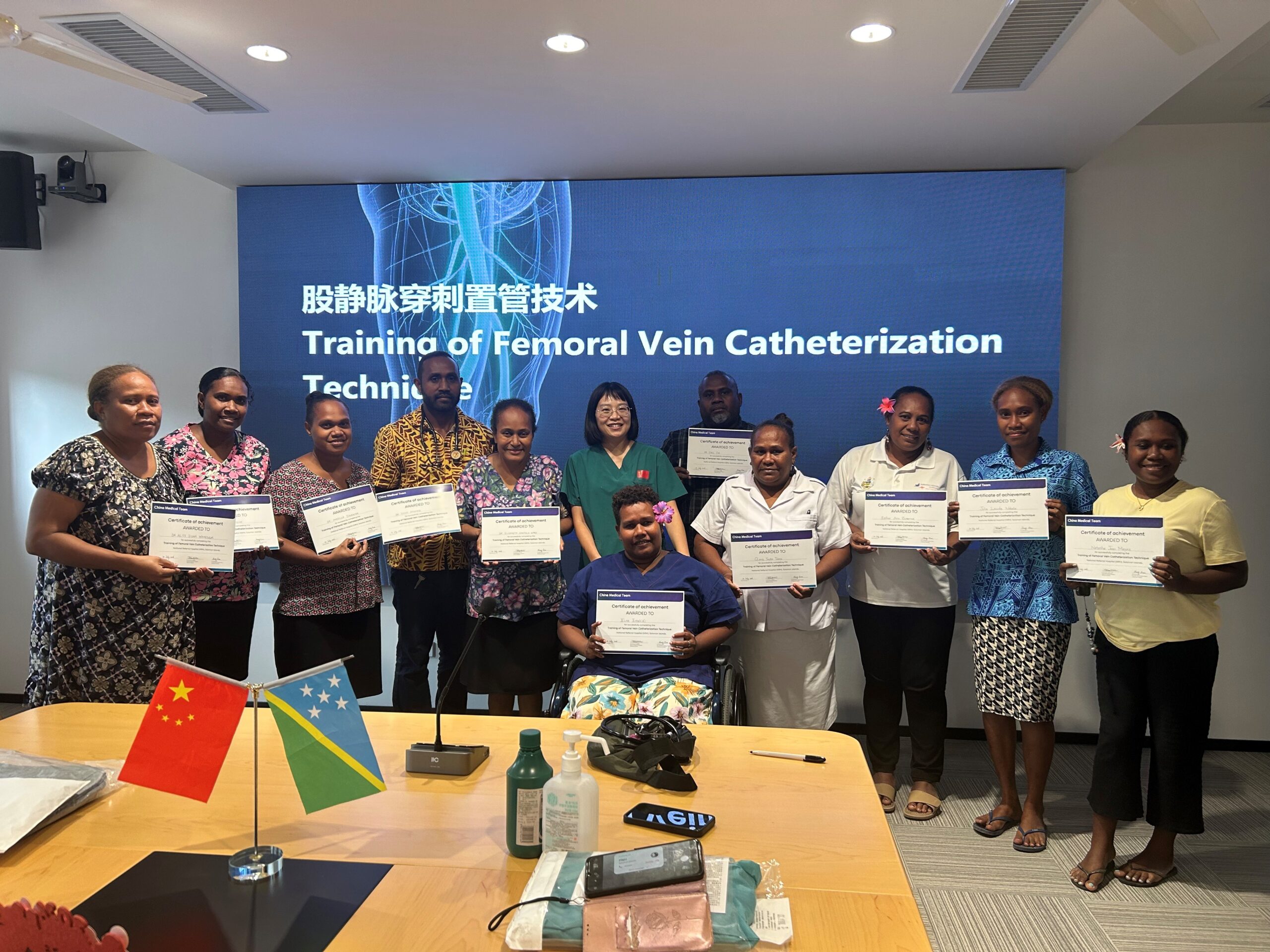
Training certificates were presented to the participating doctors and nurses
The training grew out of an emergency bedside call. When a critically ill patient urgently needed a femoral line and local clinicians were unable to establish the access themselves, Chinese stepped in and successfully performed the catheterization at the bedside, securing the vascular route needed for emergency medication and fluid resuscitation.
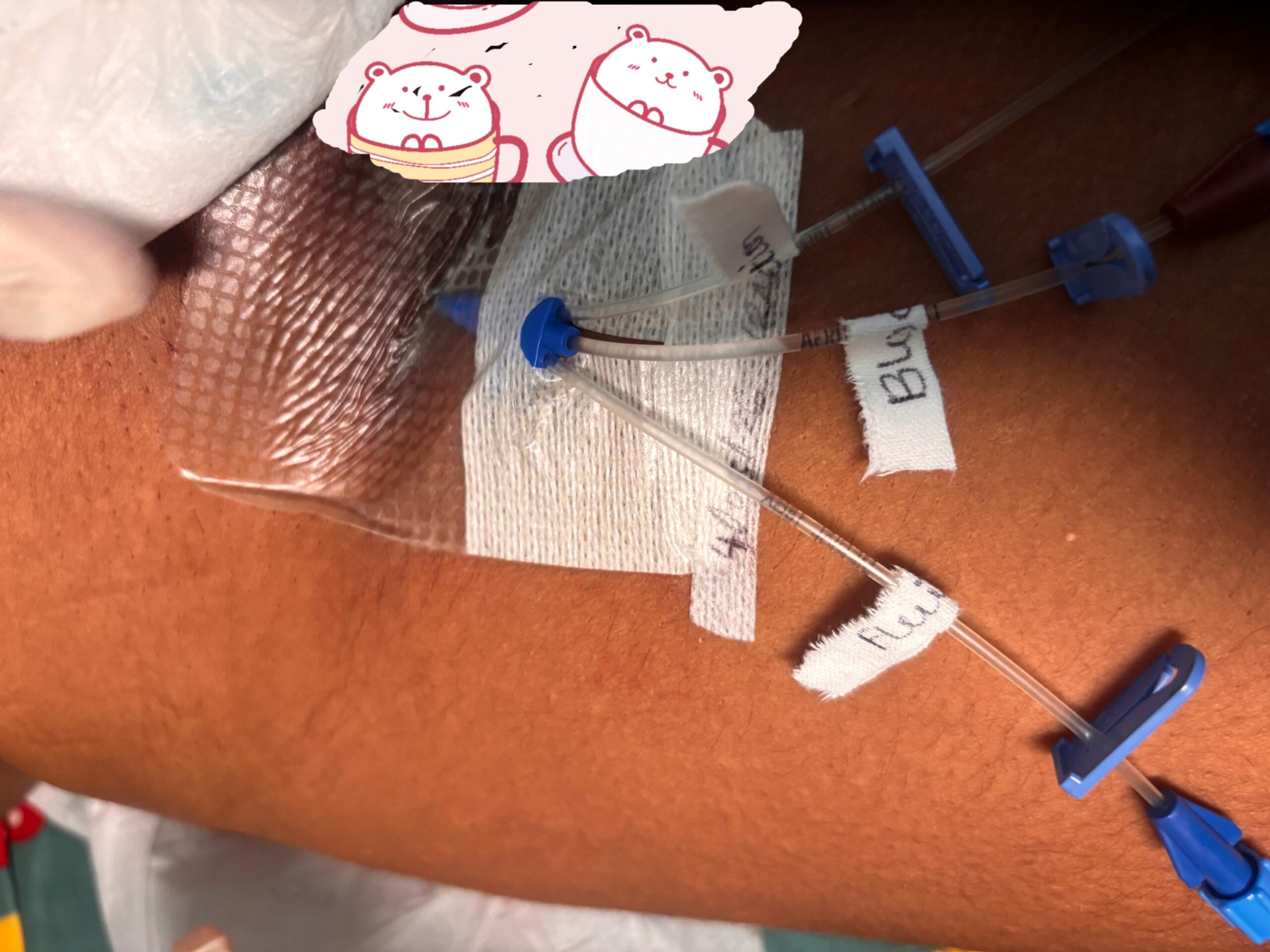
The femoral central venous catheterization was successfully performed
While assisting with the case, Chinese doctor observed that femoral central venous catheterization — a technique that rapidly establishes reliable vascular access for emergency resuscitation, haemodialysis and critical-care medication delivery — had not yet been systematically mastered by some of the hospital’s clinicians. As the Chinese saying goes, “it is better to teach a person to fish than to give him a fish.” Rather than resolving a single bedside crisis, the team set out to address the underlying challenge: turning an emergency procedure into a hospital-wide training programme.
LEARNING THROUGH PRACTICE
The Chinese medical team quickly carried out a needs assessment among frontline clinical staff. Based on the feedback, a dedicated training programme was tailor-made, drawing on single-use central venous catheter insertion kits donated by China. A standardized course on femoral vein catheterization was then organized for NRH clinicians.
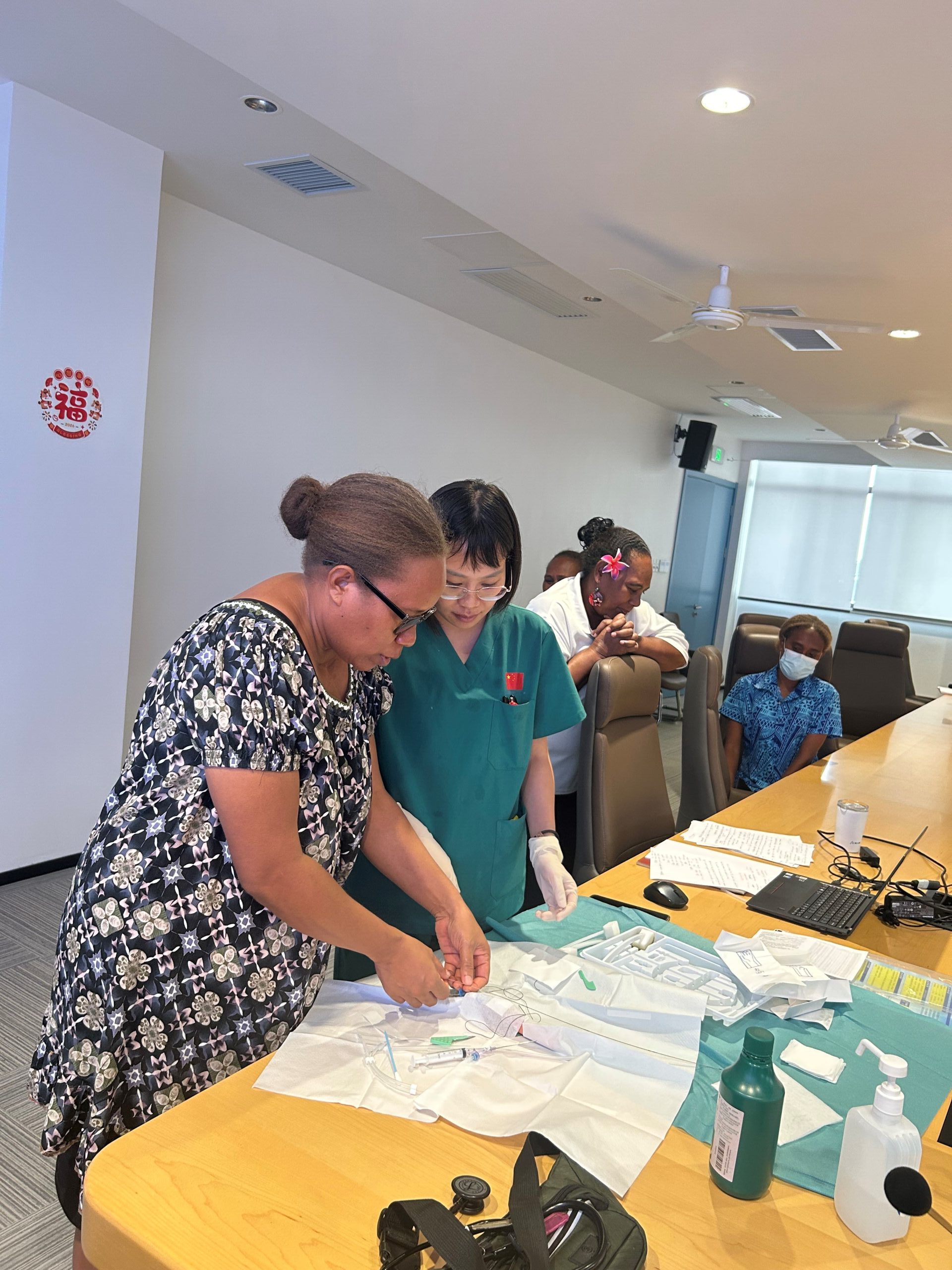
Dr. Zheng Qian conducted hands-on training on simulation models, and one-on-one coaching
During the classroom sessions, Dr. Zheng Qian, a nephrologist with the Chinese medical team, delivered systematic lectures covering four modules: regional anatomy of the groin, standard operating procedures, key practical points, and strategies for managing difficult punctures. To make the learning stick, she combined video demonstrations, hands-on practice on simulation models, and one-on-one coaching.
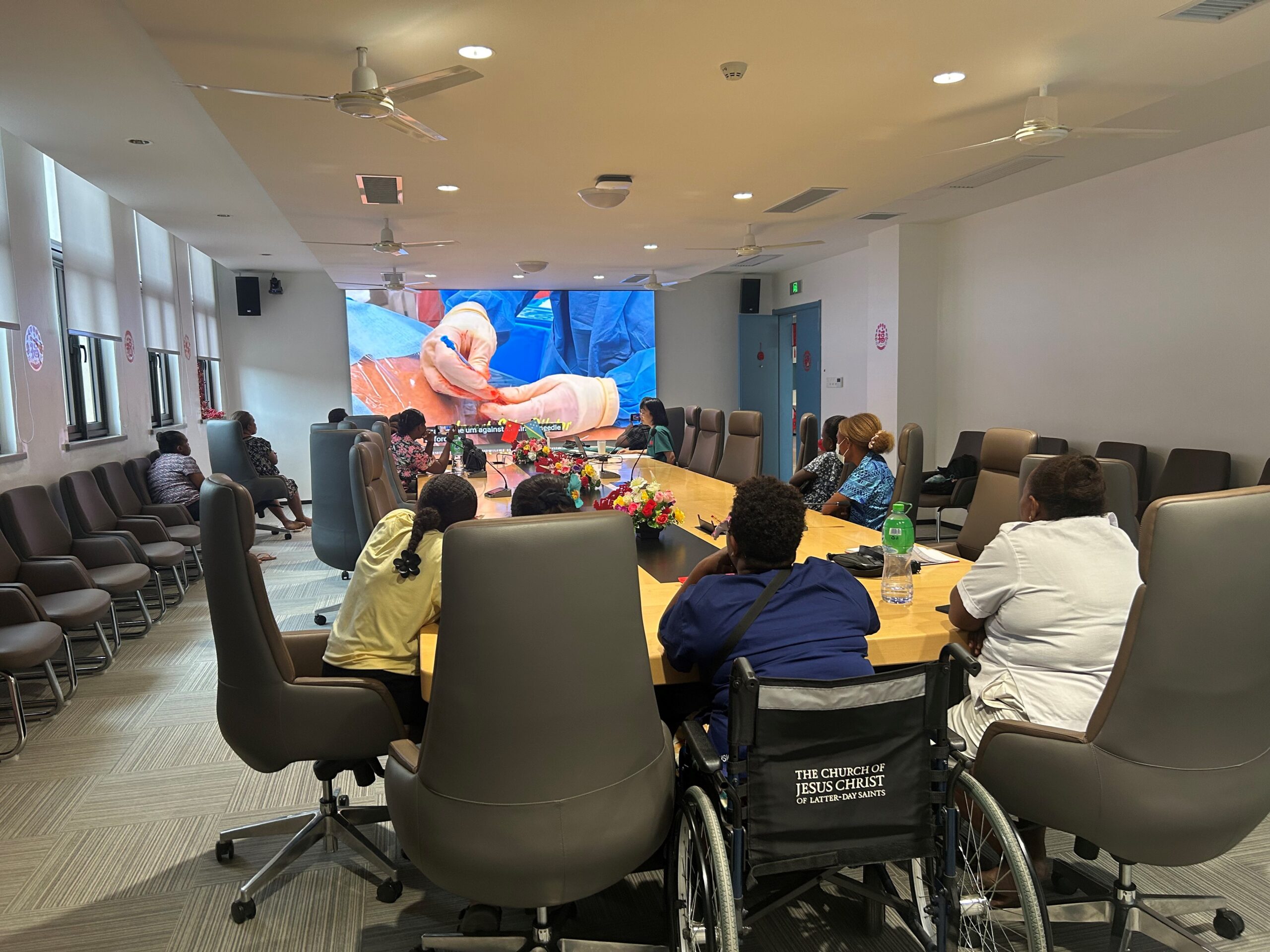
Dr. Zheng Qian she played video demonstrations
She walked trainees through the core skills of ultrasound-guided puncture and the Seldinger technique—the standard guidewire-based method for placing central lines — refining every step, from local anaesthesia and skin preparation to catheter securement and dressing. The femoral approach was chosen for training because its anatomical landmarks are clear and the site can be accessed rapidly, which matters most in emergency resuscitation. The goal, she explained, was to help local doctors grasp not only the theory behind the procedure, but the practical confidence to use it on their own patients.
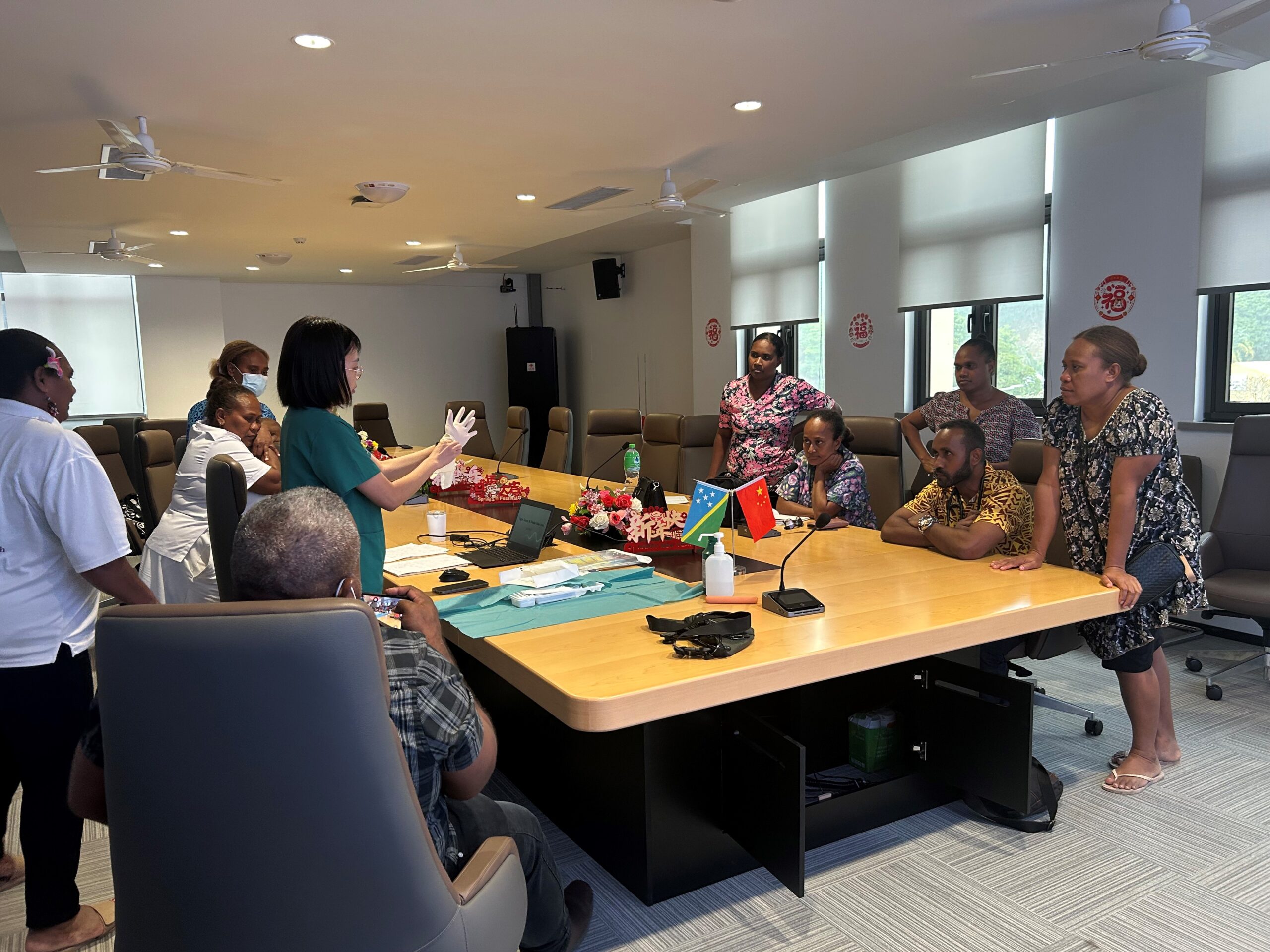
Dr. Zheng Qian walked trainees through the core skills of ultrasound-guided puncture and the Seldinger technique
FROM EQUIPMENT TO EXPERTISE
The programme received strong support and recognition from NRH management. At the closing ceremony, the Chinese team presented training certificates to the participating doctors and handed over more than 40 sets of donated single-use central venous catheter insertion kits to Elizabeth Wore, Director of Internal Medicine.
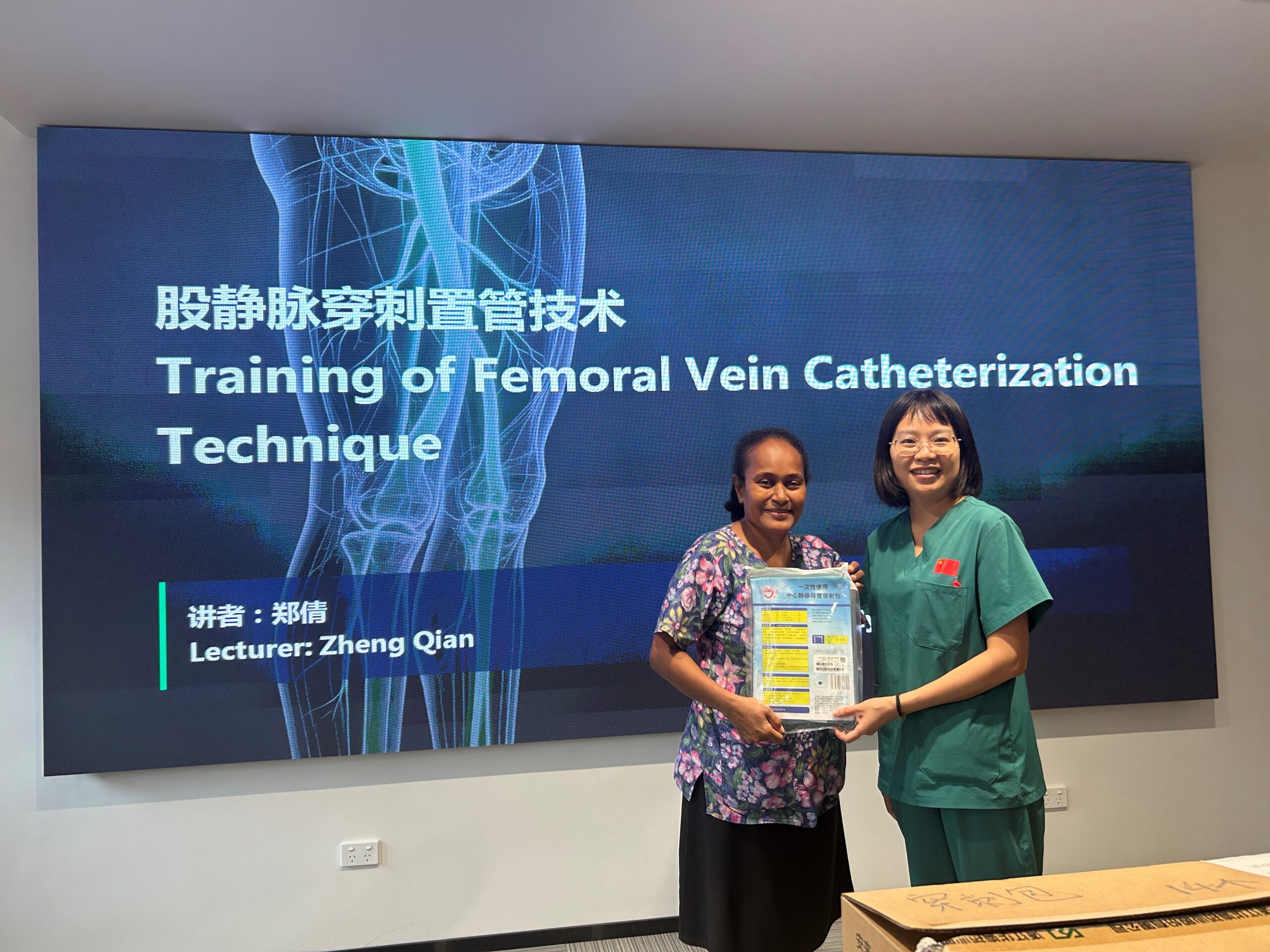
Chinese attending physician Dr. Zheng Qian handed over more than 40 sets of donated single-use central venous catheter insertion kits to Elizabeth Wore (right side)
“The supply of kits”, the team leader Dr.Chu Liangzhao noted, “means local clinicians will have not only the skills but also the materials to use them, allowing the technique to become part of routine hospital practice and ensuring the training delivers lasting results.”
By sending both medical supplies and professional know-how, the training is presented as a concrete example of what China-Solomon Islands health cooperation looks like in practice: combining material assistance with capacity building. It fills a technical gap in establishing central venous access and strengthens the hospital’s overall capacity in emergency critical care and haemodialysis.
“We want to leave behind a local medical team — one that keeps serving the people of Solomon Islands long after the Chinese experts have returned home,” said Chu Liangzhao, leader of the 5th China Medical Team in Solomon Islands.
By closely matching training to real clinical needs and passing on clinical skills and experience to local medical workers, the team is putting into practice the founding mission of China-Solomon Islands health cooperation: improving the health and well-being of Solomon Islanders and deepening the long-standing friendship between the two peoples.