Biosecurity Solomon Islands Takes Major Step Forward with Validation of National Biosecurity Strategy 2026–2036
The Ministry of Agriculture and Livestock Development (MALD), through Biosecurity Solomon Islands (BSI), has taken a major step towards strengthening the country’s biosecurity system with the validation of the Solomon Islands National Biosecurity Strategy 2026–2036.
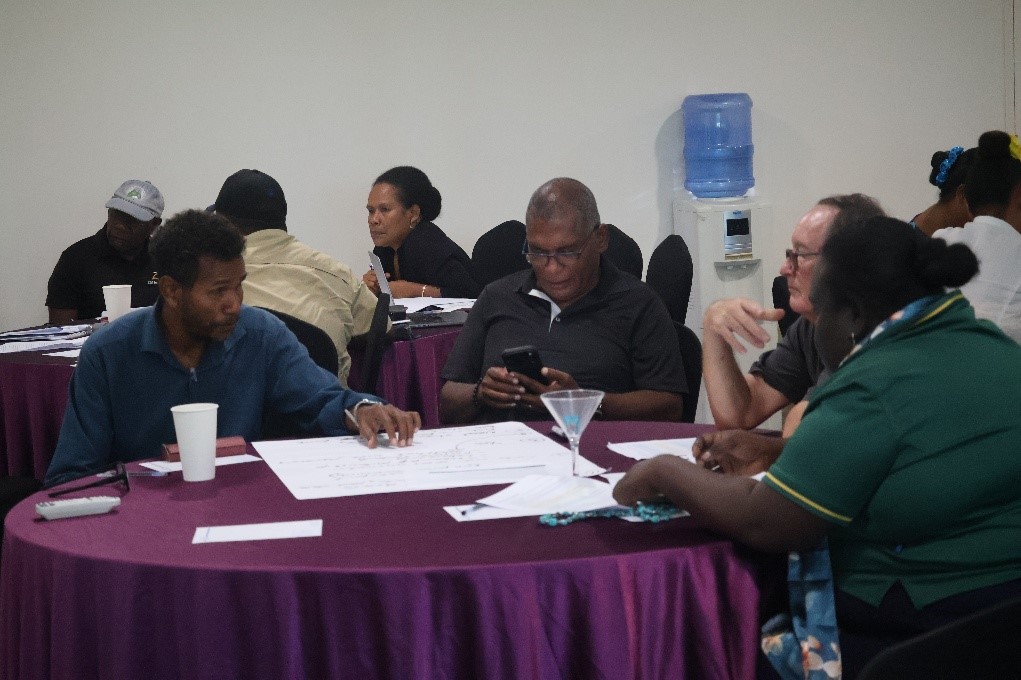
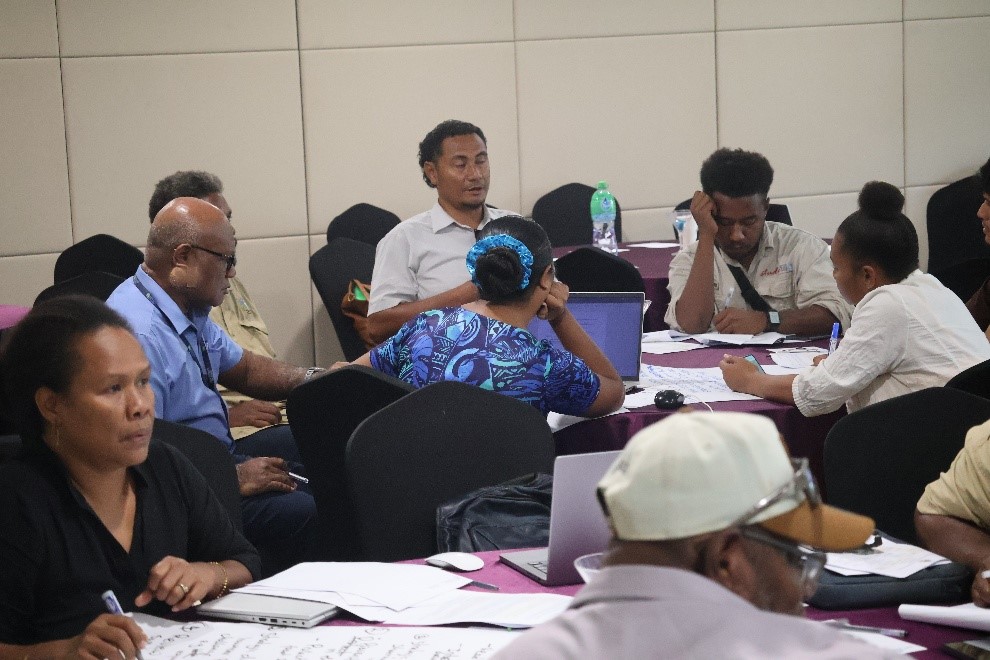
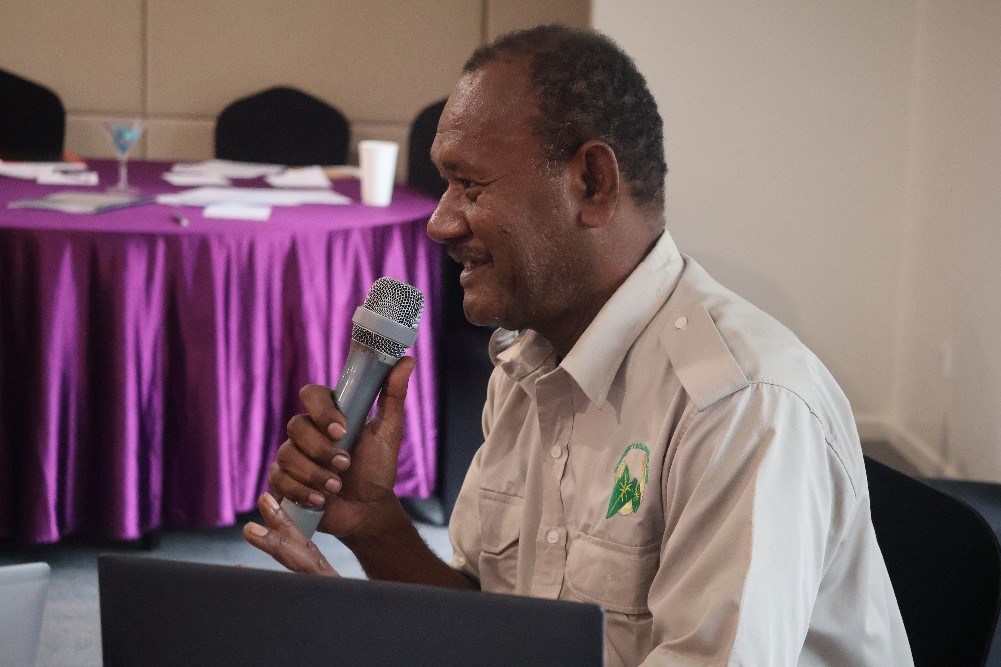
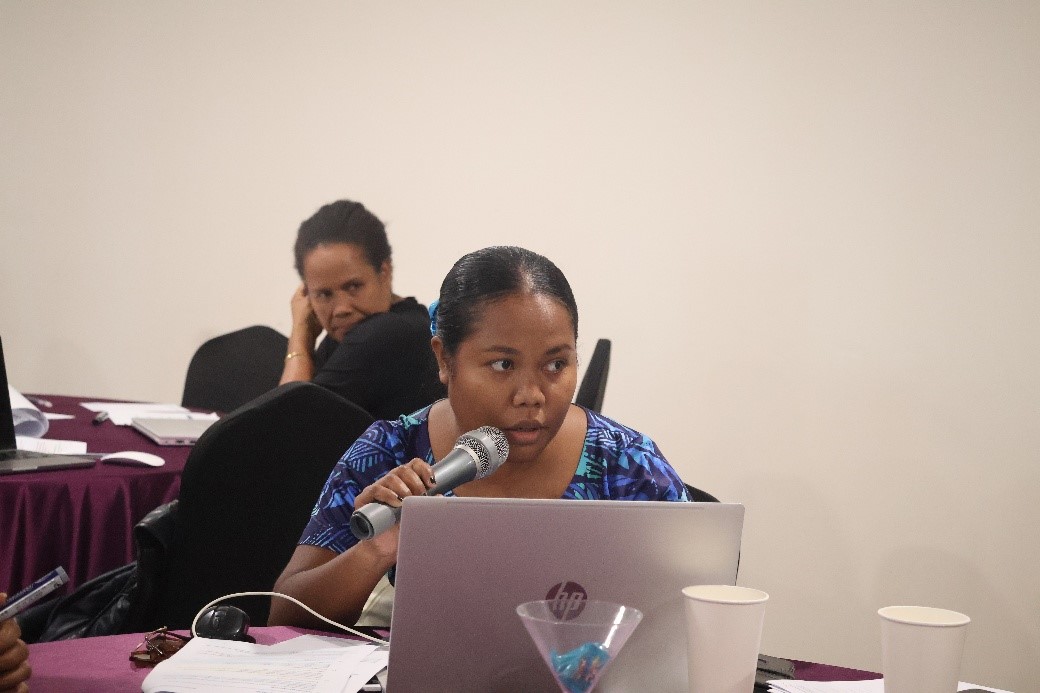
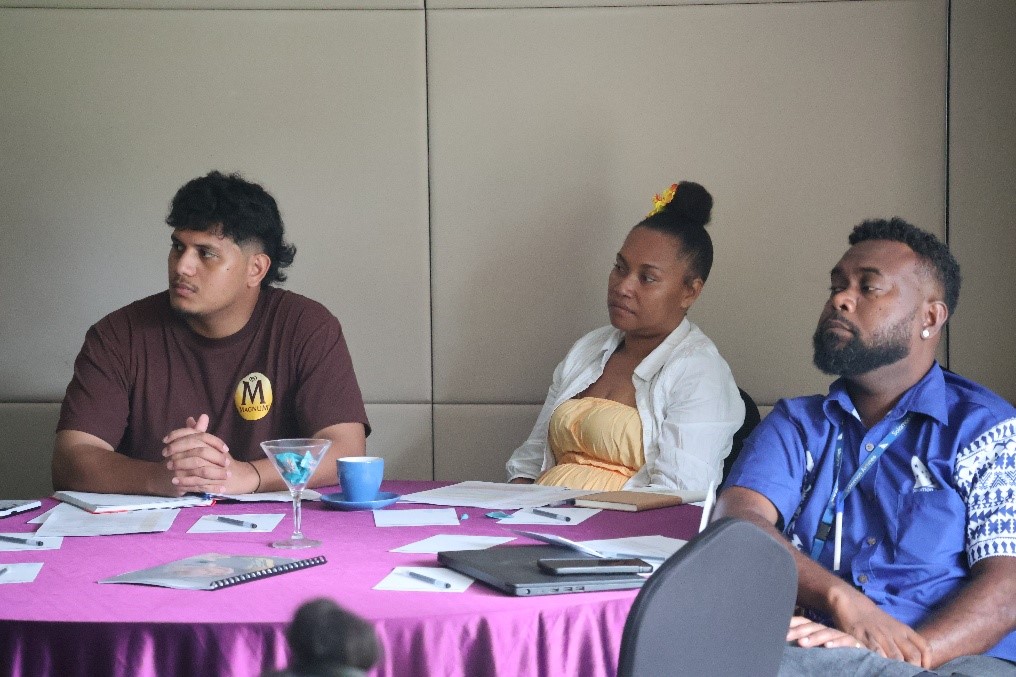
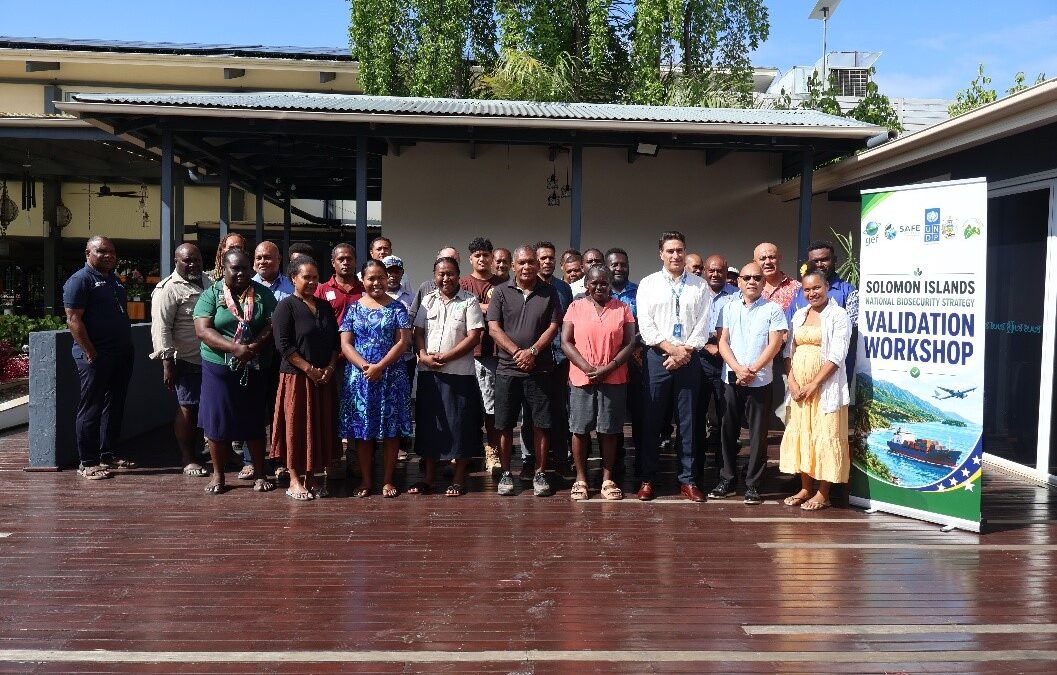
The Validation Workshop was held on the 31st of August at the Heritage Park Hotel in Honiara, bringing together representatives from Government ministries and agencies, the private sector and industry, provincial governments, academia, civil society, development and technical partners, and other key stakeholders.
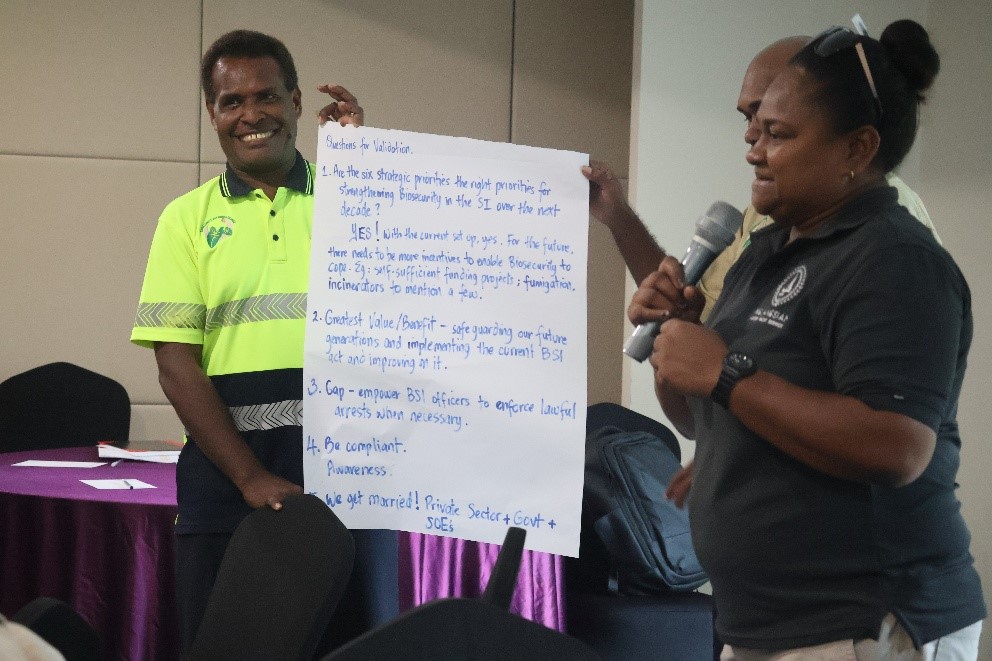
The workshop provided an important opportunity for stakeholders to review the proposed Strategy, provide feedback and validate its priorities and strategic directions for the next decade.
In her keynote address, MALD Acting Permanent Secretary Mrs Elda Wate emphasized that biosecurity should be viewed as a critical national investment rather than simply a regulatory requirement.
“Biosecurity is not simply a cost or another regulatory requirement. It is a necessary investment in protecting what we value,” Mrs Wate said.
She highlighted the significant risks posed by invasive pests and diseases, including the Coconut Rhinoceros Beetle and Giant African Snail, which have the potential to affect agriculture, forests, biodiversity, food security, livelihoods and the national economy.
Mrs Wate stressed that protecting Solomon Islands from biosecurity threats requires a whole-of-country approach, with responsibilities extending beyond Government agencies.
“Government agencies have responsibilities. Businesses and industries have responsibilities. Importers and exporters have responsibilities. Provinces and communities have responsibilities,” she said.
She called on stakeholders to work together to strengthen biosecurity at international borders and across provinces, communities, farms and businesses. She also encouraged participants to promote a simple message in their communities and workplaces: “See it. Report it. Work together.”
Mrs Wate further emphasized that the National Biosecurity Strategy must not become simply another Government document, but should provide a common direction for Government, industry, communities and development partners to strengthen the national biosecurity system.
Meanwhile, Mr Muhamed Sohail, Technical Advisor for the UNDP SAFE Project, acknowledged the leadership and ownership demonstrated by MALD and BSI throughout the development of the Strategy.
He described the process as a collective effort involving MALD, BSI, the SAFE Project, the United Nations Development Programme (UNDP), international technical experts and other stakeholders.
Mr Sohail stressed that Government ownership is critical to developing effective national strategies and policies because national institutions understand the country’s priorities, required actions and the stakeholders who need to be involved.
He noted that while validation represents an important milestone, the focus must now shift towards implementation.
“The next important milestone would be how we should see these priorities and how we should implement this strategy at the national scale,” Mr Sohail said.
The National Biosecurity Strategy 2026–2036 provides a framework to strengthen the role and functions of BSI while supporting the broader priorities of MALD and the Solomon Islands Government.
Importantly, the Strategy recognizes that biosecurity protection does not end at international borders.
As an island nation, Solomon Islands must also manage risks associated with the movement of plants, agricultural products, pests and diseases between islands and provinces.
MALD acknowledged the support of development and technical partners, particularly the UNDP SAFE Project for funding the revision and updating of the Strategy, the validation workshop and launch preparations. The Ministry also recognized the Australian Government, through DFAT and DAFF under the Biosecurity Development Program, for its continued support to strengthen biosecurity systems and staff capacity.
The validation workshop marks a significant milestone towards finalizing and implementing the National Biosecurity Strategy 2026–2036 and strengthening coordinated national action to protect Solomon Islands’ agriculture, natural resources, food security, livelihoods, economy and communities.
Ends//
MALD Press Release