

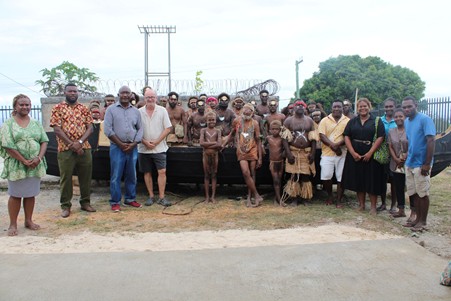
Representatives of some partners that contributed to the establishment of the Nambawan Haus Museum pose for a group photo with Mr. William Semu and Haroro Cultural group in front of the Binabina traditional war canoe.
Ngella traditional war canoe “Binabina” unveiled at Nambawan Haus Museum in Tulagi
31/07/2026, Honiara – Solomon Islands: On Monday 27 July, a day before the official opening of the Nambawan Haus Museum in Tulagi, Central Islands province, a remarkable cultural event took place with the unveiling of the Binabina traditional war canoe in the museum’s Vale Kiala (Kastom Canoe House).
The traditional war canoe was rowed from Haroro to Tulagi, where it was welcomed with a traditional ceremony at Tulagi Market, before being carried to the Nambawan Haus Museum for its official unveiling and display.
The Binabina was handcrafted by Mr. William Semu of Haroro village in Rodrick Bay, who is regarded as the last known builder of this traditional war canoe. It was constructed entirely with customary materials and techniques.
Speaking at a ceremony to welcome the Binabina, Premier Hon. Kenneth Sagupari said that when plans for the museum were in placed, discussions were on identifying an artefact to display in the museum that would represent the culture and identity of the people of Central Islands province.
“This is when we came up with the Binabina, and we then liaised with Mr Semu, who willingly undertook the task of handcrafting this traditional war canoe.
“Now the work is complete, and as premier, I thank Mr. Semu for crafting this war canoe, which had not been seen for more than three decades,” Sagupari said.
The display of the Binabina at the museum represents an invaluable contribution by the people of Central province to preserving not only their cultural heritage, but also the wider heritage of Solomon Islands.
Curator of Solomon Islands National Art Gallery under the Ministry of Culture and Tourism, Ms. Julie Ann Fakaia, commended the people and government of Central Islands province, along with Mr. Semu and the people of Haroro village, for crafting the Binabina, describing it as a remarkable cultural treasure of the province.
“This canoe is far more than a finely crafted vessel. It is a powerful symbol of our ancestors’ traditional knowledge, identity, maritime heritage and enduring cultural traditions,” she said.
Mr. Semu expressed gratitude to the Ministry of Culture and Tourism and the Central Islands government for the opportunity to contribute to the Nambawan Haus Museum through the crafting of the Binabina.
“I am happy that this initiative has given me the opportunity not only to build the Binabina but also to pass on the knowledge and skills to the younger generations.
“I am also proud that my work will continue to inspire not only our people, but also visitors from outside world who will come to the museum to learn, appreciate and celebrate our cultural heritage,” he said.
Mr. Semu also expressed commitment to construct other traditional Ngella canoes, including the Batubatu, Beko and Guligao for future display at the museum.
The Binabina is displayed in the Vale Kiala, located at the entrance of the museum and serves as one of the museum’s centrepieces. It symbolises pride, identity and ownership of the people of Ngella and Central Islands province of the museum.
ENDs/////////////
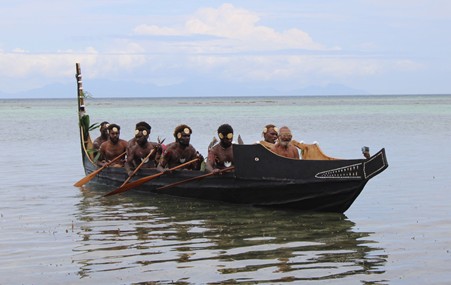
Arrival of the Binabina tradition war canoe at Tulagi.
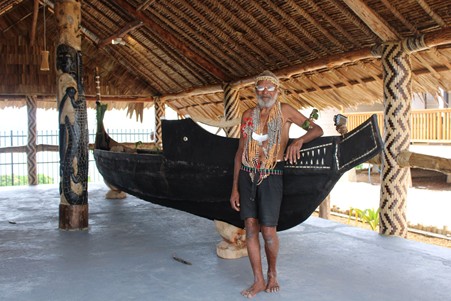
Handcrafter of the Binabina traditional war canoe, Mr. William Semu.
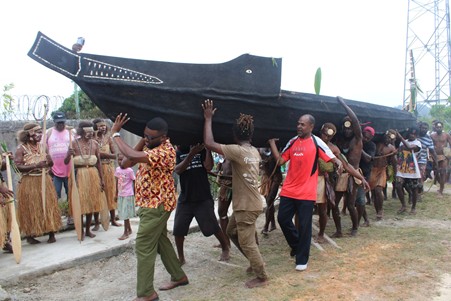
Premier Kenneth Sagupari leads his follow Kula people as they shouldered the Binabina canoe up the Tulagi hill to the Nambawan Haus Museum.
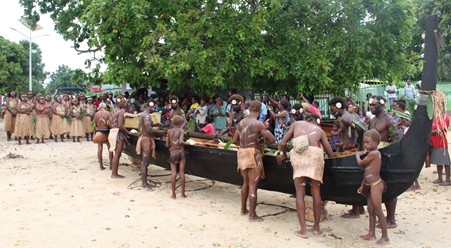
The Binabina is accorded with traditional welcome upon its arrival.