

MALD and UNICEF Strengthen Partnership to Improve School Meals and Nutrition in Solomon Islands
Officials from the Ministry of Agriculture and Livestock Development (MALD) and UNICEF Solomon Islands has convened a high-level meeting to review progress under the School Meal Improvement Project, reaffirming their shared commitment to improving child nutrition and strengthening school food systems in the country.
The meeting was held at the MALD Headquarters Conference Room in Honiara yesterday Wednesday the 8th April, and was chaired by the Permanent Secretary of MALD Dr Samson Viulu, with participation from senior ministry officials and UNICEF’s School Meal Improvement Project representatives.
The School Meal Improvement Project focuses on improving nutrition outcomes for school-aged children, particularly in Isabel and Western Provinces, through an integrated, school-based meal programme.
The initiative links nutrition, agriculture, climate resilience, and WASH (Water, Sanitation and Hygiene) interventions to address food and nutrition challenges in schools.
The project aims to:
- Ensure targeted schools have sustainable access to locally grown food;
- Build the capacity of schools to promote nutritious and sustainable diets;
- Improve WASH services and hygiene practices in schools; and
- Develop a multi-sectoral national school meal provision strategy to support scale-up.
The overall goal is to reduce the triple burden of malnutrition in the schools and ensure that students access healthy, safe and locally sourced meals in hygienic learning environments.
MALD Permanent Secretary, Dr Samson Viulu, said the partnership highlights the important role of agriculture in improving nutrition outcomes.
“By connecting schools with local farmers and strengthening technical support within MALD, we are ensuring that school meals contribute both to better nutrition for children and sustainable livelihoods for our communities,” the Permanent Secretary said.
The UNICEF’s School Meal Improvement Project provided updates on progress, including agriculture support, school nutrition assessments, improvements to kitchen facilities, and planned WASH infrastructure upgrades in selected schools.
School Meal Improvement Project Maternal and Child Health Specialist Dr. Ayaz Hussain, emphasized the importance of a coordinated, multi‑sectoral approach.
“School meals create a vital opportunity to improve children’s nutrition, learning and wellbeing. Our partnership with MALD, Ministry of Health and Medical Services (MHMS) and Ministry of Education and Human Resources (MEHRD), UNICEF is helping to build resilient school food systems that benefit children today and into the future,” he said.
UNICEF Officials briefed the ministry that tender for procurement of smaller farm machines and tools have been published and will close shortly. Dr. Ayaz said, “we expect to deliver the farm machines and tools to some of the schools in the third quarter of this year. The farm machines will help to reduce workload on boarding students while increasing productivity at the farms”.
Deputy Secretary Technical Mr. Hoota speaking in support of the initiative said, “MALD is concerned about the sustainability of the project especially post-funding phase. This is an area that both parties and recipient schools in particular must seriously consider”.
Contributing to the discussion of sustainability, the Director for Extension Services Mr. Melanolu suggested, “my department will likely allocate some of our staffs to the recipient schools to be stationed there full time”.
During the briefing, both MALD and the UNICEF reaffirmed their commitment to strengthening coordination, addressing implementation challenges, and ensuring the project is effectively integrated into ministry annual operational plans.
The partnership is expected to lay the foundation for a sustainable, climate-smart school meal programme that benefits children, communities, and local farmers.
The School Meal Improvement Project will be implemented over a three-year period (February 2025 – February 2028) and represents an important investment in the health, nutrition, and future of Solomon Islands children.
It is funded by the government and people of Japan through the Embassy of Japan Office in Honiara.
Ends///
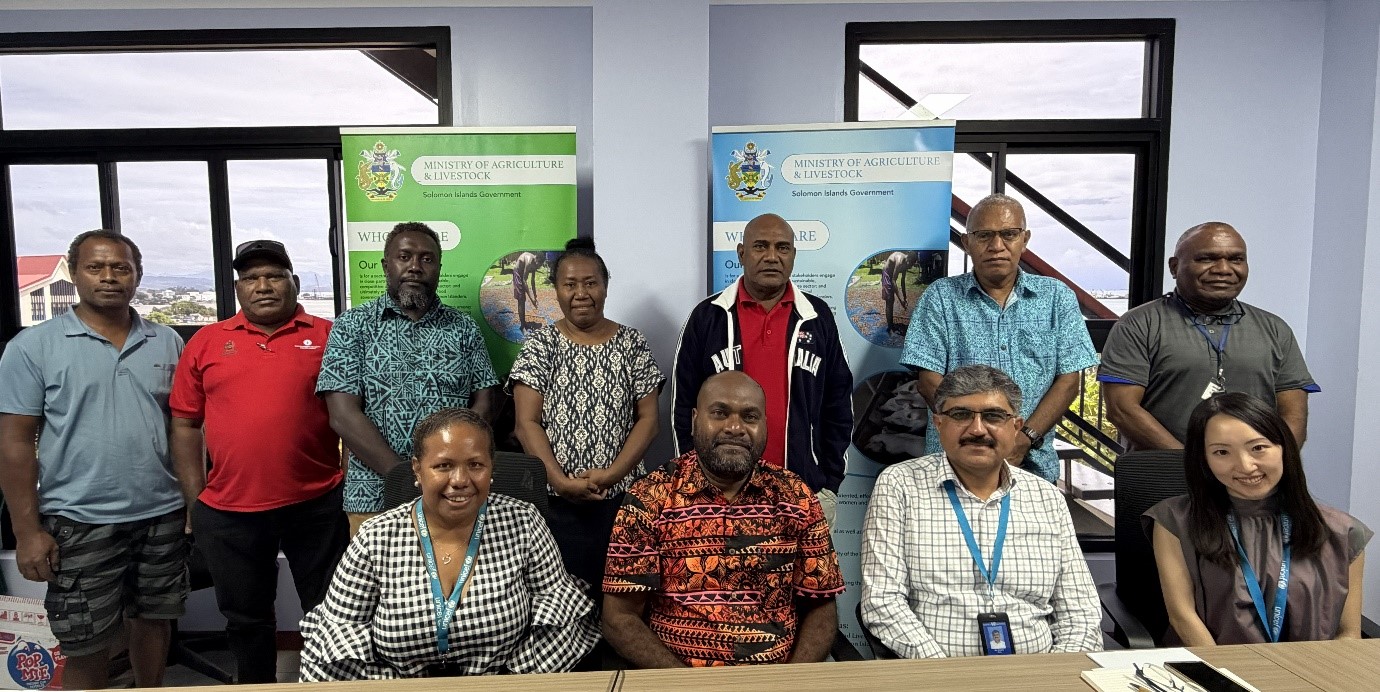
MALD Permanent Secretary, Dr Samson Viulu (sitting 3rd from right) and School Meal Improvement Project Maternal and Child Health Specialist Dr. Ayaz Hussain (sitting 2nd from right).
MALD PRESS RELEASE