

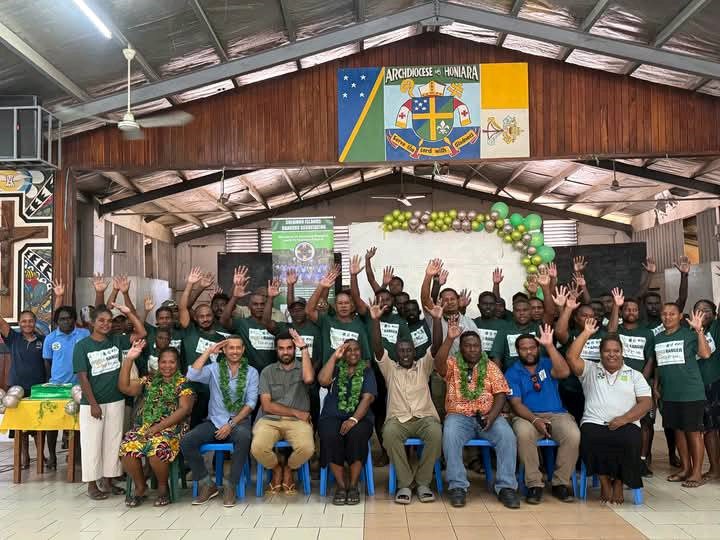
(Group photo: Environment and Conservation Division (ECD) staff with Solomon Islands Rangers Association reps including staff from Ecological Solution Foundation and from Islands Knowledge Institute with participating rangers and stakeholders) Source: FB
MECDM JOINS CELEBRATION OF INTERNATIONAL WORLD RANGERS’ DAY.
Ministry of Environment, Climate Change, Disaster Management and Meteorology (MECDM) through the Environment and Conservation Division, in collaboration with Solomon Islands Rangers Association, Ecological Solution Foundation and Islands Knowledge Institute celebrates The International World Rangers Day at the Holy Cross Hall in Honiara recently.
The World Rangers Day is celebrated annually on the 31st of July joining others around the world to commemorate and honor the dedication and bravery of rangers worldwide who protect natural and cultural places. .
This year’s theme is “Rangers Powering Transformative Conservation” with its intention to shine a light on the crucial role rangers play in driving and shaping change in conservation efforts across the world.
The day marks how rangers are not just frontline protectors, but are also dedicated to honoring the women and men, who with deep commitment and sacrifice to conservation work and are key contributors to addressing environmental problems such as illegal fishing, biodiversity loss, waste management and illegal logging.
In the Solomon Islands, there are more than 1,600+ rangers (on record), more than 900 Solomon Islands Rangers affiliated members and more than 50 Rangers for the 8 legally established Protected Areas- this day is dedicated to them.
These rangers serve as the frontline guardians of our forest, reefs, unique wildlife and our natural and cultural heritage, including the knowledge, kastom and stories that these places hold, and ensuring it is protected and managed for us today and the future generation.
This occasion provides a wonderful opportunity to reflect upon the exceptional work undertaken by our rangers- individuals who stand along the shores, paddle our rivers and seas and walk our forests, safeguarding the nation’s biodiversity and landscapes. Often placing their lives at risk to protect the biodiversity, ecosystems, and cultural landscapes valuable to them, their tribes, communities and even families.
Speaking during the celebration, on behalf of the Director of the Environment and Conservation Division, Chief Conservation Officer Agnetha Vave-Karamui said “our rangers exemplify the hope and resilience of Solomon Islands environmental stewardship”.
“They are the custodians of our nation’s rich biodiversity, cultural sites, forest and marine/coastal ecosystems-true sentinels of conservation, community service and sustainable development”.
Karamui said to all the rangers, we see you as leaders, protectors and rangers, who embody the spirit of conservation, guided by the legacies of your ancestors, the deep knowledge and kastom of the people, your land and waters. Your leadership, commitment and professionalism are key drivers of our progress towards resilient ecosystems that support the well-being and livelihoods of our communities.
To achieved all of this, partnership and collaboration are important pillars in the line of work and in the conservation sector. Government along with NGOs, CSO, community-based organisations and community leaders continue to made significant advances in environmental conservation and community empowerment. These include:
– Establishment and expanding reach of Rangers in our Protected Areas in Provinces and communities – ensuring resourcing and technical support is provided through our Rangers program to support enforcement and community outreach (e.g. EREPA Project a national project implemented in 4 Provinces supporting protected areas establishing and management)
– Capacity Building: Conducting training sessions for rangers, focusing on collaboration, policy and legislative development, and promotion of sustainable resource management projects.
– Strategic Partnerships: Forming alliances, partnerships and networks with organizations (both national and internationally) to support community-led conservation initiatives. The continuous contributions of our partners — including provincial governments, traditional leaders, community groups, law enforcement agencies, NGOs and even our young emerging leaders, is important.
– Community Engagement: Empowering local leaders (PA managers, rangers) through workshops on environmental governance, sustainable resource management, and nature conservation.
– Ranger’s Manual Guide and Facilitator’s Handbook: This is important tool developed with the support of United States Forest Service (USFS) for rangers to better understand their roles and responsibilities under relevant Government laws.
– Conducting baseline biodiversity assessments and promoting sustainable practices for forest and marine and coastal area protection. The work of organisations such as ESF, WWF, TNC, WorldFish, IKI including academic institutions such as SINU in building up awareness, improving the use of digital tools for enhancing data collection, analysis, and dissemination, science, capacity and best-practices that ultimately informs more effective conservation strategies is commendable.
Meanwhile, in her final remarks Ms. Agnetha Karamui said the challenges persist. The threats of illegal fishing, poaching, habitat destruction, and resource exploitation remain pressing concerns.
“We must acknowledge the need for improved resources, technical, financial, policy and legislative, and training for rangers, as their wellbeing, safety and partnership directly impacts the effectiveness and success of conservation efforts.
She said:
“May today’s commemoration serve to renew our collective attention to how we can ‘reimage’ and improve our partnerships, our support and our resourcing for our rangers”.
Attendees of the program are the members of the Solomon Islands Rangers network, participating rangers from the provinces, communities and church leaders, Government officials from the sector Ministries and the Provincial governments, Members of the CSOs, CBOs, NGOs and Development Partners.
END///