


MID Lab Advances Testing Capabilities but Government Support Needed
The Ministry of Infrastructure Development’s (MID) Construction Material Laboratory is making significant strides in providing quality assurance and comprehensive testing for construction materials. However, the lab’s potential as a vital economic resource within the construction sector remains underutilised due to a pressing need for greater government support.
Ishmael Alulu, the Acting Director of the Transport Infrastructure Management Services Division (TIMSD) and Deputy Director of Quality Assurance at the Lab, shared that the facility is currently operating at only 30% of its capacity. He emphasised there is still a gap in competent staffing, functional and calibrated equipment for laboratory testing.
“This lab strives for accreditation to fulfil its obligations as the nation’s only legal testing authority in the construction industry.
“Our current activities include site investigation, pavement testing, aggregate testing, soil testing, and geological assessments.
“With the National Building Code impending, we require significant initial investment in essential equipment, staff employment and training and continuous operation of the whole system,” Mr Alulu explained.
He noted that enhancing MID Lab’s capabilities will not only create employment opportunities but also establish rigorous quality assurance and checks for ongoing construction projects across the country. Major projects, including the Tina Hydro Project, the Bina Harbour Project, the Land and Maritime Connectivity Project and all the other government and non-government projects, rely on the lab for material testing.
“We generate between $200,000 and $300,000 in revenue per month through our testing activities for the government,” he said.
“With increased investment, we can expand our revenue streams, enhance our service offerings, and ensure that our practices align with international standards,” he added.
In partnership with the Solomon Islands National University, the lab is currently facilitating engineering students’ internships, providing them with hands-on technical training and practical experience to prepare them for future leadership roles in the construction industry. “Every day is bustling with activity at the lab, as our young civil engineers enthusiastically engage in their daily tasks,” added Mr. Alulu, referring to the ongoing collaboration with the Japan International Cooperation Agency (JICA) on the Interlocking Block Pavement (IBP) project, which aims to introduce innovative technologies to improve local road infrastructure.
Looking ahead, the government engineer expressed optimism about the forthcoming National Standard Building Bill, which aims to enhance regulation within the construction sector.
“The passage of this bill will empower us to act as the ‘watchdog’ of the construction industry.
“By guessing, 70% of building projects throughout the country are conducted without sufficient quality control oversight,” he cautioned.
The laboratory situated within the mechanical division compound welcomes construction teams seeking to have their materials tested.
-ends-
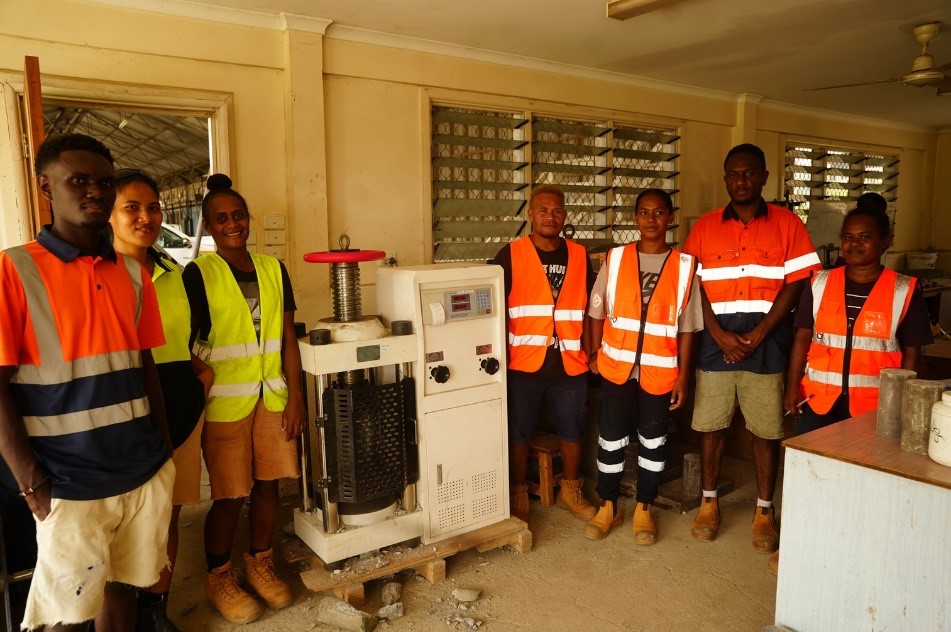
The lab is currently staffed by part-time engineers and students through a partnership with the Solomon Islands National University Faculty of Science & Technology. This collaboration not only offers students valuable hands-on experience in laboratory operations but also provides them financial support.
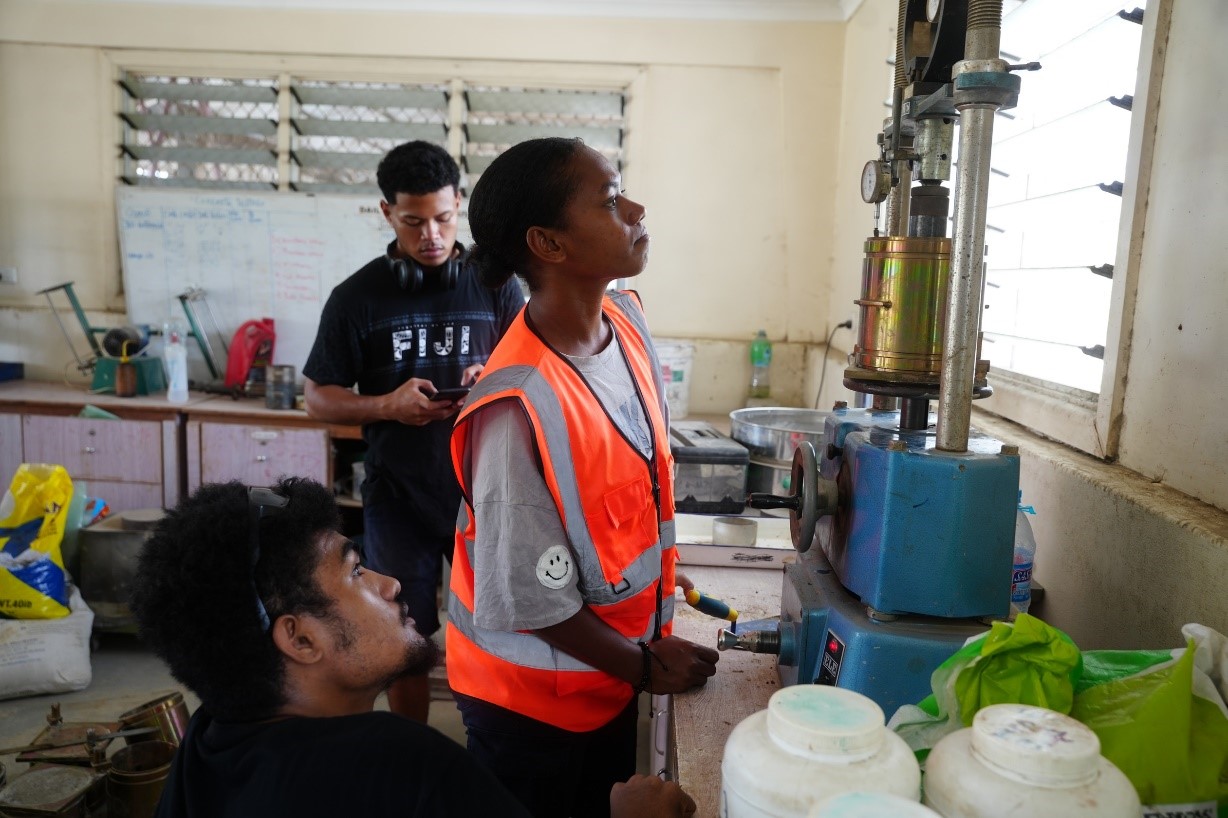
Every day at the lab is filled with energy and excitement as young civil engineers dive into their daily tasks. Here, they’re conducting soil tests using essential equipment that analyzes soil texture for construction sites.
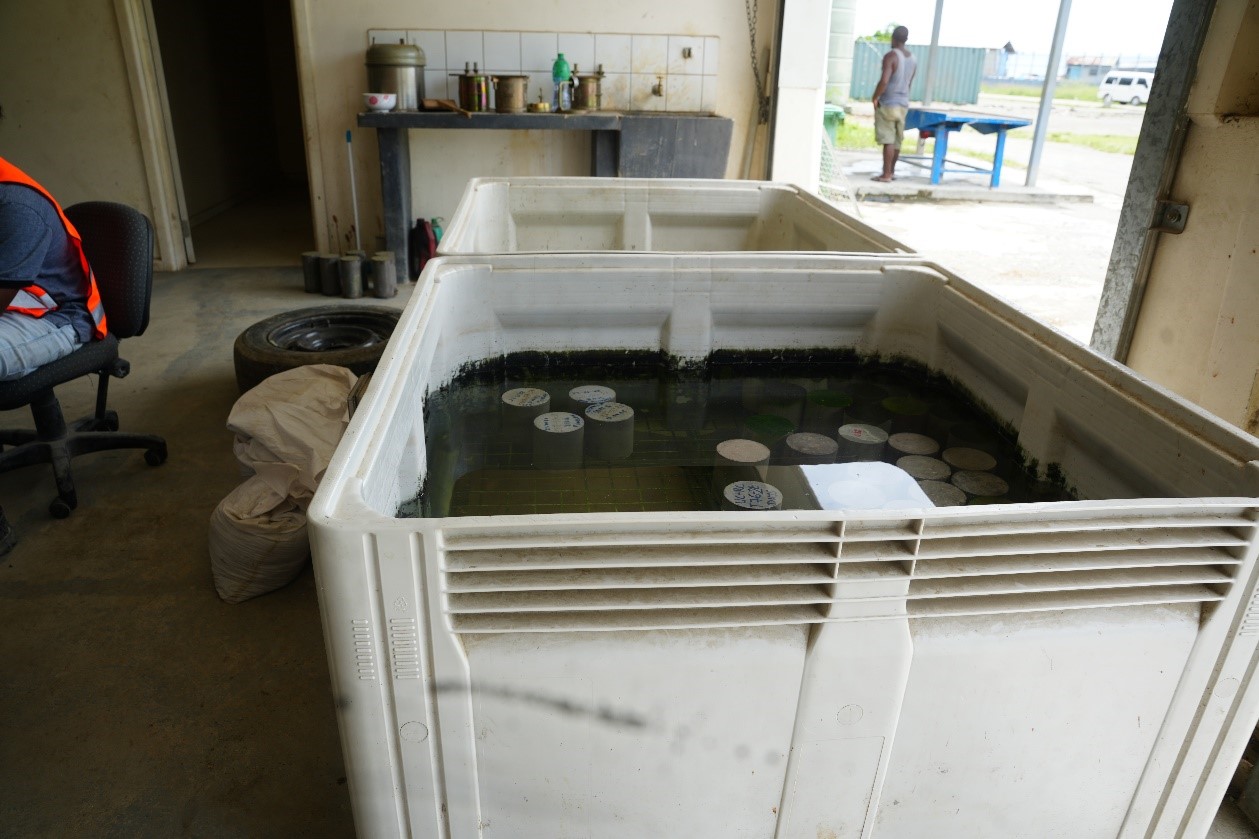
Tanks that are used for the ‘curing’ process for concrete blocks used in construction. The lab strives for accreditation to fulfil its obligations as the nation’s only legal testing authority in the construction industry. There is a need for expanding the testing services, modernizing the lab and specialized training programs.
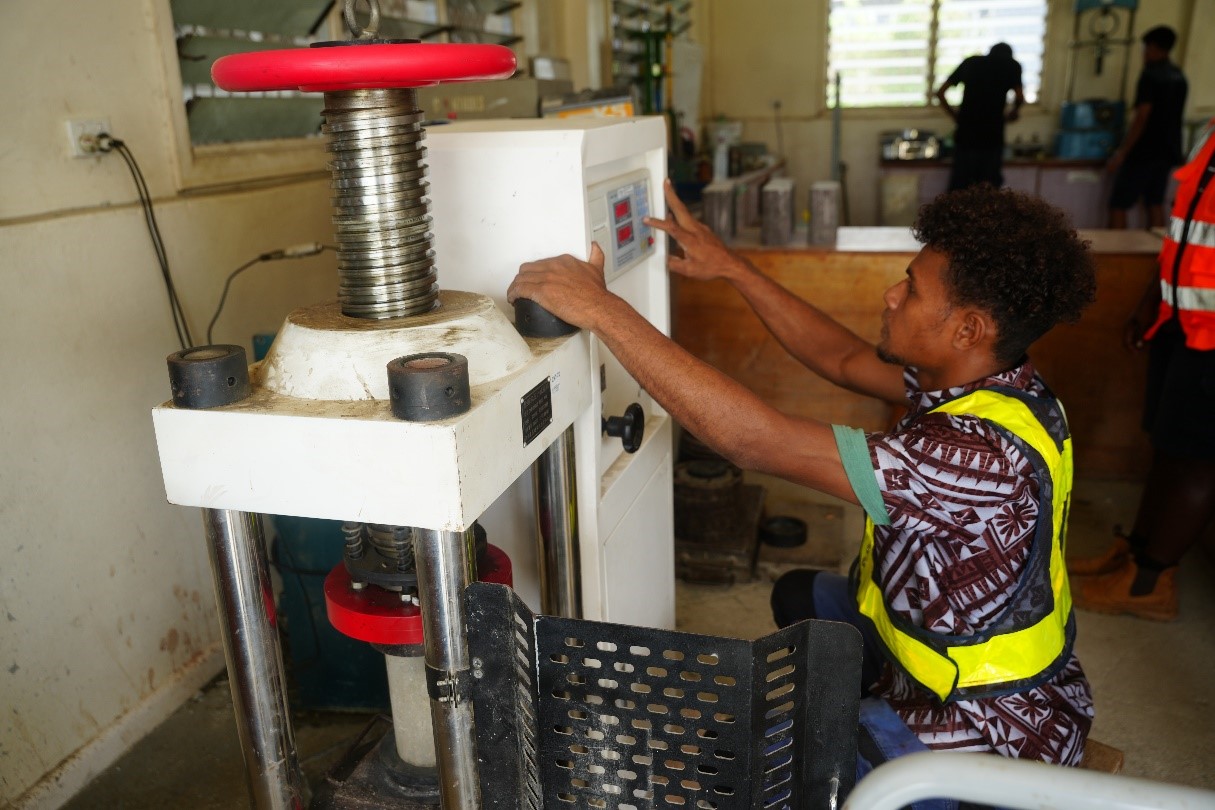
The compressive testing machines used to test strength of concrete blocks.