

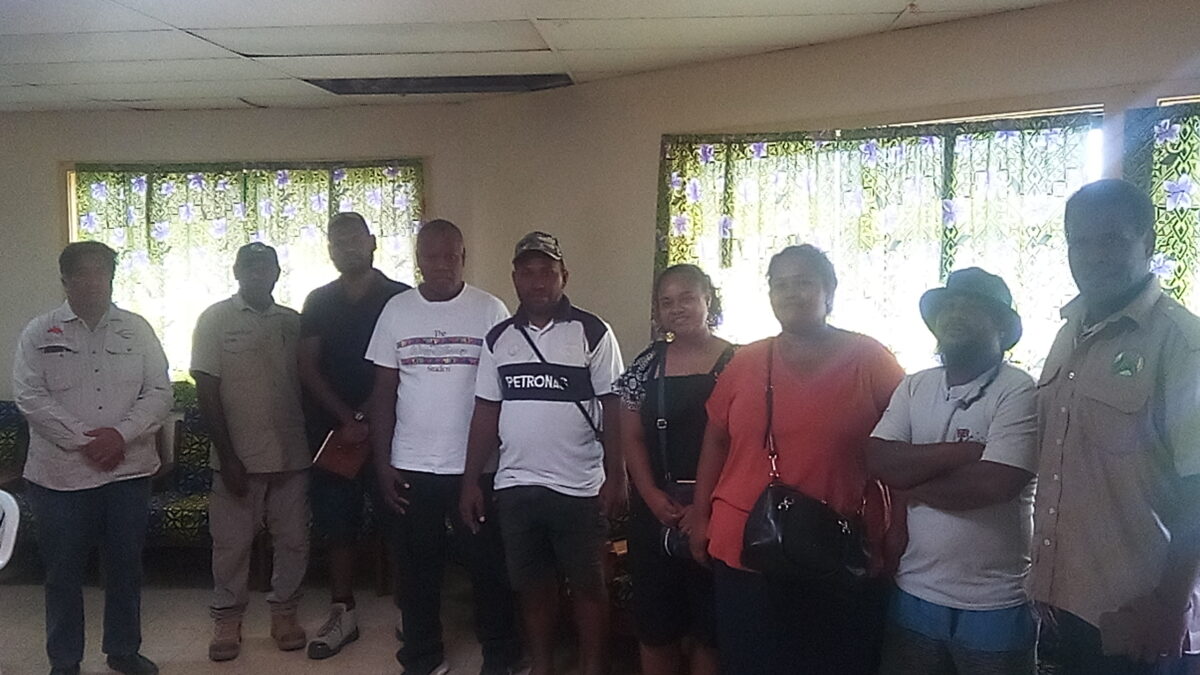
Biosecurity stakeholder Engagement workshop held 5th April 2024.
Biosecurity stakeholder Engagement workshop held 5th April 2024.
Biosecurity Solomon Islands of the Ministry of Agriculture & Livestock through the support of Solomon Islands Biosecurity Development Program held a workshop for License Customs Brokers and Shipping Agents of Solomon Islands.
The workshop is the first of its kind since the enactment of the Biosecurity Act 2013 and aims to build a stronger biosecurity partnership arrangement as a way forward to minimize or reduce the chance of foreign exotic pests and diseases of animals and plants impacting of our livelihood , food security and the economy of the country.
The workshop was delivered by the National Facilitator of Solomon Islands Biosecurity Development Program funded under DFAT Mr. Max Kolubalona, Biosecurity Head of Operations, Mr. Steward Teoga and the Head of Biosecurity Compliance Mr. Samuel Hone.
Biosecurity Solomon Islands realizes that there have been an increase in the discovery of new pest and diseases of plants and animals in the country as result of surveys conducted by DAFF Plant and Animal Health Teams in the recent past.
Risk assessment on possible pathways could lead to these pest or diseases entering the country through either airport or seaport and so the need to tighten or improved biosecurity inspections on both pathways. This requires Biosecurity Solomon Islands to have regular and closer relationship with its key external stakeholder such as Importers, Shipping Agents and Customs Brokers both for the seaport and airport to support the work of Biosecurity to become aware of the types of biosecurity risk pathways and their associated risks.
Biosecurity Act 2013, Sect 13. On Biosecurity clearance Agents
- A person who proposes to import or export regulated articles through a seaport or airport and who will not be present when biosecurity inspection is to take place must:
- in writing appoint a person resident in Solomon Islands as a biosecurity clearance agent for the purposes of this Act; and
- notify the Director in writing of the appointment before the agent performs any agency functions.
- A biosecurity clearance agent appointed under subsection ( 1) ceases to be an agent for the purposes of this Act if the Director notifies the importer or exporter in writing that, in the opinion of the Director, the agent’s conduct in the performance of functions under this Act renders the agent unacceptable for purposes of this Act
- Notice under subsection (2) must be given in sufficient time to allow the importer or exporter to appoint another agent.
- A biosecurity clearance agent who performs or purports to perform any functions of an importer or exporter under this Act is liable to the same extent as the importer or exporter for any act or omission which amounts to an offence or which creates any legal obligation under this Act.
- lf a person referred to in subsection (1) fails to comply with that subsection, biosecurity clearance will not be granted for any regulated article or consignment which the person seeks to import or export .
In this case, those brokers and shipping agents who were not trained by Biosecurity or not approved by the Director biosecurity should not be performing biosecurity clearance on biosecurity regulated articles arriving into Solomon Islands.
Licensed Customs Brokers and Shipping Agents who attended the workshop came to realise the need for them to support the work of Biosecurity in the prevention of pests and diseases and were eager to receive more biosecurity trainings to build that biosecurity team to better protect Solomon islands.
SIBDP National Facilitator stresses the importance of Biosecurity engaging with its key stakeholders as global biosecurity threats keeps increasing with the volume of goods and trade increases with new and increased trading partners.
ENDS///