

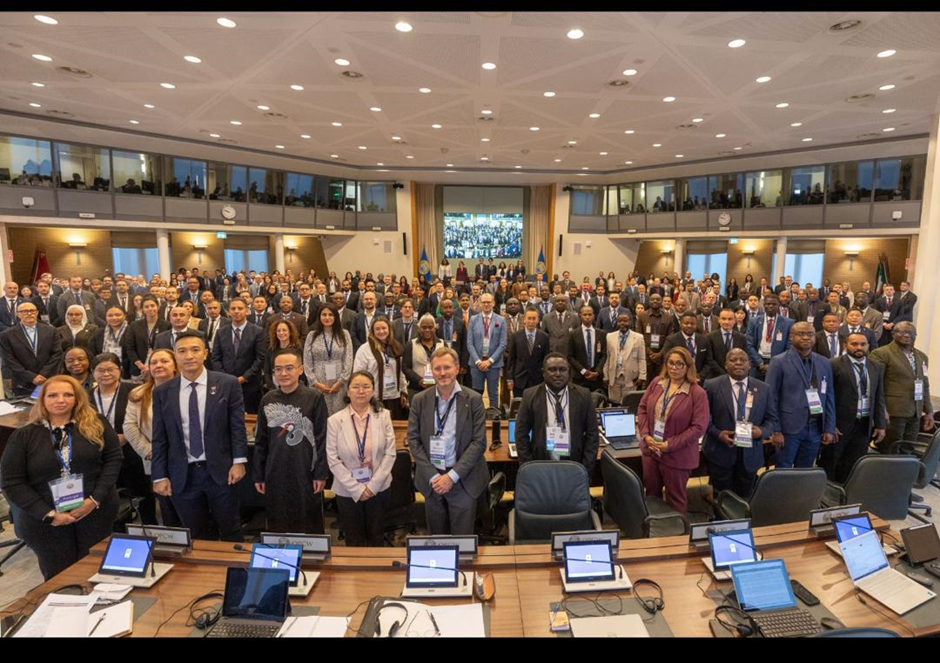
Group photos taken during ANAM 2026.
SI Reaffirms Commitment to Chemical Weapons Convention and Sets Out Priorities for Full National Implementation
Solomon Islands has reaffirmed its commitment to the Chemical Weapons Convention (CWC), while identifying the completion and enactment of comprehensive national implementing legislation as its most important next step.
The commitment was expressed during Solomon Islands’ participation in the 28th Annual Meeting of National Authorities, hosted by the Government of the Netherlands and organised by the Organisation for the Prohibition of Chemical Weapons (OPCW). Solomon Islands acceded to the Convention on 23 September 2004, and it entered into force for the country on 23 October 2004.
Solomon Islands is represented in the implementation of the Convention through the Ministry of Foreign Affairs and Trade, working with relevant national agencies. Existing legal and institutional frameworks—including customs, immigration, police, counter-terrorism, pharmacy and poisons, environmental protection, and disaster-response arrangements—provide an important foundation for national implementation.
The Counter-Terrorism Act 2009, Customs and Excise Act, Pharmacy and Poisons Act, and Environment Act 1998 support border control, chemical safety, licensing, inspection, and environmental protection. Solomon Islands has also submitted its Article VII, paragraph 5, notification and has benefited from OPCW-supported legislative and capacity-building initiatives.
Solomon Islands representatives took part in the OPCW Internship Programme for Legal Drafters and National Authority Representatives in The Hague in August 2019. In April 2026, the OPCW Technical Secretariat reviewed the country’s draft legislation and provided recommendations to strengthen alignment with the Convention. Solomon Islands customs officers also participated in regional OPCW training in Brisbane in September 2025.
Despite this progress, Solomon Islands recognises that its most significant challenge remains the absence of comprehensive, enacted national legislation specifically implementing the CWC. Existing laws provide useful support but do not fully cover all obligations under Articles I and VII of the Convention, including prohibitions, penalties, jurisdiction, enforcement powers, declarations, verification cooperation, and institutional arrangements.
Solomon Islands has set out a clear implementation pathway: draft, adopt, enact, operationalise, and report. Achieving this will require sustained political will, effective inter-agency coordination, adequate resourcing, and retention of trained personnel within the National Authority.
Solomon Islands has identified six immediate priorities for strengthening implementation of the Convention:
- Complete and adopt comprehensive Article VII implementing legislation and regulations.
- Strengthen the National Authority through a clear legal mandate, adequate staffing, resources, and inter-agency coordination.
- Operationalise declaration procedures for identifying, collecting, validating, and reporting relevant information.
- Improve controls over relevant chemicals, including transfers, imports, exports, storage, handling, and peaceful-use activities.
- Strengthen preparedness for chemical incidents through training, detection capacity, emergency response, and access to Article X assistance.
- Continue using OPCW technical, legal, and capacity-building support, including development of a practical national action plan.
Solomon Islands has also established an Unexploded Ordnance (UXO) Office and an Explosive Ordnance Disposal Team to coordinate clearance of ordnance remaining from the Second World War. Potential chemical remnants have been confirmed at Alligator Creek, and the Solomon Islands is liaising with the OPCW to explore possible assistance for assessment and clearance.
National UXO legislation is under development, while the launch of the Information Management System for Mine Action (IMSMA CORE) in July has strengthened coordination, information management, and public safety.
Solomon Islands said effective implementation of the Convention is not only a legal obligation but also an investment in national security, public safety, environmental protection, health, and the peaceful development of the country.
The Government reaffirmed its commitment to strengthening national systems, improving cooperation among agencies, and working closely with the OPCW and fellow States Parties in the region to fulfil its obligations under the Convention.
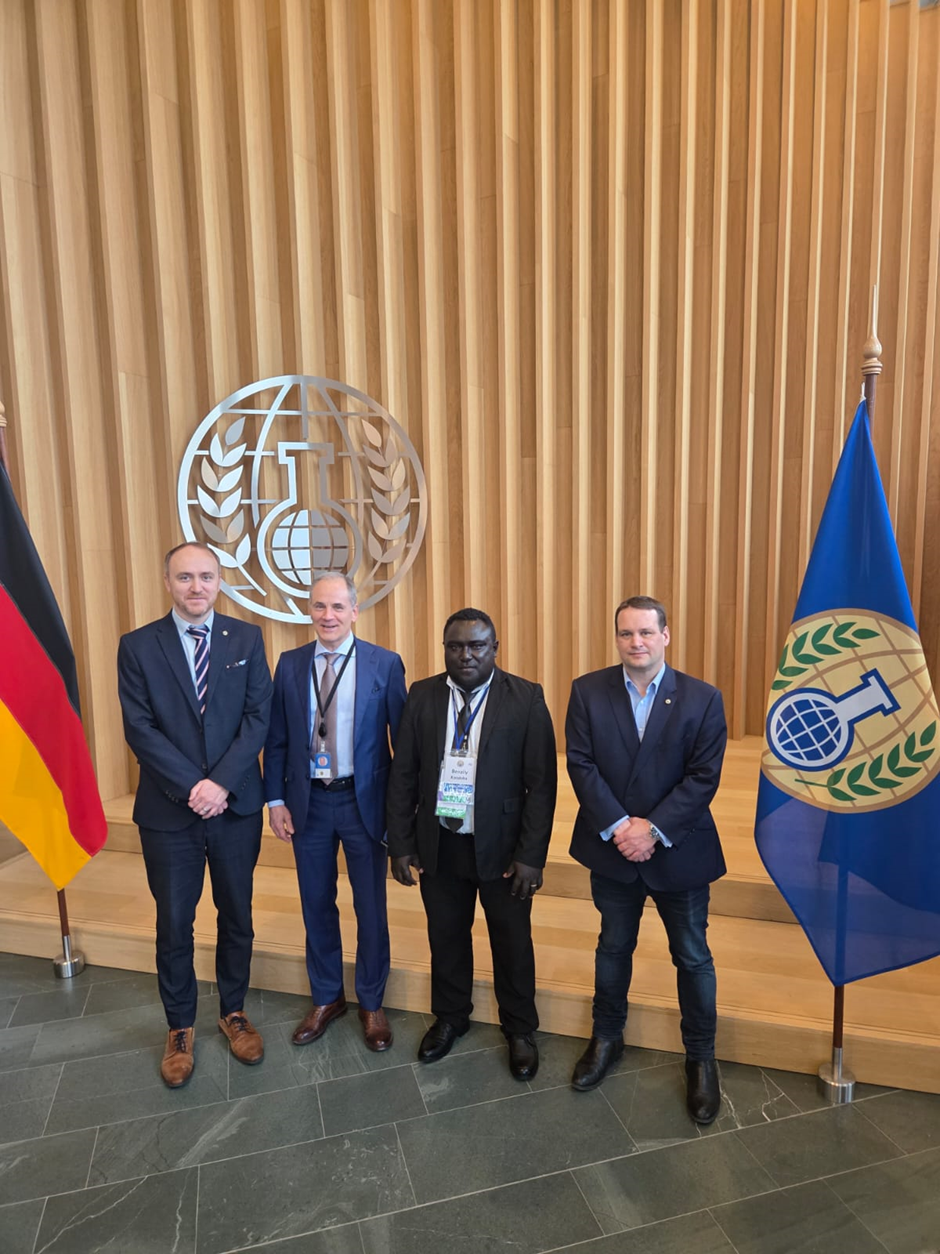
Photo taken during the courtesy visit to the OPCW Office.
-MPNSCS Press