

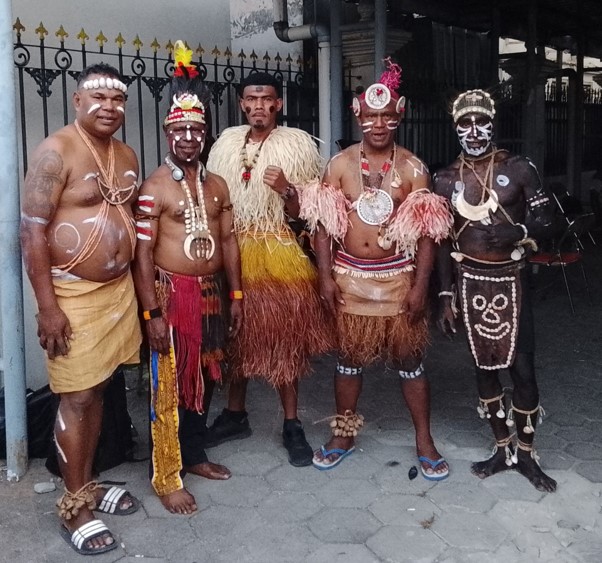
Casper Hairiu (left) and Michael Kaura (second from right) with fellow artists around the region, who attended the IPCC in Indonesia.
SI makes its mark at IPCC 2026
Honiara, 25th November 2026 – Solomon Islands has made its mark on the regional cultural stage through its participation in the Indonesia Pacific Cultural Connect (IPCC) 2026, held in Yogyakarta, Indonesia, from 5th to 17th October 2026.
Organised by the Ministry of Culture of the Republic of Indonesia, IPCC is a major cultural exchange and residency program aimed at strengthening people-to-people ties and diplomatic relations between Indonesia and the Pacific region.
The program brought together approximately 30 artists from eight Pacific countries, including Solomon Islands, and around 70 artists from Eastern Indonesia and representatives from institutions such as ISI Yogyakarta and ISI Surakarta in Indonesia.
Representing Solomon Islands were local artists Casper Hairiu, known among fellow local artists as Cassy, and Michael Kaura, who were identified by the Ministry of Culture and Tourism (MCT) through its Culture Division to participate in the traditional music and arts and crafts exchange program.
Both artists are familiar faces in the local artistic industry, each bringing their own talents and experience in promoting Solomon Islands’ cultural heritage.
Hailed from Nari’ekeara village in West Are Are Lagoon of Malaita province, Cassy began his artistic journey as a panpiper with the renowned Narasirato Panpipe group in the 1990s, later transitioned into visual arts, his current profession.
In his career, he has made significant contributions to the country’s creative industry. Among his notable achievements are designing the Relay Baton for the 2023 Pacific Games hosted in Honiara, designing the Solomon Water official outfit, and scooping several local awards for his artistic work.
For Cassy, participating in the IPCC was more than an opportunity to showcase Solomon Islands’ traditional music and arts.
It was also a valuable platform to exchange knowledge, learn from other artists and gain a deeper understanding of the region’s diverse cultural traditions.
“One thing that stood out the most throughout the program was the cultural exchange. We exchanged knowledge with fellow artists and learned a lot from each other,” Cassy said.
During the program, they also visited museums and music centres to learn about Indonesia’s rich traditional music, including how some instruments were developed using materials that could also be found locally.
Cassy was also given the opportunity to showcase and share the cultural significance of Solomon Islands’ traditional panpipe music with fellow participants.
“I explained how panpipe music is made, the different types of panpipe music, how to play them and the traditional occasions during which they are performed,” he said.
Another highlight of the program was the creation of a collaborative masterpiece song, bringing together different traditional musical styles from across the region.
The song was well choreographed and performed before government officials from Indonesia and other Pacific Island countries during a special showcase held as part of the program.
Reflecting on the experience, Cassy acknowledged MCT through its Culture Division for providing the opportunity, saying the knowledge gained had further strengthened his career in promoting and preserving traditional music.
He said it was time for Solomon Islands to seriously consider establishing more avenues to revive traditional music, particularly some forms that are gradually disappearing.
Cassy was particularly impressed by how Indonesia preserves its traditional music through cultural institutions, ensuring knowledge and skills are passed down from one generation to another.
He believes initiatives such as the National Panpipe Festival in Solomon Islands are important in safeguarding the country’s traditional panpipe music and should continue to be supported.
Meanwhile, fellow artist Michael Kaura, from Mbita’ama in Northwest Malaita, also returned with valuable experiences and new skills gained through the cultural exchange program.
A talented craftsman, Kaura represented Solomon Islands through bamboo and coconut-shell arts and crafts, demonstrating how locally available materials can be transformed into meaningful and intricate works of art.
Kaura expressed his gratitude to MCT through the Culture Division for the opportunity to attend IPCC. He said meeting and working alongside fellow Pacific artists was an enriching experience that he greatly appreciated.
Throughout the program, Kaura participated in training sessions and practical workshops, learning new techniques from experienced Indonesian craftsmen.
Visits to galleries and museums also left a lasting impression on him, particularly the diversity and quality of artworks on display, which reflected Indonesia’s rich cultural heritage and the craftsmanship behind its traditional arts.
He said the level of craftsmanship, the use of advanced tools and the knowledge applied in producing the artworks were impressive and offered valuable lessons for local artists.
One of the highlights for the arts and crafts participants was learning to create the Jaran Kepang, a traditional woven horse associated with Indonesian cultural performances and historical traditions.
Using processed bamboo, participants were taught how to split the material into thin, flexible strips before weaving them into the shape of a horse.
After completing the weaving process, they painted their creations, which were later presented during the program’s official closing ceremony.
Kaura also produced three coconut-shell artworks during the program: a traditional chiefs’ bowl, a bride wearing traditional North Malaita attire and a traditional canoe.
Like Cassy, the experience motivated Kaura to return home and share the knowledge he had acquired with fellow craftsmen, helping broaden their skills and encourage greater use of locally available materials.
He said Solomon Islands had abundant resources such as bamboo and coconut shells that could be used to produce a wide range of arts and crafts.
However, Kaura said these resources are yet to fully utilise, partly due to limited knowledge, skills and access to advanced tools, and an area that needs attention to strengthen not only traditional arts and crafts but also the country’s wider arts industry.
Both artists assured commitment to share the knowledge and skills gained with fellow local artists, aiming to strengthen the local creative industry and promoting Solomon Islands artworks to tourists and visitors.
They reiterated their sincere appreciation to the Ministry of Culture and Tourism for the opportunity to participate in the cultural exchange program.
They described it as a rewarding experience that had broadened their knowledge, strengthened their appreciation of traditional culture and inspired them to contribute more to the preservation and promotion of Solomon Islands’ cultural heritage.
Cassy and Kaura operate art and craft shops at the National Art Gallery in Honiara, where they create and sell a range of artworks and craft products.
Ends/////////////////
Photo…………
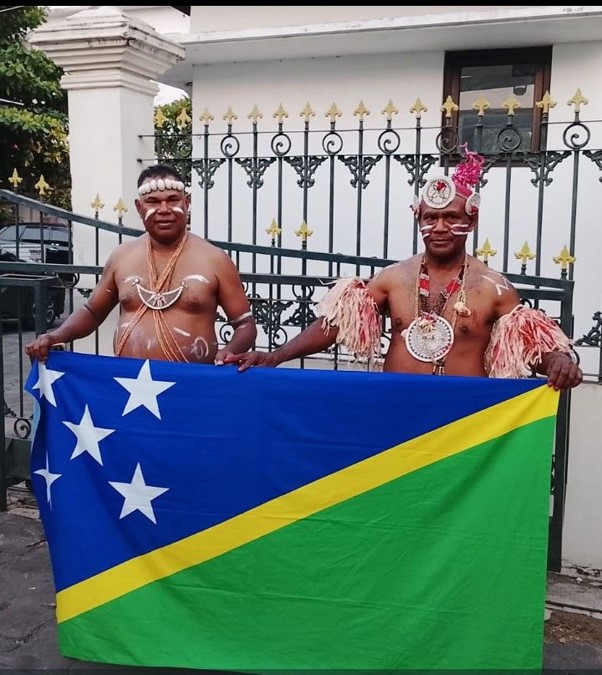
Casper Hairiu (left) and Michael Kaura (right) posed for a photo with the national flag.
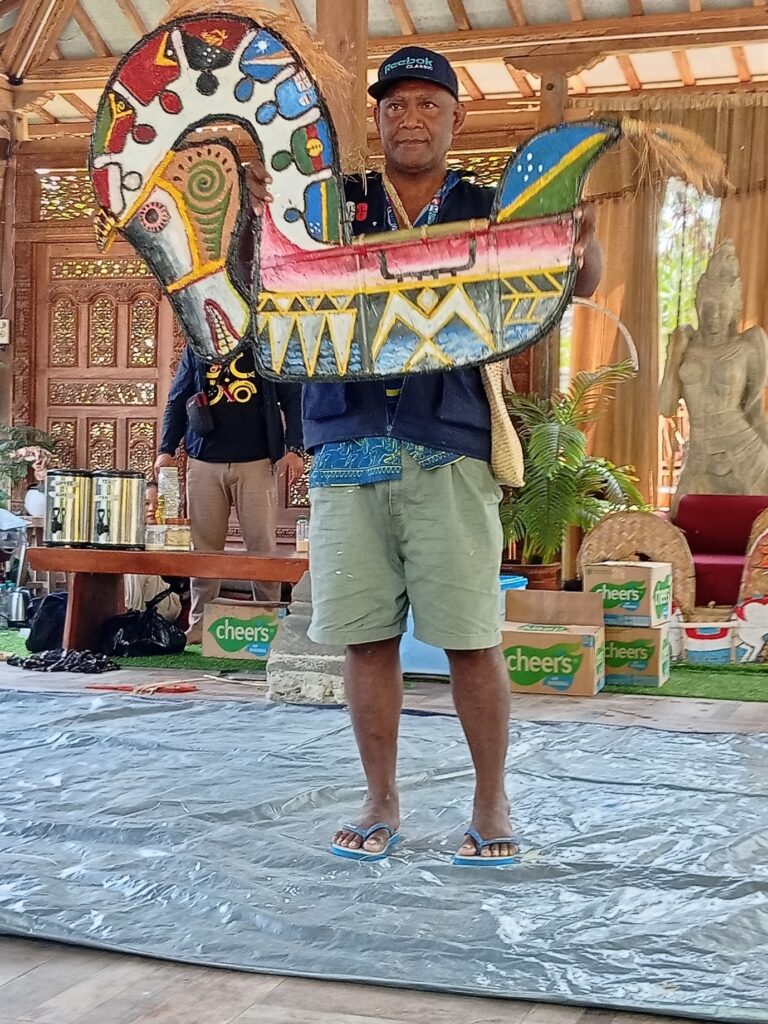
Michael Kaura displays the Jaran Kepang, a traditional woven horse linked to Indonesian cultural performances and historical tradition. He handcrafted the piece during the IPCC program.
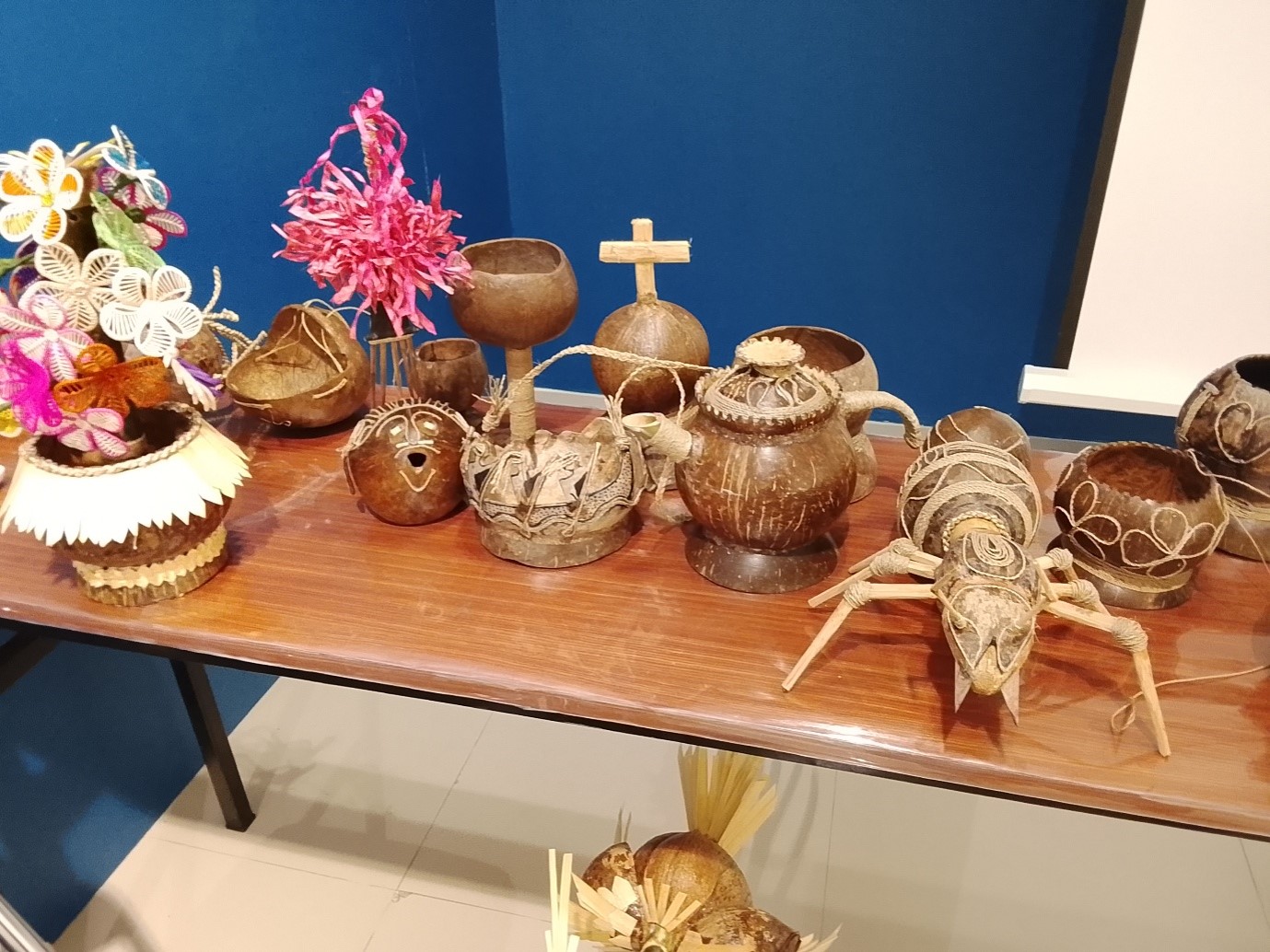
Some of the products made from coconut shells during the IPCC cultural exchange program in Indonesia.
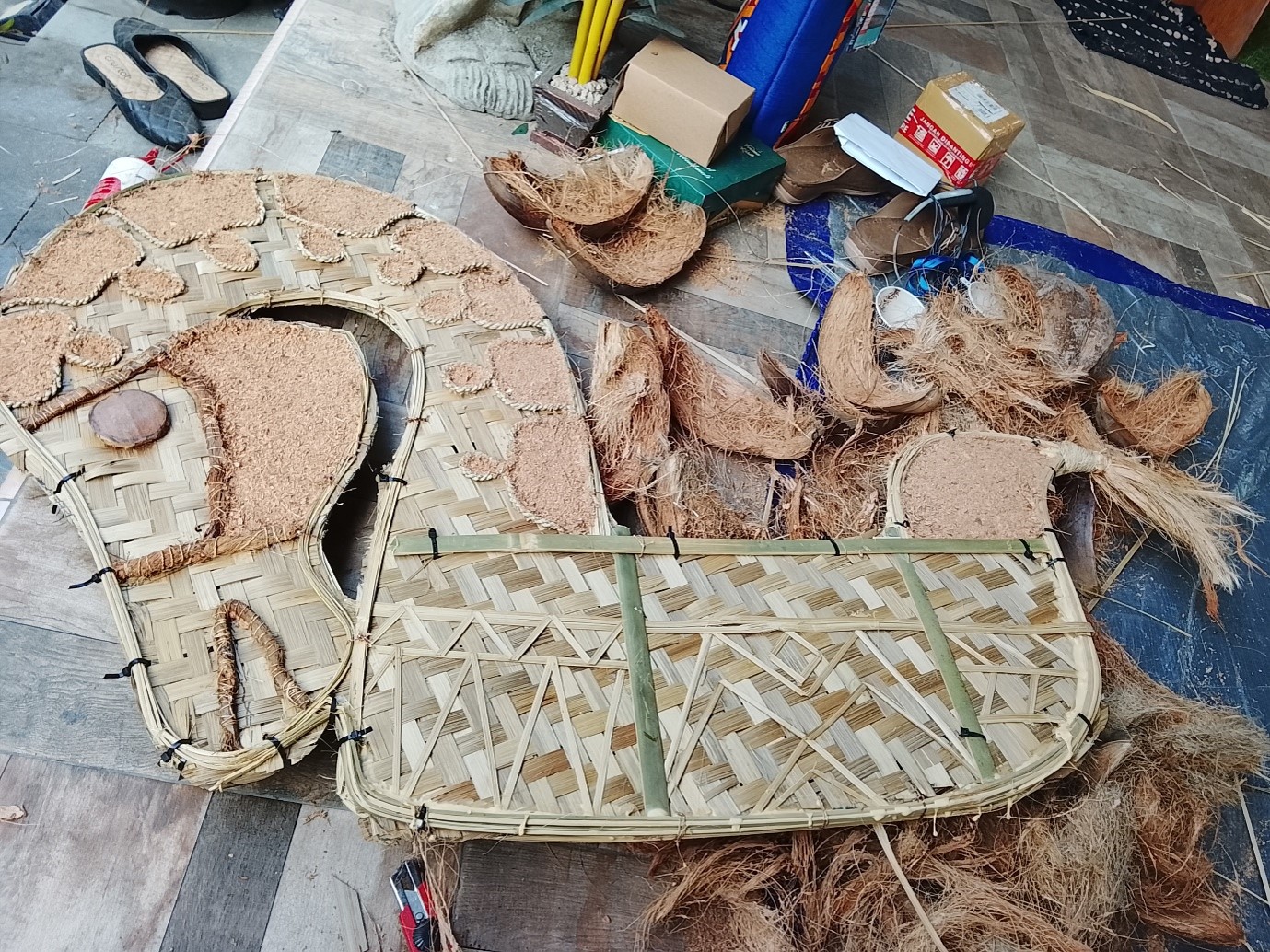
The Jaran Kepang horse is crafted using materials that are abundant locally, it only requires specialised knowledge, skills and tools to transform them into a masterpiece.