

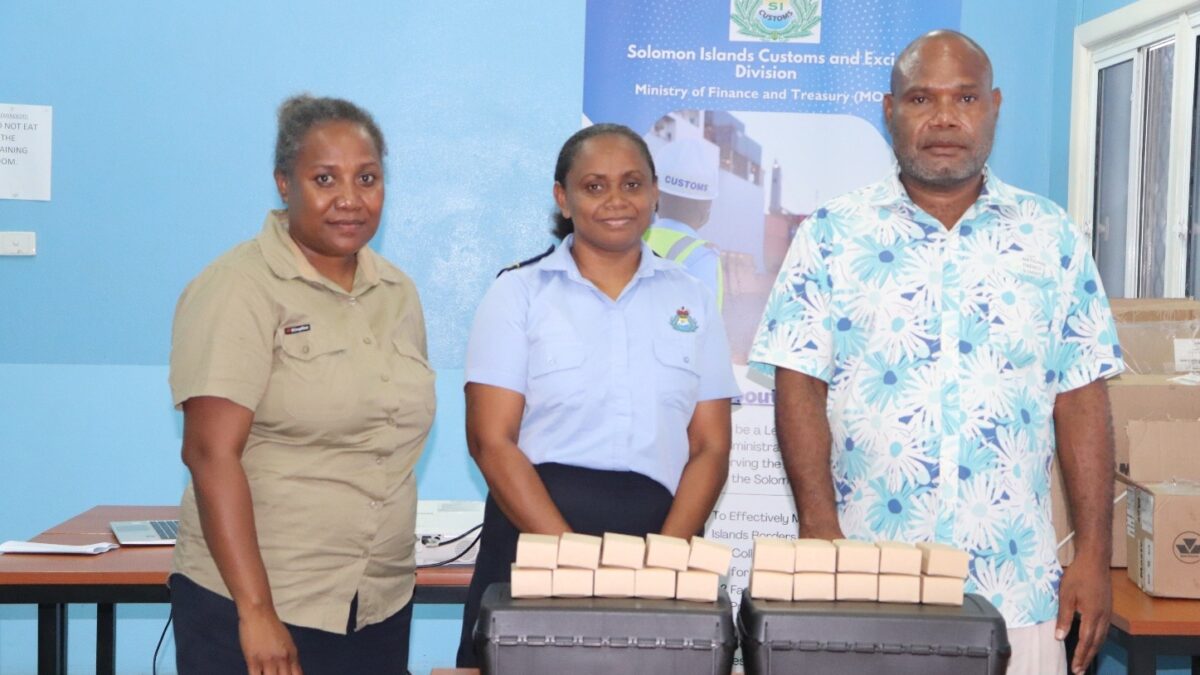
Solomon Islands Customs and Excise Division Deputy Comptroller for Revenue and Operations Alice Saefo’oa (centred) receiving the 2 Refrigerant Identifier devices from the Deputy Director Richard Bapo (Right) and National Ozone Officer Mariana Nonga (left) from the Energy Division at the Customs Headquarters in Honiara.
Honiara, Solomon Islands – 23 November 2026
The Solomon Islands Customs and Excise Division (SICED) has received two Refrigerant Identifier devices to strengthen its ability to monitor refrigerant imports, detect illegal substances and protect the environment.
The Ministry of Mines, Energy and Rural Electrification, through its National Ozone Unit (NOU) under the Energy Division, coordinated the equipment handover at Customs Headquarters in Honiara on Thursday, 19 November 2026.
The two devices will serve Customs officers in Honiara and Noro. They will help officers identify refrigerant gases, verify import declarations and detect restricted, mislabelled or non-compliant products entering the country.
Speaking at the handover, Deputy Director of the Energy Division, Richard Bapo, said the equipment would strengthen Solomon Islands’ efforts to meet its obligations under the Montreal Protocol.
“These devices will give Customs officers the technical ability to identify refrigerants entering the country and detect misdeclared or restricted substances.
“Through this partnership, we are strengthening our efforts to protect the ozone layer, reduce the risks associated with harmful refrigerants and promote responsible environmental management in Solomon Islands,” Bapo said.
Customs Deputy Comptroller for Revenue and Operations, Ms Alice Saefo’oa, welcomed the support and thanked the Ministry, National Ozone Unit and development partners for strengthening Customs’ operational capacity.
“This equipment will improve Customs’ capacity to monitor, control goods and activities at borders. It offers officers enhanced tools to carry out their responsibilities efficiently and professionally.
“By bolstering operational capabilities, Customs will be more adept at identifying prohibited and restricted items, facilitating revenue collection, and ensuring adherence to national laws and regulations,” Mrs. Saefo’oa said.
She added that this equipment assists in closing operational gaps by enhancing the capacity to perform inspections, surveillance, and enforcement activities promptly.
“It will also aid officers operating in remote and high-risk areas, allowing for quicker responses and improved service delivery.
“Border protection is not solely the responsibility of one agency; it necessitates cooperation among all involved parties, she added.
“The assistance from the Ministry of Mines and Energy reflects a joint commitment to managing resources in accordance with the law and creating partnerships to improve Customs collective ability to serve the people of the Solomon Islands,” Saefo’oa highlighted.
National Ozone Officer, Mariana Nonga, said the devices would help Customs detect illegal refrigerant imports, including ozone-depleting substances (ODS) and hydrofluorocarbons (HFCs), which are subject to national and international controls.
“The equipment will help Customs officers verify refrigerant composition, identify potential misdeclarations, and make informed decisions during cargo inspections.
“It will also support existing import permit checks and inspection procedures, giving officers an additional tool to strengthen compliance and protect the environment,” Nonga said.
The equipment was funded through the Multilateral Fund for the Implementation of the Montreal Protocol, with the United Nations Environment Programme (UNEP) serving as the Implementing Agency.
The initiative strengthens cooperation between government agencies and international partners while supporting Solomon Islands’ commitment to controlling harmful refrigerants and protecting the environment.
Through this support, Customs continues to strengthen its role in protecting national borders, facilitating legitimate trade and enforcing import requirements.
ENDS///
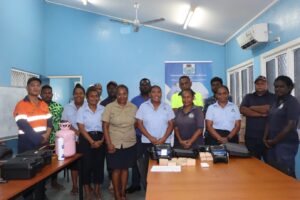
Customs officers who work in various Operational sectors within the Division posed together with the staff from the Ministry of Mines and Energy with the Refrigerant Identifier devices during the handover ceremony at the Customs Headquarters in Honiara.
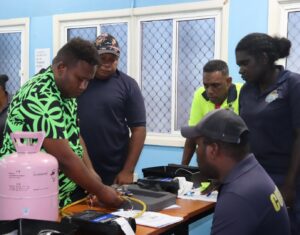
Refrigerant trainer from the Energy Division demonstrates and explains how to use the Refrigerant identifier equipment and testing devices to the Customs officers who served at the various operational sectors within the Division prior to using these equipments.
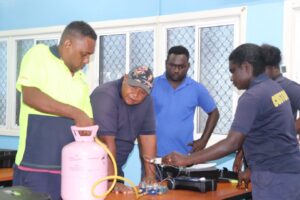
Customs officers inspect a refrigerant cylinder and demonstrate the use of the newly provided Refrigerant Identifier equipment.
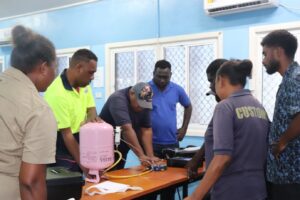
Customs officers demonstrate the use of Refrigerant Identifier equipment to improve the monitoring of refrigerant imports and help prevent the illegal trade of controlled substances.