

SOLOMON ISLANDS CALLS FOR CLIMATE FINANCE THAT REACHES VULNERABLE COMMUNITIES AT COP31 MINISTERIAL DIALOGUE
Antalya, Türkiye | 13 November 2026
The Solomon Islands Government has called for urgent, increased and more accessible climate finance to support vulnerable developing countries, particularly Small Island Developing States (SIDS) and Least Developed Countries (LDCs), in responding to the growing impacts of climate change.
The call was made during the Seventh Biennial High-Level Ministerial Dialogue on Climate Finance, held on Friday, 13 November 2026, alongside the 31st Conference of the Parties (COP31) to the United Nations Framework Convention on Climate Change (UNFCCC) in Antalya, Türkiye.
The dialogue is a mandated international ministerial platform established following the decision of COP26 to convene biennial high-level discussions on climate finance in 2022, 2024 and 2026. It provides an important opportunity for Ministers and senior representatives to assess progress in the provision and mobilisation of climate finance, discuss outstanding challenges and identify practical ways to improve financial support for developing countries.
The seventh dialogue focused particularly on progress towards the previous USD 100 billion annual climate finance goal, lessons from its delivery, and how to strengthen the scale, effectiveness and accessibility of finance for both mitigation and adaptation. It also provided an opportunity to examine the respective roles of governments, Multilateral Development Banks (MDBs) and the private sector in mobilising climate finance.
In its intervention, Solomon Islands reaffirmed its solidarity with SIDS and LDCs, emphasising that countries which have contributed least to the climate crisis continue to face some of its most severe consequences.
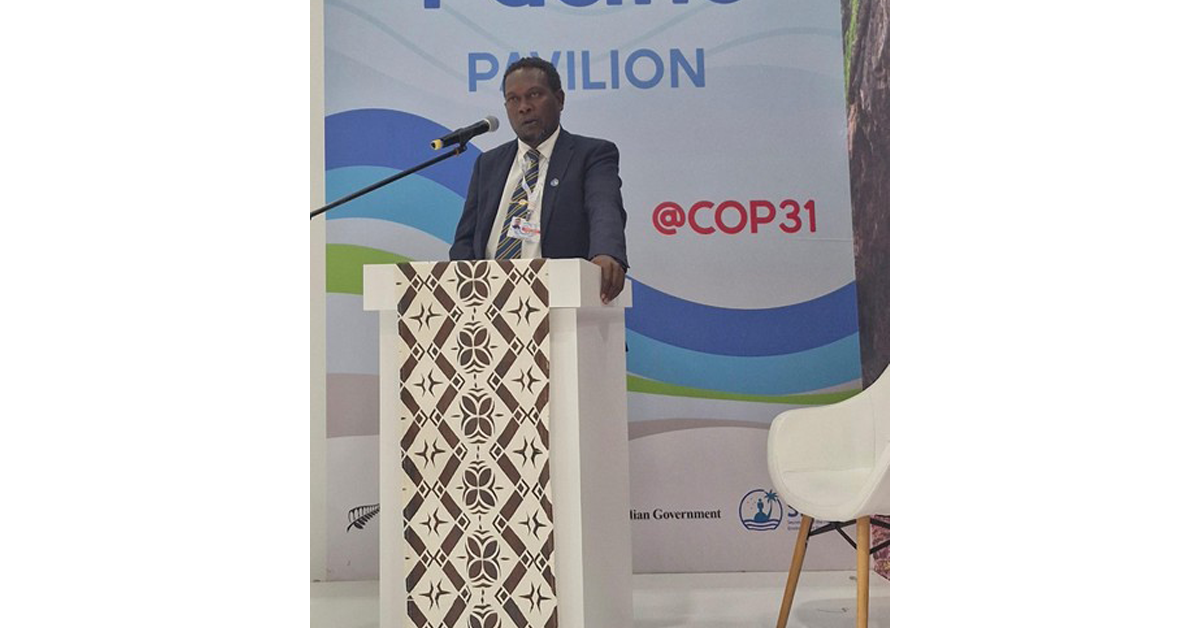
Minister Ghemu stressed that the experience of the USD 100 billion annual climate finance goal demonstrated that achieving financial targets late, or merely on paper, does not necessarily mean that funding reaches the countries and communities that need it most.
He emphasised that climate finance must be accessible, predictable, adequate and responsive to national priorities. Success must be measured by the actual support delivered to vulnerable communities rather than by financial pledges and commitments announced at international conferences.
Solomon Islands called on developed countries to fully deliver on the New Collective Quantified Goal (NCQG) on climate finance and urged the Climate Finance Work Programme to address the persistent gap between commitments made and the funding that SIDS and LDCs can realistically access.
The Government further highlighted that adaptation is a matter of survival for Solomon Islands. With communities increasingly exposed to sea-level rise, coastal erosion, flooding and other climate-related impacts, the commitment to triple adaptation finance must translate into a clear implementation pathway and adequate grant-based resources, rather than creating additional debt burdens for vulnerable countries.
Solomon Islands also called for an ambitious Third Replenishment of the Green Climate Fund (GCF) to ensure that developing countries have sufficient resources to implement their climate adaptation and mitigation priorities.
On the role of private sector investment, Hon. Wayne acknowledged its importance in mobilising additional resources but cautioned that private investment alone cannot address the significant climate financing needs of small island states.
The Government reaffirmed that public finance must remain the backbone of international climate support, with private finance serving a complementary role rather than replacing public commitments.
He also urged Multilateral Development Banks to expand the use of guarantees, blended finance and simplified financing procedures, while ensuring that access to concessional finance takes into account countries’ vulnerability to climate change and not income levels alone.
Climate Finance Is a Commitment, Not Charity
The Solomon Islands Government reiterated that climate finance is not charity, but a commitment under the UNFCCC and the Paris Agreement. Delivering on these commitments is essential to protecting vulnerable populations, strengthening national resilience and safeguarding the development aspirations of countries like Solomon Islands.
The Government emphasised that the true measure of progress in global climate finance must be the tangible difference it makes to people’s lives, particularly in vulnerable villages, coastal communities and remote islands.
As the international community continues its deliberations at COP31, Solomon Islands calls for stronger international cooperation, greater ambition and practical action to ensure that climate finance commitments translate into meaningful support on the ground.
“Our islands cannot wait, and neither can our people.”