

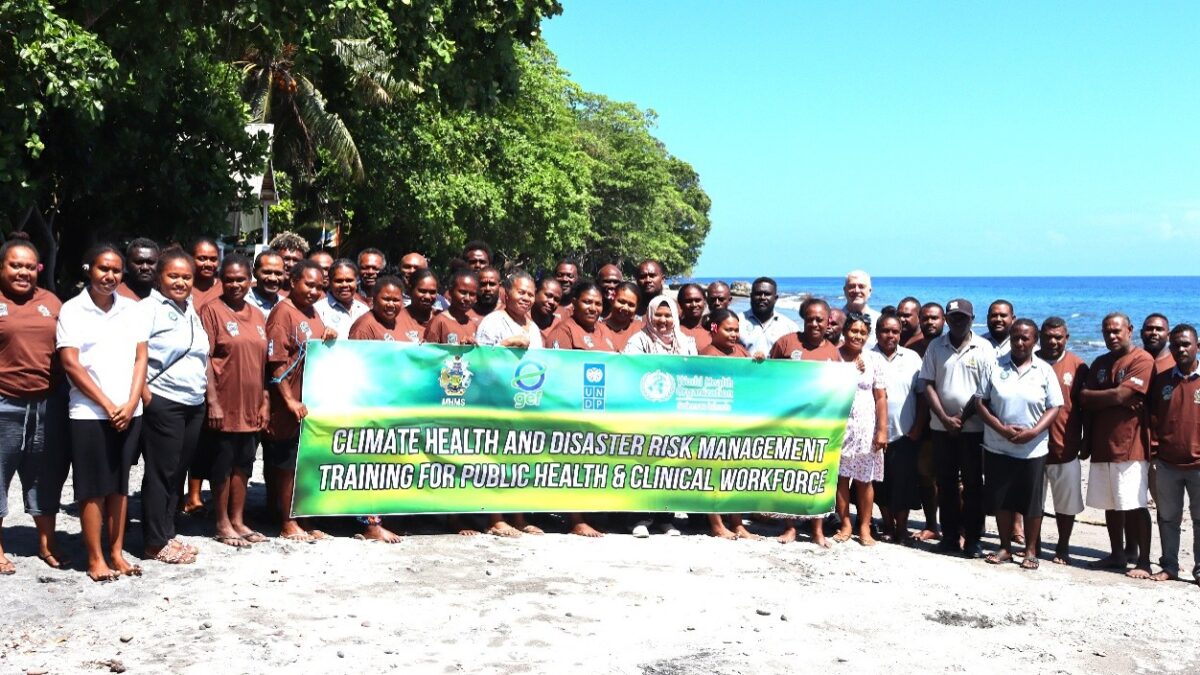
Group photo of the facilitators and participants that includes MHMS EHD officers, WHO technical officers and GP Health Director and officers.
Forty-two Guadalcanal health workers trained to keep care going during climate-related emergencies
Solomon Islands experiences, on average, one or two cyclones a year, and most people live close to the coast, in striking distance of storm surges and floods. When weather-related events inevitably strike, gardens and water sources are contaminated. But women still give birth, children still need vaccines, people with diabetes or high blood pressure still need life-saving medicines, and the risk of common infectious disease outbreaks rises. For the safety and health of the population, clinics must keep functioning. Yet earlier this year, we saw Tropical Cyclone Maila damage 12 health facilities in Choiseul Province alone. Here in Guadalcanal, one health facility sustained damage.
Preparedness for emergencies is critical. Forty-two health workers from Guadalcanal Province have been trained to keep clinics running and provide essential services during floods, cyclones and landslides. This adds to those trained in Temotu (38) and Makira (36) Provinces.
The training, held from 2 through 6 November, brought together clinical and public health workers and a community representative from the province’s Eastern, Western and Northern regions. It was led by the Ministry of Health and Medical Services (MHMS) with support from the World Health Organization (WHO), United Nations Development Programme and the Global Environment Facility (GEF).
Mr Philip Manele, a nurse at Aola Area Health Centre, said the training helped him understand how health workers can prepare, communicate, and coordinate with communities and partners during an emergency.
“Climate change is already affecting how our communities grow food and live,” said Philip. “Last time, there was heavy rainfall, and we saw floods destroy food gardens near rivers, and landslides wipe out crops on the hills. Yet communities are learning to adapt by planting on higher ground and in safer areas. These local solutions show how important it is to strengthen our resilience as the climate continues to change.”
“This training is very relevant to us because our communities are vulnerable to flooding, landslides, cyclones and other hazards. I have learned how we can work together when disaster happens, and I will share what I have learned with my colleagues. Thank you very much to WHO and GEF for this training and for supporting us here in Guadalcanal,” he said.
Ms Brightlyn Longatabo, Nurse-in-Charge at Chichinge Rural Health Clinic, said she plans to pass on what she learned to the people her clinic serves. “This training has helped me understand how climate change affects the health of our communities and the practical steps we can take to prepare and respond. I look forward to sharing what I have learned with community members,” she said.
Over five days, participants identified climate-related health risks in Guadalcanal, checked which communities and clinics are most at risk, and took part in practice drills and emergency role plays. They also learned how to check whether their clinics could stay open in an emergency, prepare action plans and track how well their preparations are working.
Guadalcanal Provincial Health Director, Dr Rayboy Seleso, highlighted the importance of preparing the provincial health workforce to respond effectively to climate-related challenges. “Our communities are already experiencing the effects of climate change. By building the knowledge and skills of our health workers, we can better anticipate the risks, respond earlier and help communities become more resilient. Most importantly, this training gives us local capacity to continue sharing this knowledge with other health workers across the province,” said Dr Seleso.
Chief Health Inspector Mrs Jennimer Ngoli, speaking on behalf of the Environmental Health Director and the MHMS Executive, said the training matters for the whole country. She noted that the National Health Strategic Plan 2022-2031 says climate change must be considered when clinics are built and health services are planned.
The training addresses gaps identified in an initial assessment of the Solomon Islands health workforce. It is part of a national training plan on climate change, health and managing disaster risks. It was first piloted in Temotu Province, then expanded to Makira Province, before being held in Guadalcanal Province.
The training is being rolled out province by province. The next training will take place in the south and east of Guadalcanal Province in the first week of December 2026.
WHO Technical Officer for Health Emergencies, Mr Georgios Theocharopoulos, said health facilities and health workers are at the centre of the response to climate change. “Climate change is putting growing pressure on Solomon Islands’ health system. Through discussions and simulation exercises, participants learned how they and their health facilities can improve preparedness and build resilience. It is encouraging to see the Ministry of Health and Medical Services leading this training across provinces,” he said.
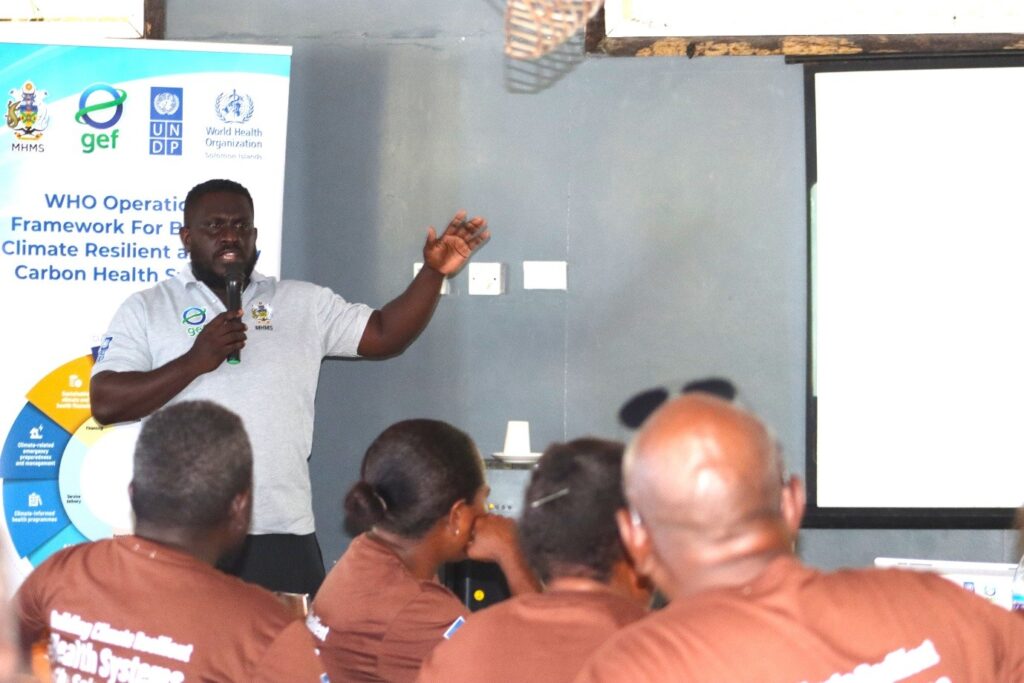
Dr Rayboy Seleso, Director Health Guadalcanal Province sharing his presentation at the training.
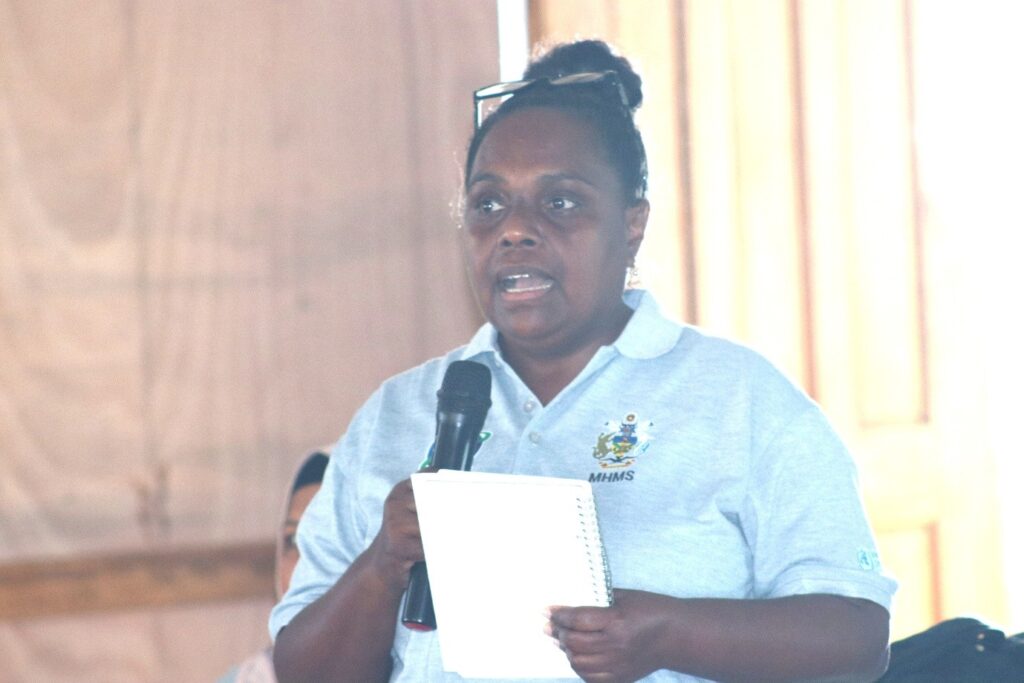
Mrs. Jennimer Ngoli, Chief Health Inspector sharing a remark for MHMS at the training.
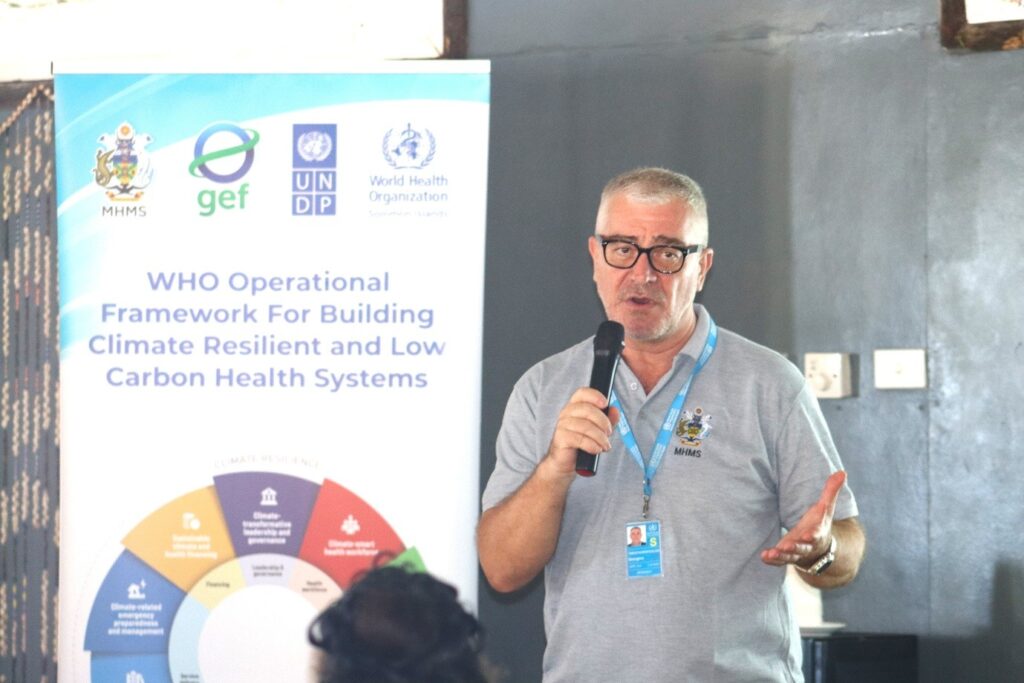
World Health Organization, Emergency Technical Officer, Dr Georgios Theocharopoulos speaking on behalf of WHO at the training.
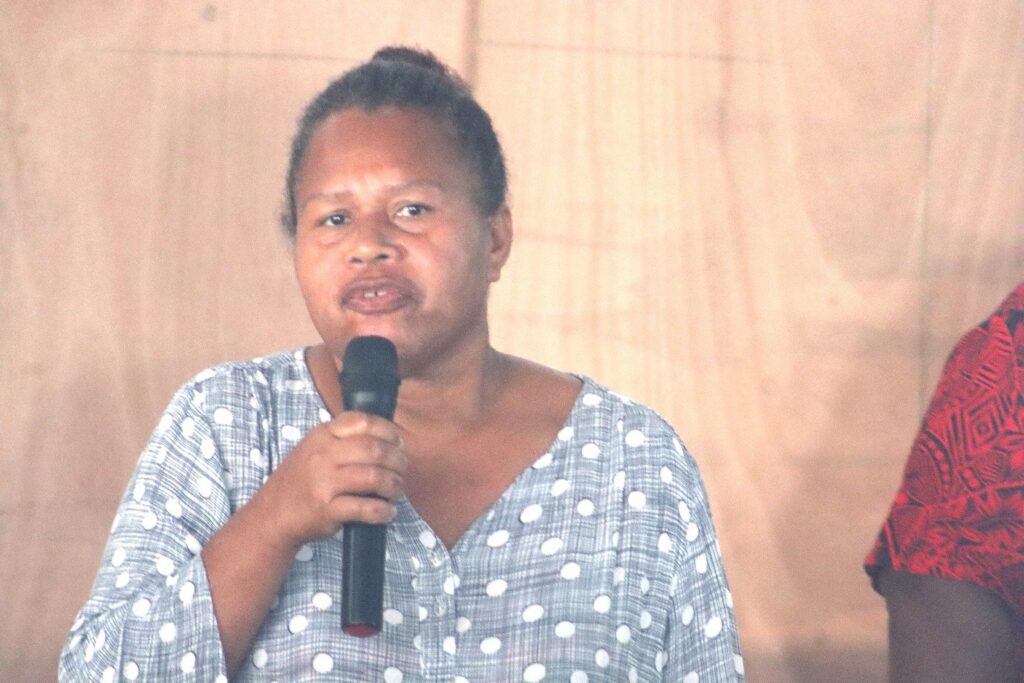
Ms. Ethel Kaota, Nursing Health Director supervising, Guadalcanal Province speaking at the training.
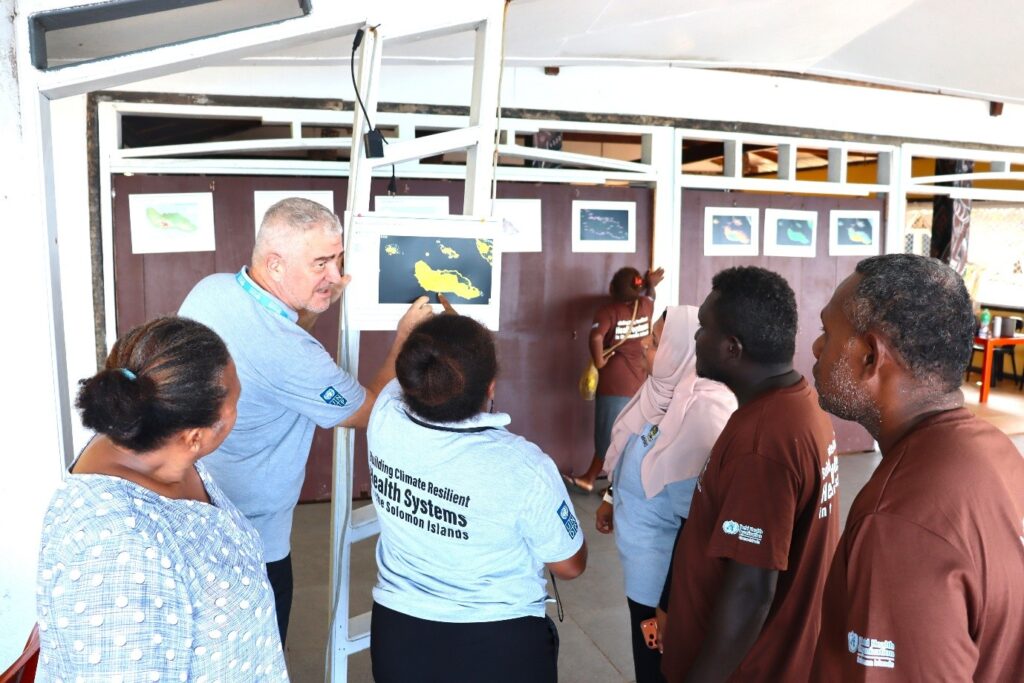
Training facilitators and participants engage in a discussion on climate disaster-prone areas in GP, highlighting local vulnerabilities and strategies for building community resilience.
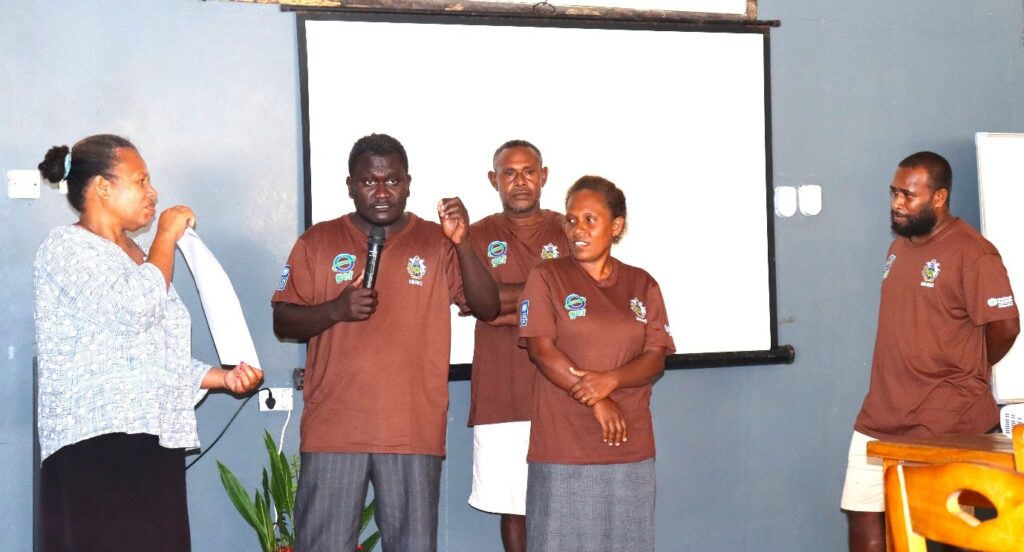
Training participants presenting their findings.
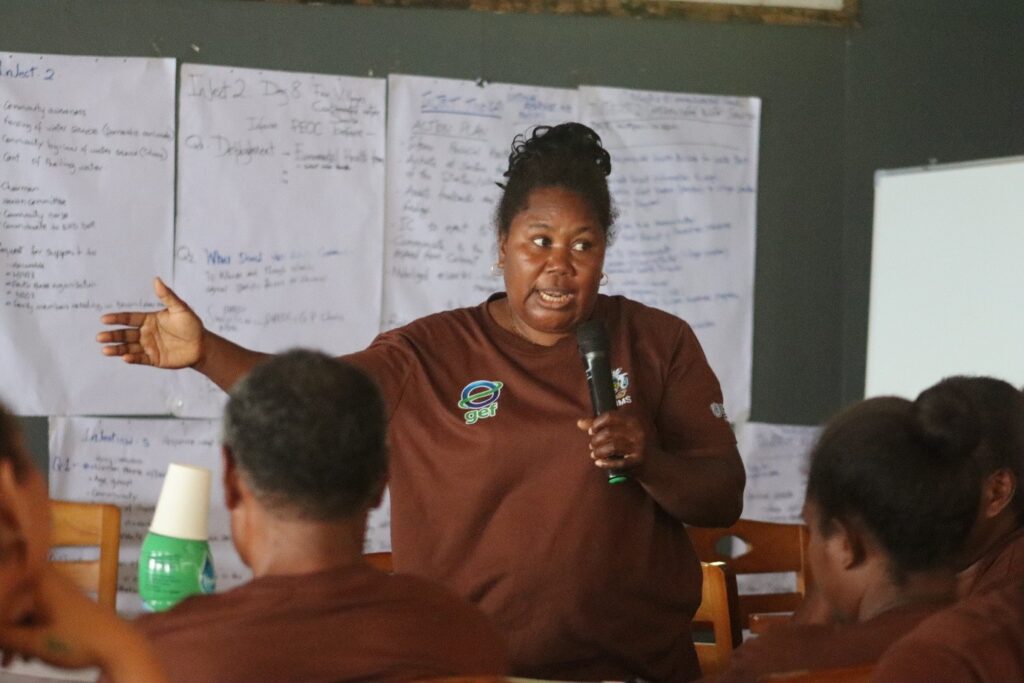
Visale Area Health Center Head Nurse sharing her experience working at the during the recent cyclone Maila.
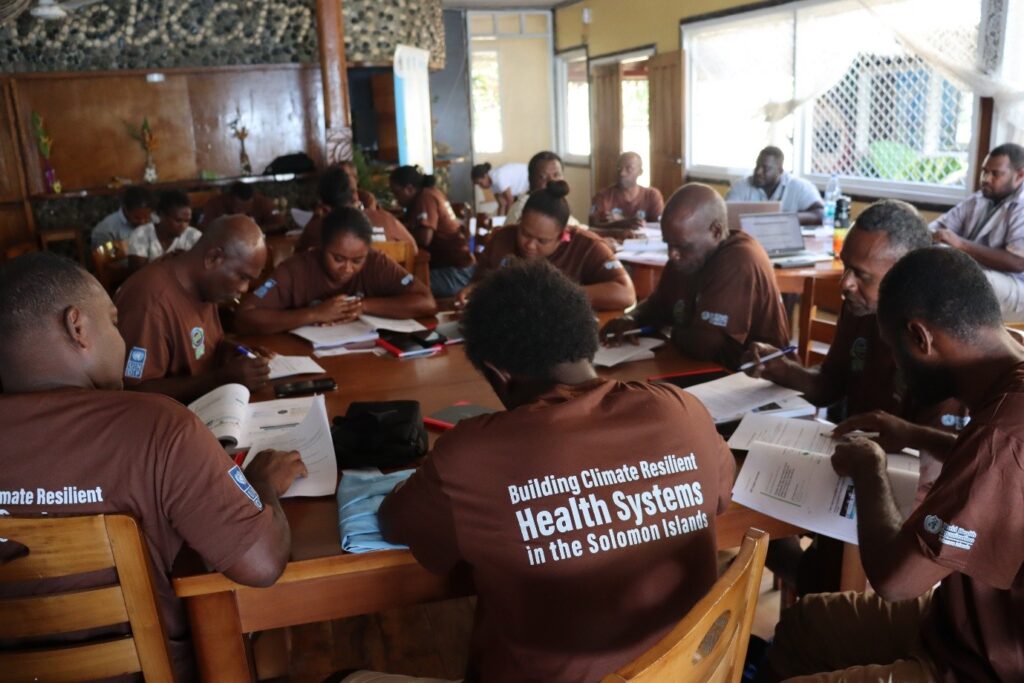
Some of the participants during group activity.
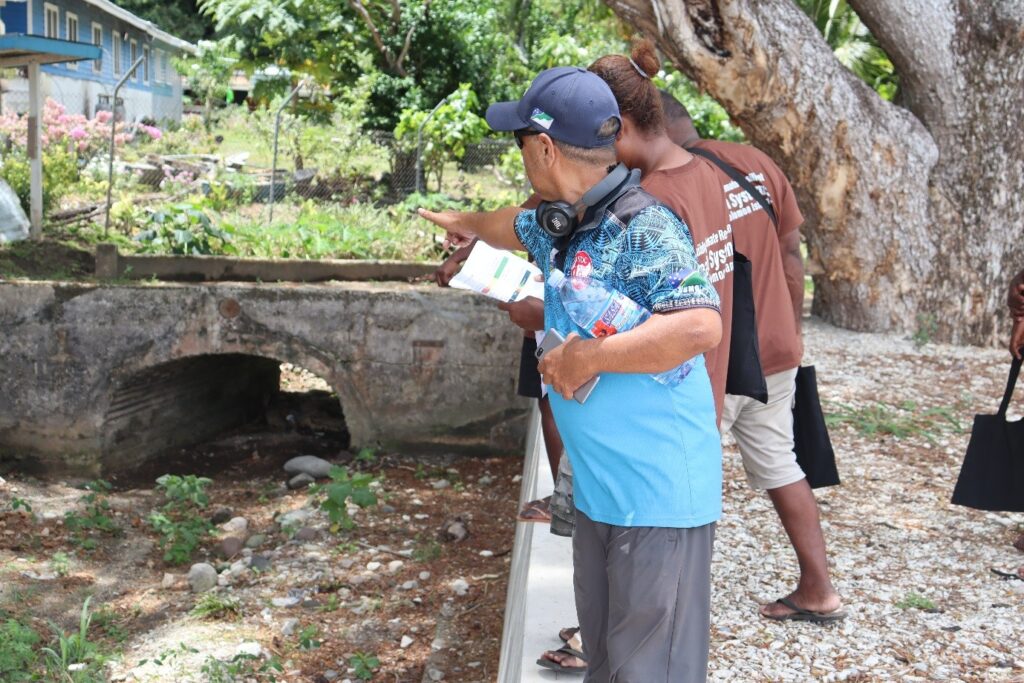
NDMO Representative and some of the participants inspects a drain beside Visale AHC.
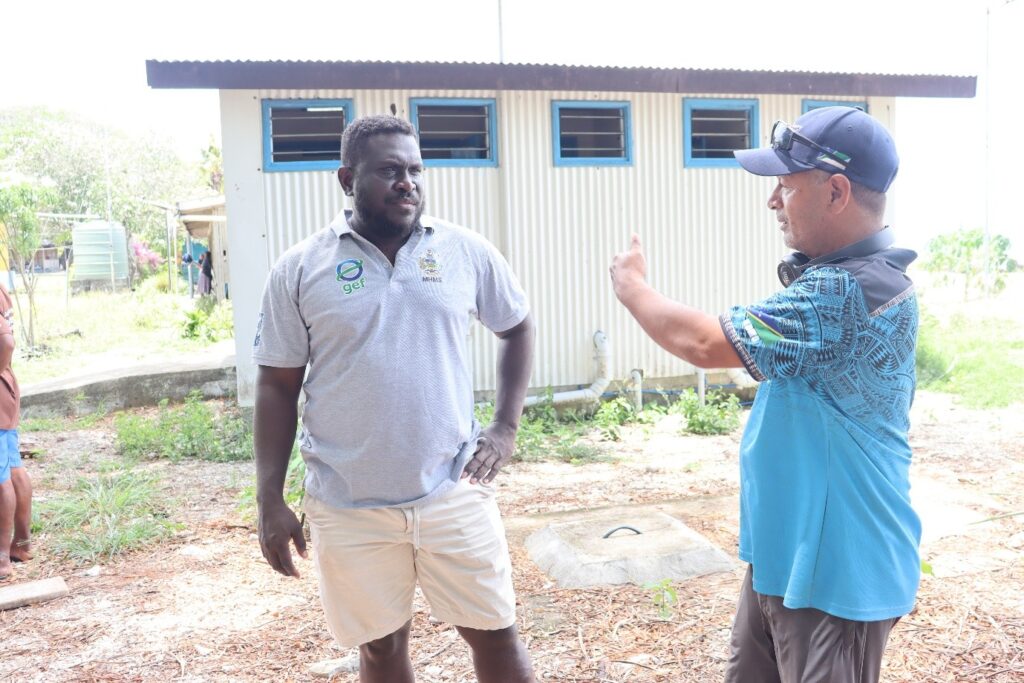
NDMO Representative and Guadalcanal Health Director discussed some climate-related hazards and disasters affecting the Visale AHC, and ways of preparedness and resilience in safeguarding the health services.