

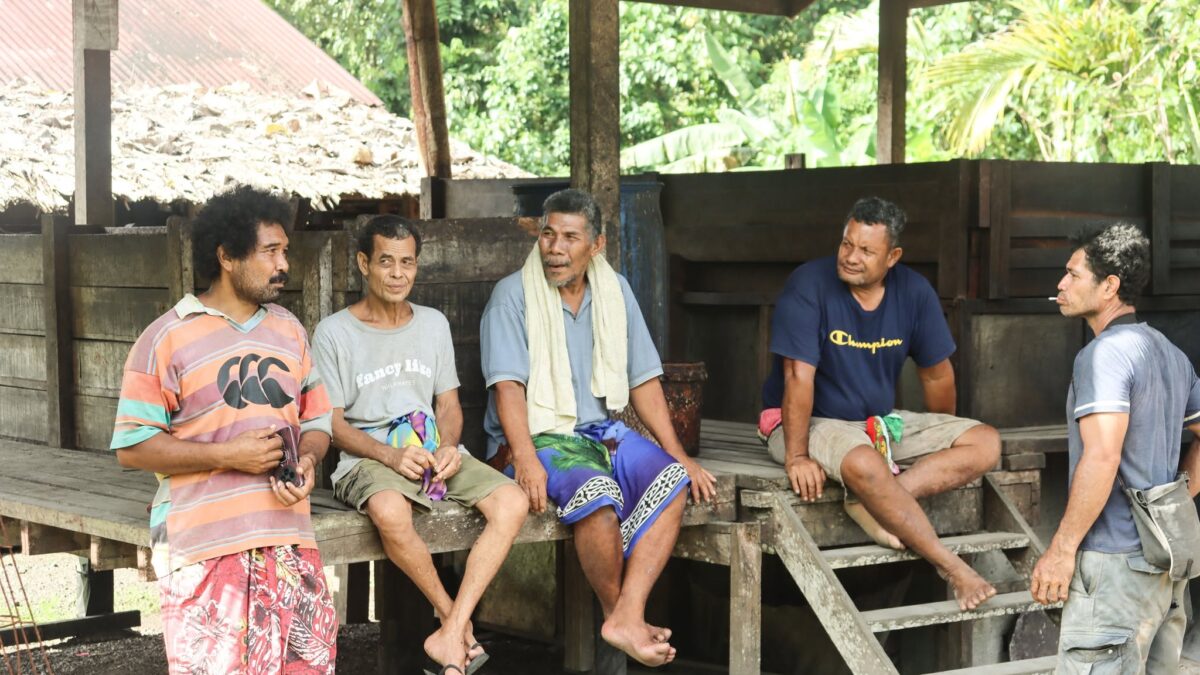
Cocoa farmers in Nukukaisi village in Makira/Ulawa Province. The SIART Project is supporting 9 Agribusiness Producer Organizations in cocoa in the province representing a $3.1 million investment.
More than 14,000 local farmers benefitting from SIART’s support
Thursday 24 September, Honiara – A total of 14, 665 local farmers across Guadalcanal, Malaita and Makira/Ulawa Provinces are now benefitting from support from the Solomon Islands Agriculture Rural Transformation (SIAR) Project through their respective Agribusiness Producer Organizations (ABPOs).
The SIART Project, a World Bank funded initiative implemented by the Ministry of Agriculture and Livestock, have funding agreements with a total of 96 ABPOs in the three provinces which represents a SBD38.08 million.
Funding to the ABPOs focuses on supporting community farmer groupings and family farms in key value chains like cocoa, coconut, piggery, poultry, including food crops, spice, coffee and honey.
There are 32 ABPOs in Guadalcanal Province with 5,165 beneficiaries, 45 in Malaita Province where 6,166 local ABPO farmers are benefiting and 19 ABPOs in Makira/Ulawa Province benefitting 3,334 local farmers.
The objective behind the ABPO grants is to increase the production capacity and income of smallholder farmers in the targeted areas.
SIART Project Manager, Mr. William Okekini highlighted that aside from the funding support, the Project has also committed to help the local farmers improve the quality of, and access to, extension services in crop production, small livestock production, and animal health services.
“It is encouraging to see the positive impacts the project is having on the targeted vulnerable communities for agriculture production and the rest of the project areas.
“We are increasing the income for smallholder and semicommercial farmers engaged in high-value crops and small livestock production while contributing to our objective of enhanced agricultural production, import substitution, and increased export,” Mr. Okekini said.
Out of the 96 ABPOs, 45 focuses on cocoa, 20 in piggery, 14 in coconut, 9 in food crops, 4 in poultry, 2 in spice and one each for coffee and honey covering a total of 30 constituencies on the three provinces.
$18 million investment in Cocoa
With a total investment of SBD18.04 million in cocoa, the SIART Project has 16 ABPOs in Guadalcanal ($6.6 million), 20 ABPOs in Malaita ($8.2 million) and 9 ABPOs in Makira/Ulawa ($3.1 million) Province.
This includes 1,200 households across the three provinces with approximately 6,900 beneficiaries.
As part of the support, SIART has helped local farmers who are members of the ABPOs with the rehabilitation of 880 hectares of existing cocoa farms and have supported 31 nurseries and also providing 300,000 seedling which can be equivalent to 350 hectares.
In terms of infrastructure, SIART has increased the processing capacity of the ABPOs with the construction of 72 new cocoa driers and has rehabilitated 24 existing driers. Additionally, 34 solar driers were also built.
A vital part of the support to the ABPOs is through capacity building. SIART conducted and facilitated relevant trainings for the local cocoa farmers on Integrated Pest and Disease Management (IPDM), farm management, cocoa grafting for genetic improvement, and financial literacy and record keeping to enable farmers to manage their agribusiness.
To operate as an agribusiness, a total of SBD2,764,000 working capital, termed as revolving funds, has been disbursed for the ABPOs to purchase wet beans for processing and also dried beans from local farmers in the communities.
For the Matepono Farmers Association, one of the ABPOs in Guadalcanal Province, support received from the SIART Project is helping them build towards their bigger goal, which is to export their cocoa products.
“Now we are working on building a warehouse as a storage place for cocoa beans in preparation for when we start exporting,” Mr. Greg Leta, Treasurer, of the Matepono Farmers Association, said.
Local farmer, Mr. James Kogana, also from the Matepono area, is very grateful and described SIART’s support as a long-time goal for their farmers and communities.
“It will improve the livelihoods of our people here in the rural area. I believe this will benefit our families and children going into the future so I’m really happy,” he said.
Increased coconut production in sight
The SIART Project has supported 14 ABPOs across the three provinces representing a $5.2 million investment. They include 3 in Guadalcanal Province, 7 in Makira/Ulawa Province and 4 in Malaita Province.
To enable the ABPOs to increase production, 771 hectares of coconut plantations have been rehabilitated under the project with 46 driers being either newly constructed or rehabilitated.
According to recent data gathered by the SIART Project, the current average production of all 14 ABPOs combined is around 700kg per hectare and 540 tons for the 771 hectares.
“After rehabilitation the production of copra should increase to 1.5 tons per hectare,” Project Manager, Mr. Okekini, said.
“Production from the rehabilitated 771 hectares is expected to produce around 1.157 tons, an increase of 617 t0ns of dried copra worth $4.32 million per annum at $7 per kg,” he added.
A total of 418 households in the three provinces are benefitting from SIART’s support in their respective communities reaching up to 2,340 beneficiaries.
Other support includes 11 nurseries of 27,000 seedlings which is equivalent to 219 hectares, 11 storage sheds, construction of 46 hot air driers, equipment, capacity building trainings and a $820,000 working capital to operate their agribusinesses.
Community pig farming projects
SIART has invested a total of $8.7 million into 20 ABPOs, 16 in Malaita Province, 3 in Guadalcanal Province and 1 in Makira/Ulawa Province which is improving the livelihoods of 532 households and benefitting around 3,000 individuals in different communities across the three provinces.
SIART supported the establishment of pig breeding facilities including pig house, breeding stock, feed and equipment and distributed weaner to members of the respective ABPOs.
Mr. Okekini said the project has also supported with pig grower sheds for either individual farmers or for the ABPOs as a group.
“The potential impacts of this investment will be huge which also has the potential of changing the lives of local pig farmers in the communities.
“We are estimating 2,400 weaners produced per annum from the 100 breeder sows supplied which is valued at $1.92 million. That is if they sell at $800 per weaner.
“The project has also supplied 189 weaners to farmers for growing with the potential value of $567,000 when sold at $3,000 per head or approximately 15,000 kg of pork meat,” Mr. Okekini said.
With the piggery ABPOs, SIART ensures that they comply with set environmental safeguards standards with proper housing and waste disposal, management and take into consideration of the animals’ welfare.
A total of $902,000 has been disbursed to the 20 piggery ABPOs to purchase weaners and feed and to operate and manage their ABPOs.
“We also promote the use of local feeds with additional grant to establish feed processing unit for local feeds while also prioritizing improved pig quality and provide training in feed formulation and quality production,” SIART Project Manager, Mr. Okekini, said.
In Malaita Province, sustainable community pig farming projects supported by SIART will improve livelihoods by allowing farmers to produce healthier pigs, which increases income for education and household necessities.
“Our community has been struggling for a long time to have a breeding shelter for our people. And we are so thankful to SIART for supporting us in achieving this dream,” said Tom Irosaea from Fa’arau Village in Central Kwara’ae.
Mr. Irosaea, has been a pig farmer for almost 40 years, and is now a member of the GIF Piggery Farmers Association, made up local farmers in and around Fa’arau village who involve in pig breeding and fattening.
The GIF Piggery Farmers Association is benefitting from a $400,000 grant from the SIART that includes the construction of a breeding and fattening shelter, improvement of breeding stock, tools and equipment and a working capital revolving fund for members of the association to purchase stock and feed.
In Gwaonaoa village, Chairman Mr. Anthony Aumae leads the Arise Rural Farm Community Company Limited, a group consisting of local farmers from closed extended family members.
“For us the aim is to improve the pig farms of our members in terms of production,” Mr. Aumae said.
He described the support received from SIART as the way forward for local farmers to benefit.
Pig farmers in Gwaonaoa village through their association will receive a $200,000 grant from SIART for a breeding shelter and storage house.
“This is mainly for the livelihoods of our families. Because at the moment our members find it quite difficult to earn some income for their families.
“This approach by SIART will be effective with time and patience and all our members are really happy to be involved in this project,” Mr. Aumae said.
As the SIART Project draws down to an end in December 2026 it remains committed to its objective to increase agricultural production and improve market access in selected value chains in Guadalcanal, Malaita, and Makira/Ulawa Province.
- SIART Media Release
ENDS///…with photos
Captions:
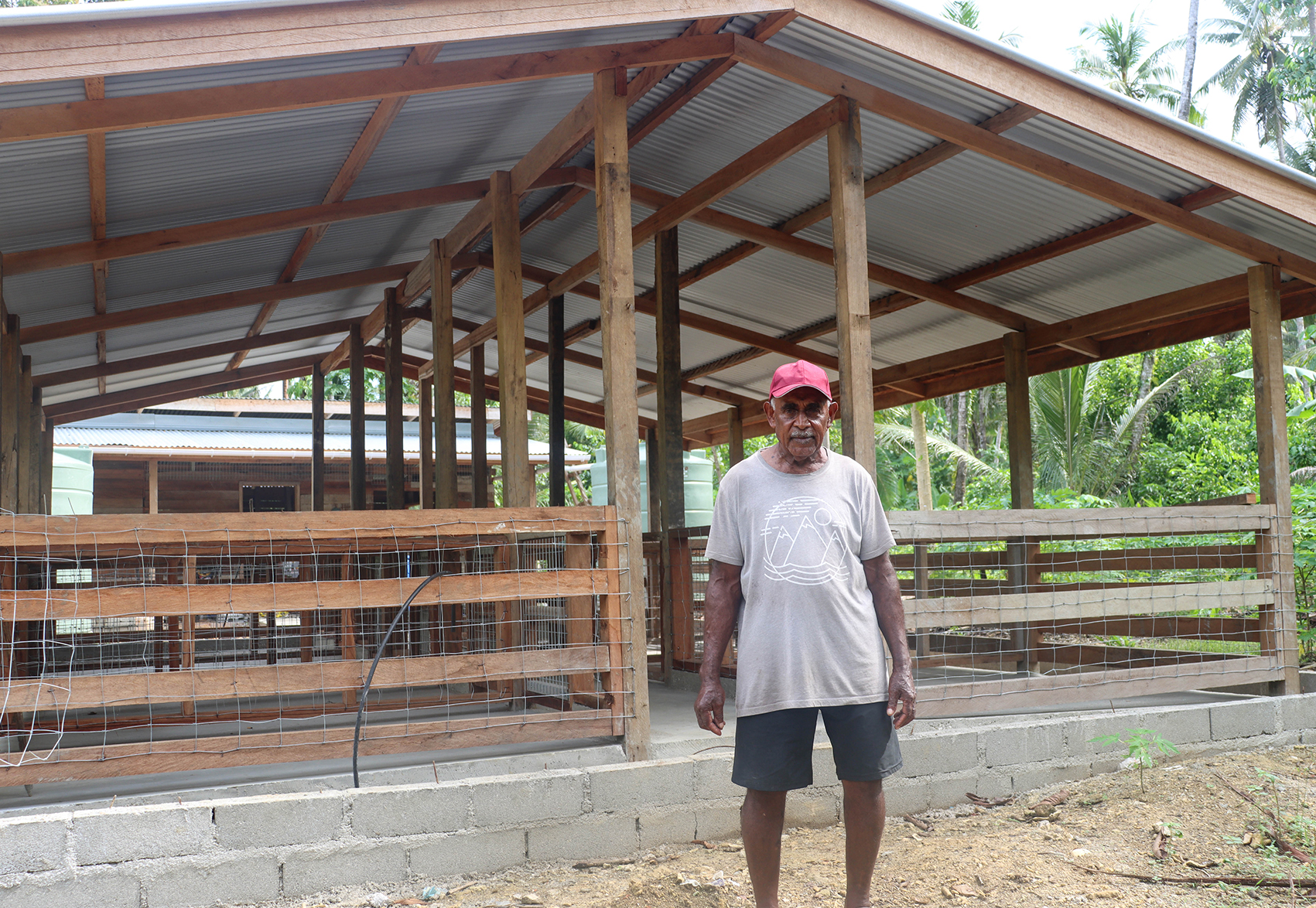
Festus Irumai, Secretary of the Ikoru Raku Farmers Association in Kiu Village, West Are’are, Malaita Province standing in front of their piggery breeding shelter supported by the SIART Project.
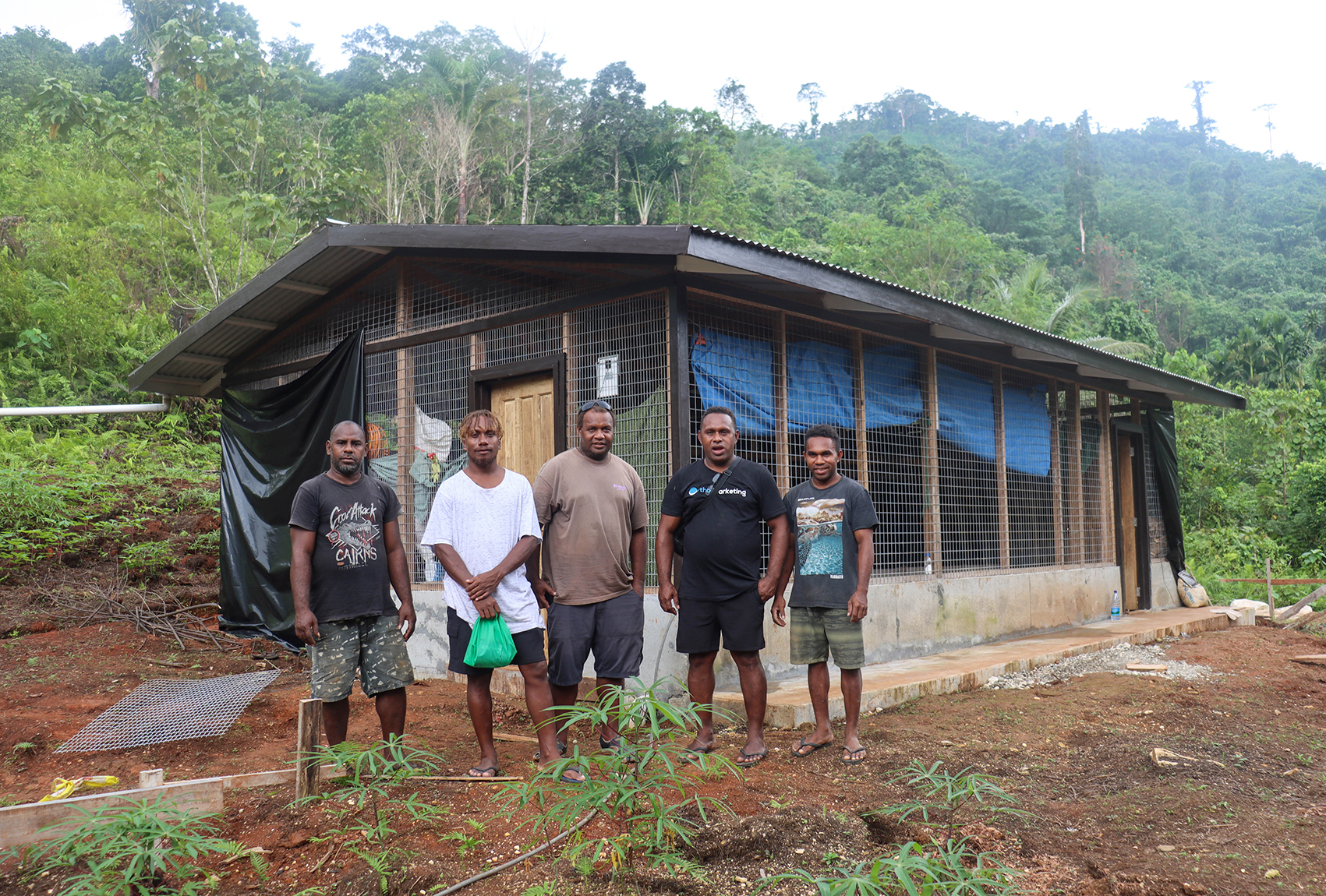
Poultry farmers at Analolo village, in Central Kwara’ae and SIART Staff visiting their poultry house and the recently delivered 500-day-old chicks from the SIART Project.
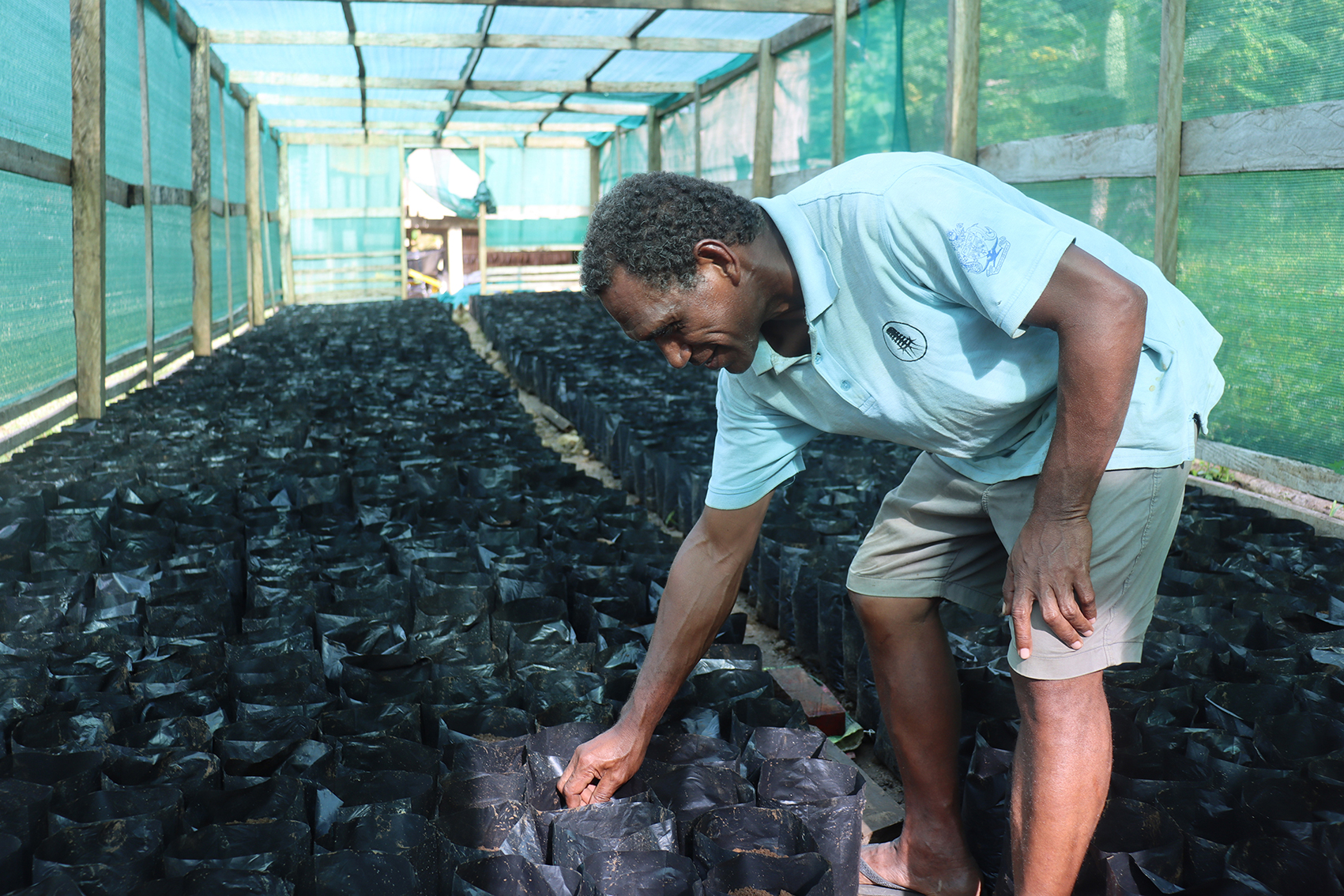
A local farmer from North Malaita in their ABPO’s cocoa nursery. SIART has supported cocoa ABPOs in Guadalcanal, Malaita and Makira/Ulawa Province with 31 nurseries and also providing 300,000 seedlings.
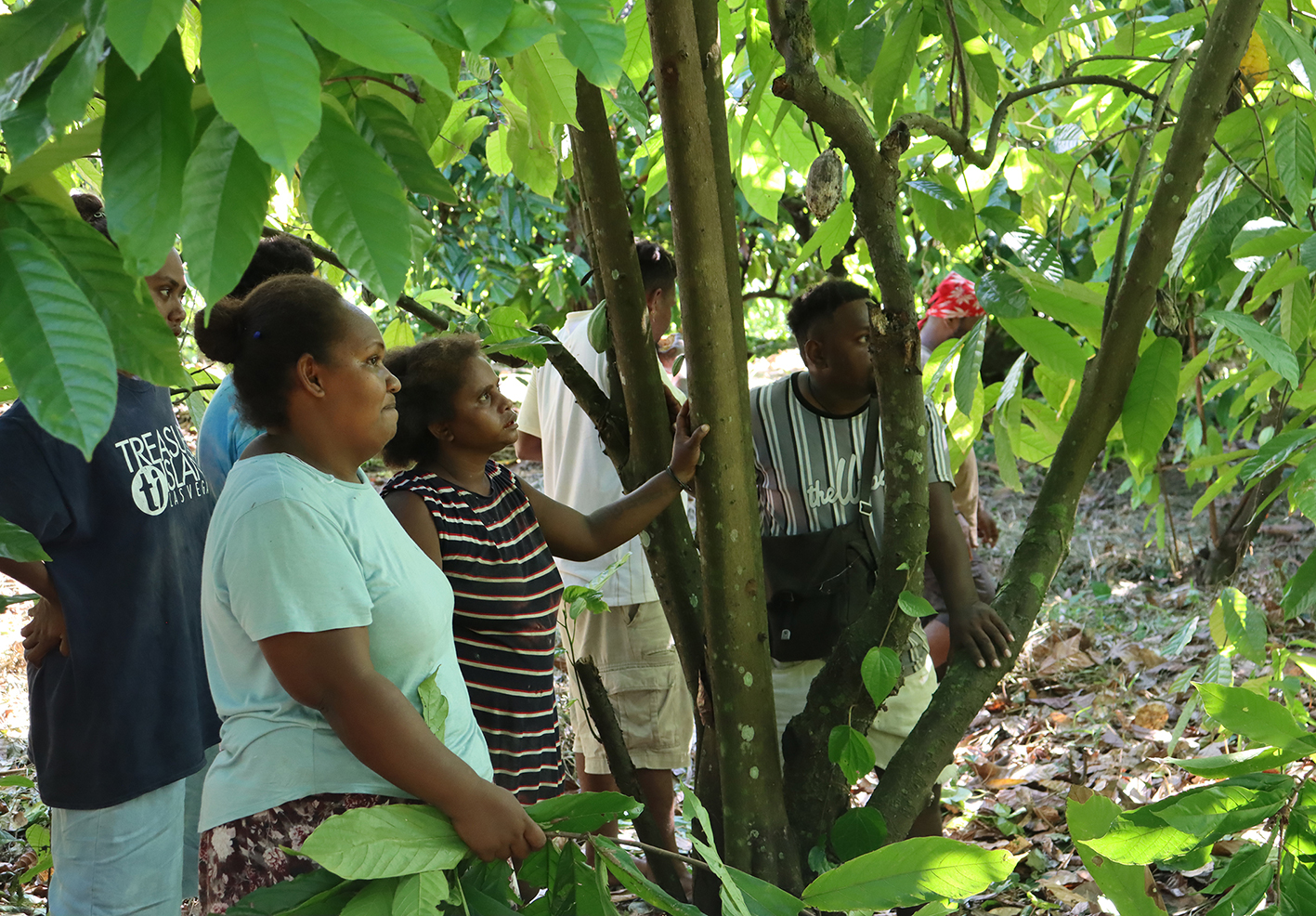
Cocoa grafting training for farmers in California, Guadalcanal Province.
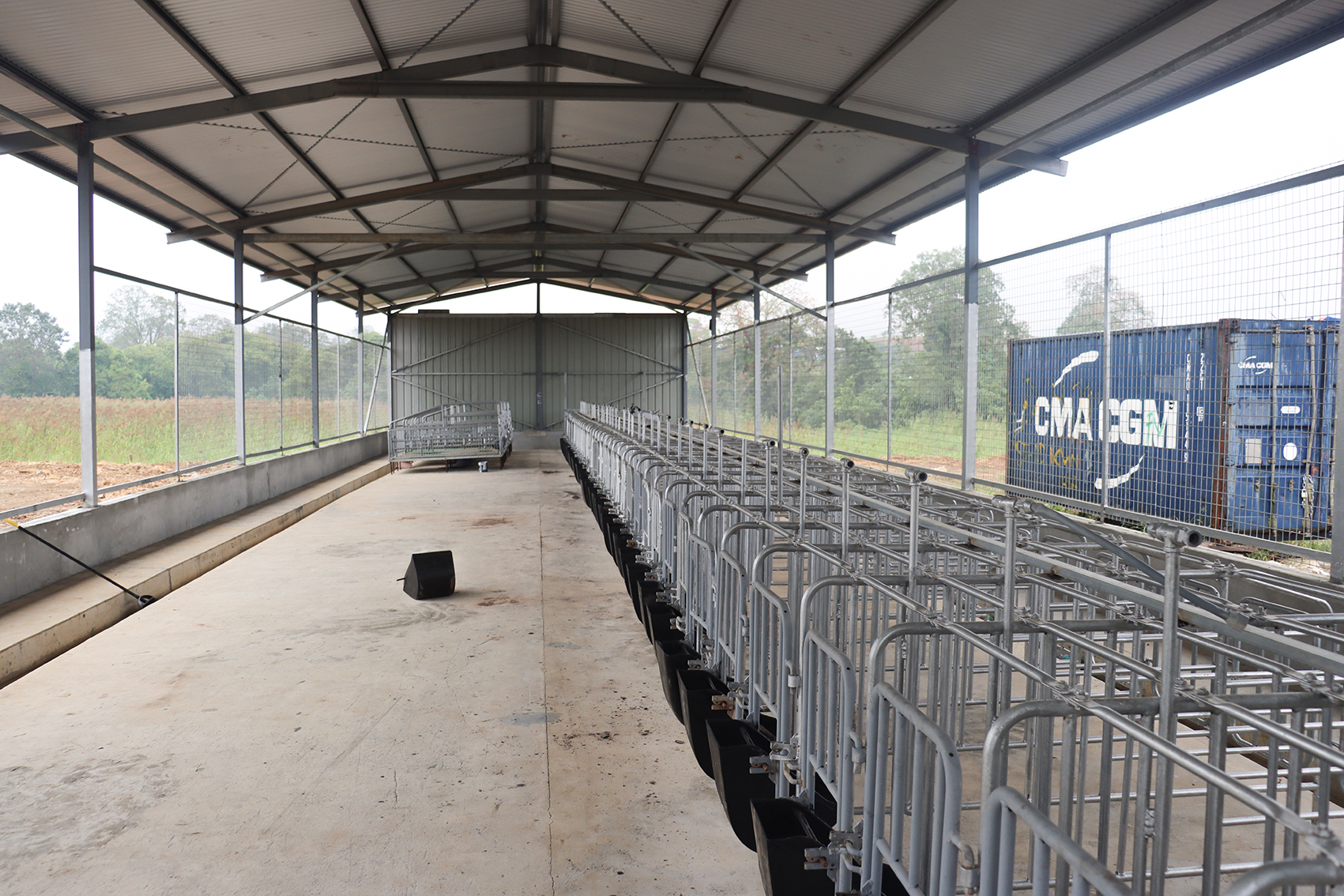
A piggery breeding shelter in Guadalcanal Province supported by the SIART Project.
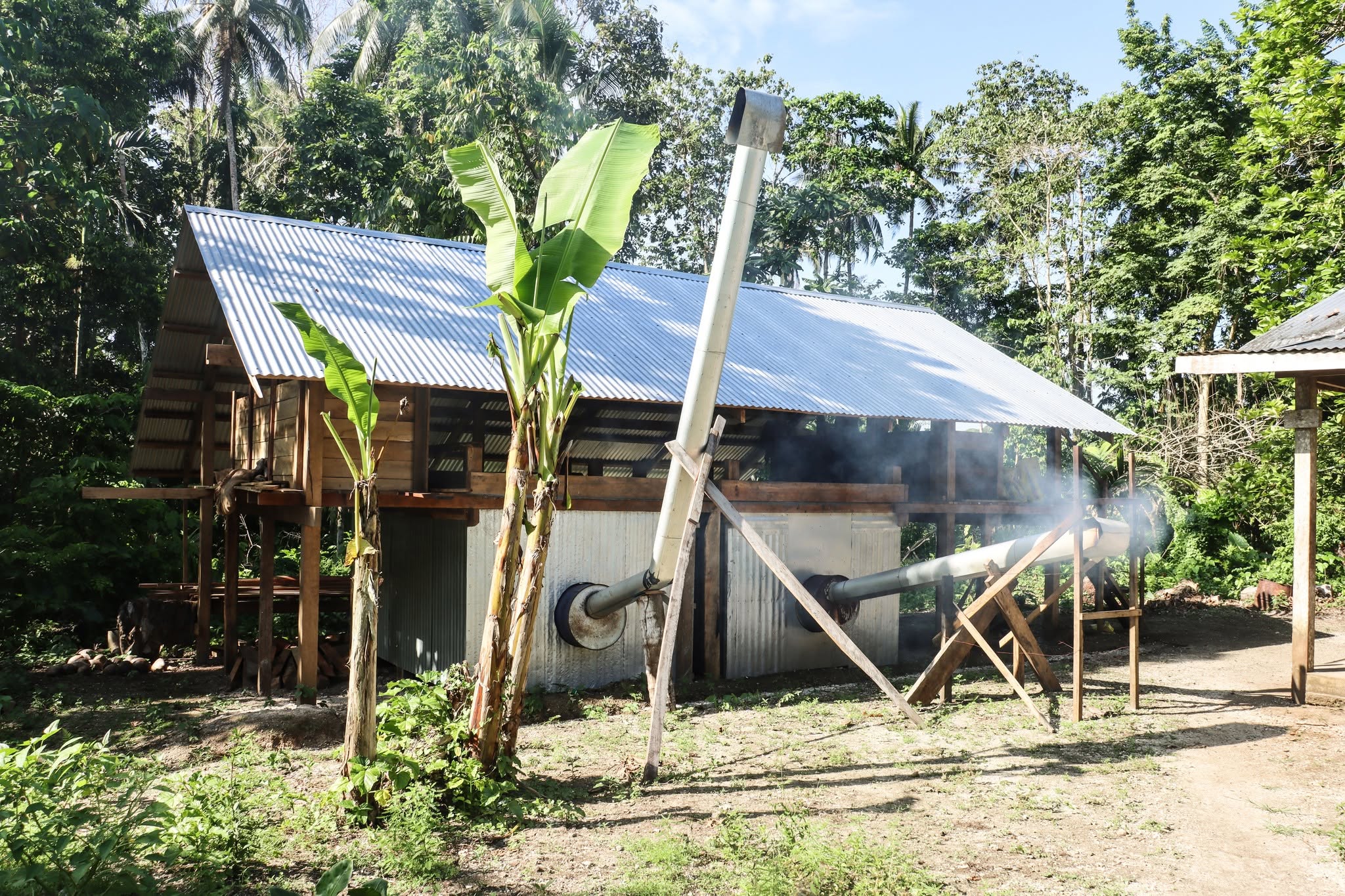
A cocoa drier in Ngoragora village near Kirakira, Makira/Ulawa Province supported by the SIART Project.