

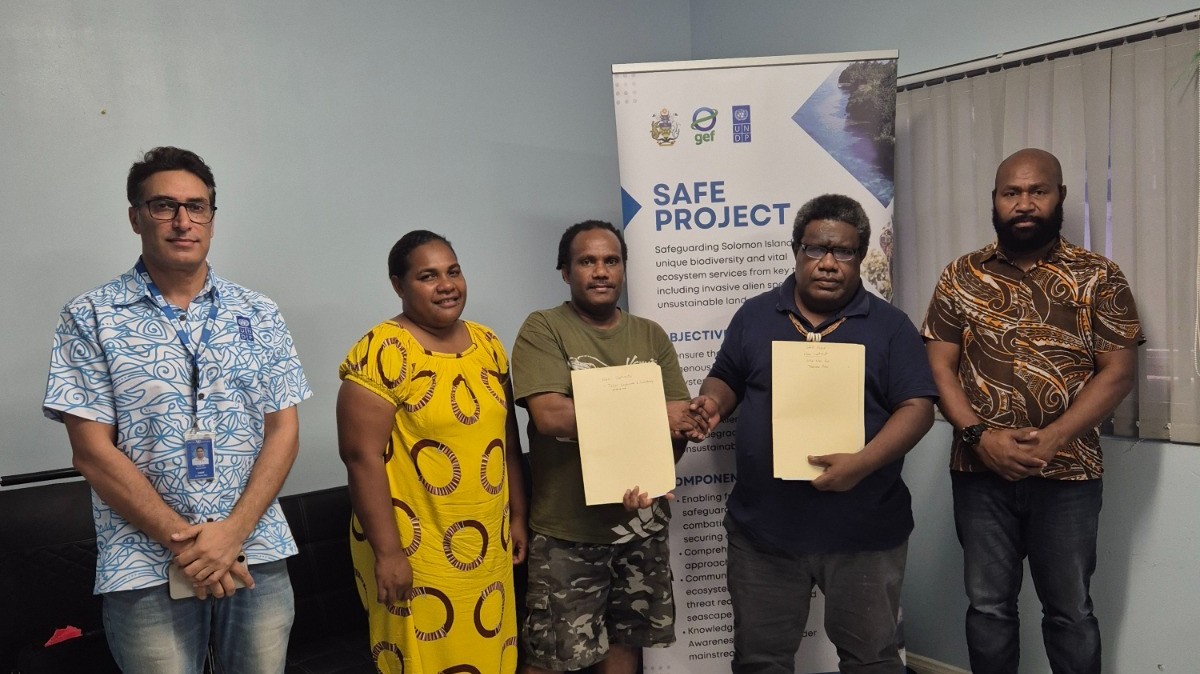
MECDM Awards Contracts to Advance Sustainable Land Management under SAFE project
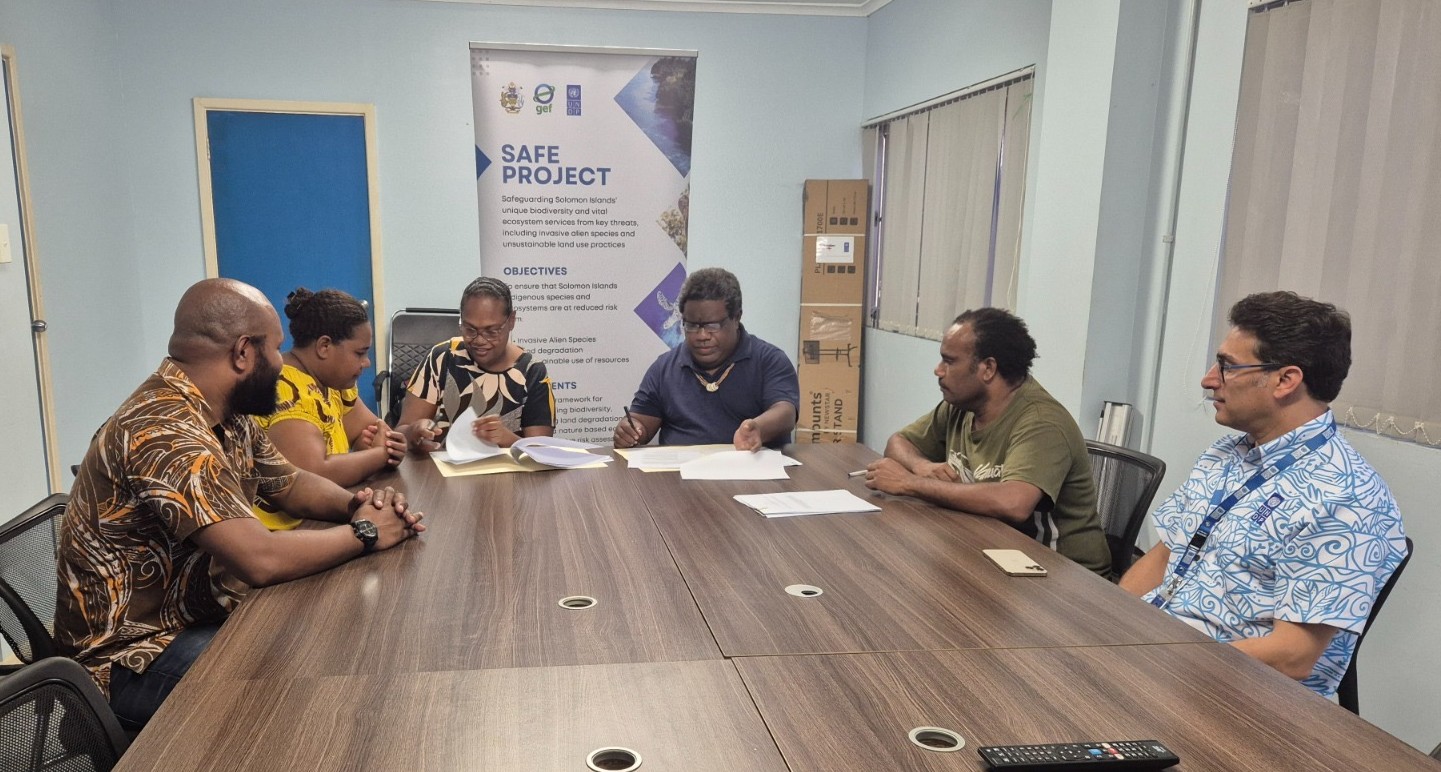
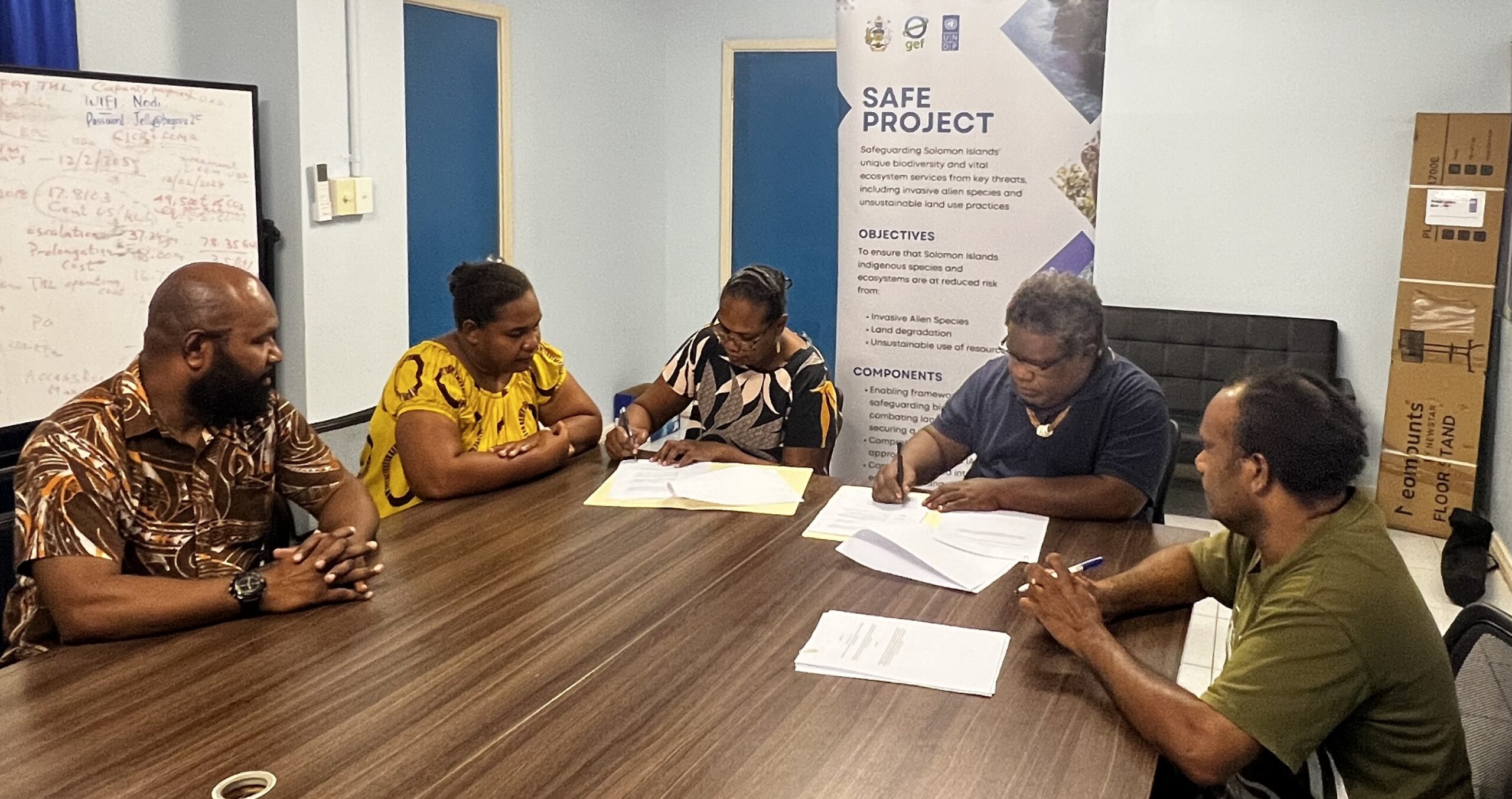 The Ministry of Environment, Climate Change, Disaster Management and Meteorology (MECDM) awarded contracts to Telios and Leiko Nei Go to support the implementation of Sustainable Land Management (SLM) and Climate-Smart Agriculture (CSA) activities in Malaita and Temotu Provinces under the SAFE project.
The contracts were formally signed by the Permanent Secretary of MECDM during a brief signing ceremony attended by senior Ministry officials and representatives of the Project Management and Coordination Unit (PMCU) and SAFE project team.
Speaking at the ceremony, the Permanent Secretary welcomed the commencement of this important phase of implementation and thanked the SAFE project team for the coordination provided throughout the process. The PS emphasized the importance of translating project investments into tangible results for communities and landscapes in the target provinces.
Through these engagements, Telios and Leiko Nei Go will work closely with provincial stakeholders and local communities to promote sustainable land-use practices and climate-smart agriculture. The activities are expected to strengthen local capacities, improve management of productive landscapes and contribute to reducing pressures on biodiversity and ecosystem services.
The signing ceremony was organized by the SAFE project – “Safeguarding Solomon Islands’ Endemic and Globally Threatened Biodiversity and Ecosystem Services from Key Threats, Particularly Invasive Alien Species and Unsustainable Land Use Practices.”
The SAFE project is implemented by MECDM, with support from the United Nations Development Programme (UNDP) and financing from the Global Environment Facility (GEF). The project supports government, provincial stakeholders and communities to address threats to biodiversity while promoting sustainable land management, climate-resilient livelihoods and improved stewardship of Solomon Islands’ natural resources.
The award of these contracts represents an important milestone for the SAFE project, moving planned interventions into practical implementation at the provincial and community levels.