

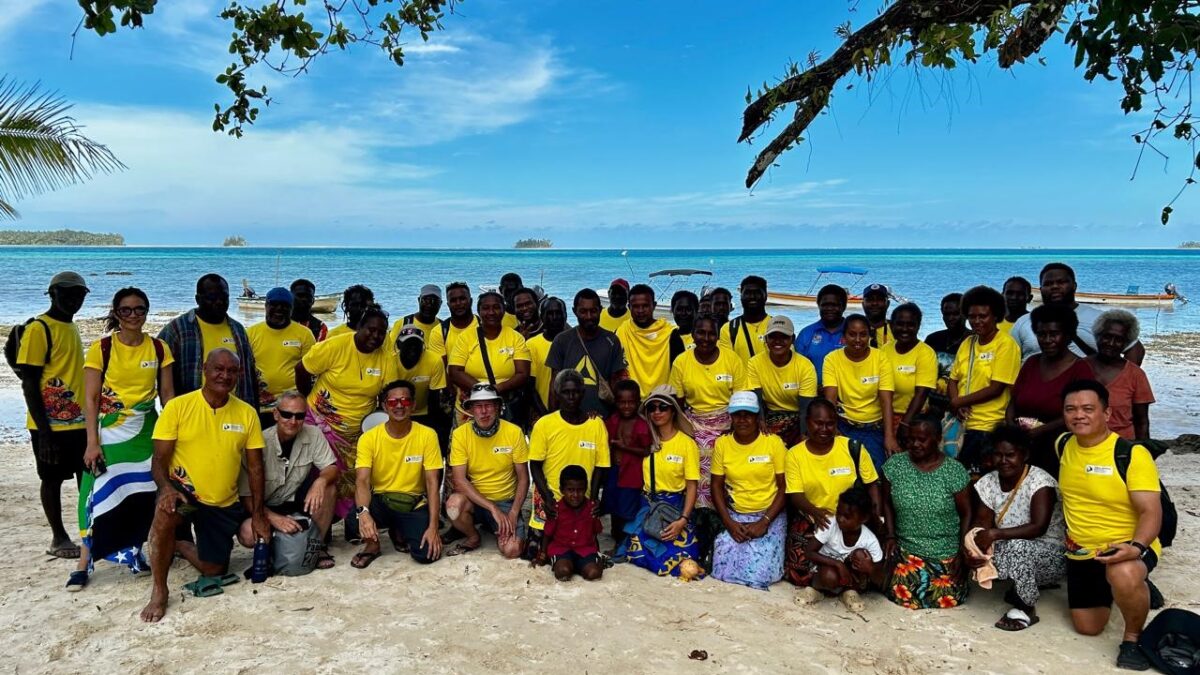
Group photo of delegates, partners and communities during the site visit to Rarumana, Vonavona Lagoon in the Western Province (Source: Corzierrah Posala, CTI-CFF Regional Secretariat)
CTI DELEGATES CONDUCTS COMMUNITY VISIT TO SEAWEED FARMING AT RARUMANA COMMUNITY, WESTERN PROVINCE, SOLOMON ISLANDS
A half-day community visit to Rarumana in Vonavona Lagoon, Western Province, was conducted on Thursday 30th July 2026 by delegates of the Coral Triangle Initiative on Coral Reefs, Fisheries and Food Security (CTI-CFF) as part of the Seascapes Technical Regional Exchange and Technical Working Group Meeting hosted in Noro, Solomon Islands from 27–29 July 2026.
The field visit provided an opportunity for delegates to engage directly with the local community and seaweed farmers. During the visit, the community demonstrated the seaweed farming methods and practices undertaken at the community level and engaged the delegates to participate. It was highlighted by the community that the seaweed farming contributes to food security and livelihoods.
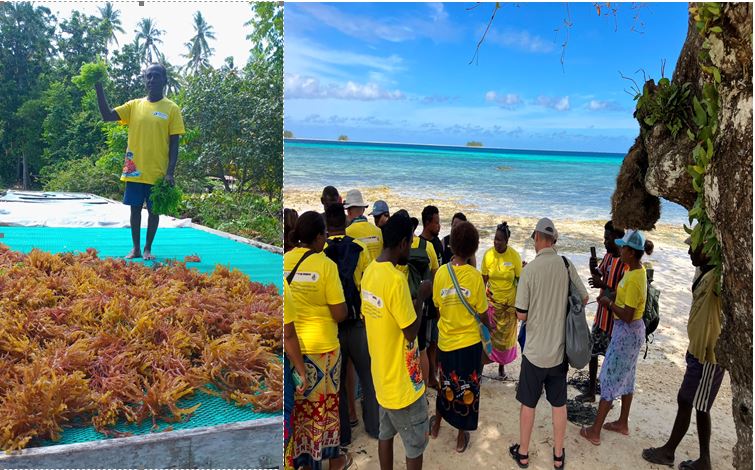
Community demonstration of seaweed farming methods to delegates
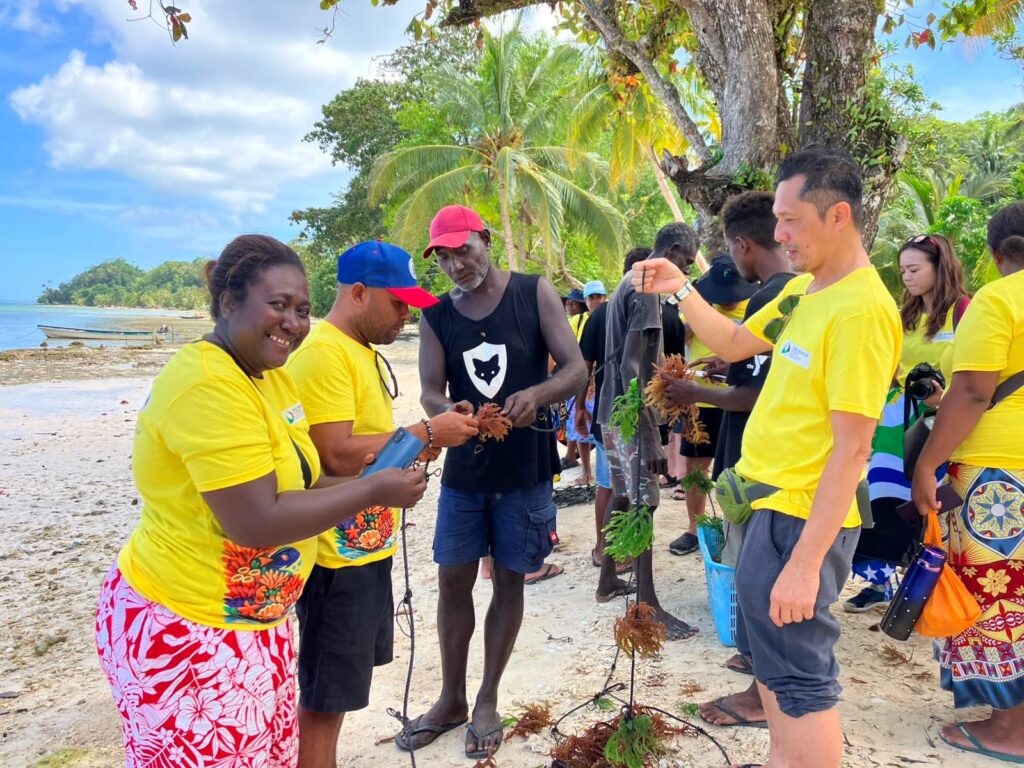
Delegates engaged in the demonstration activity at the community
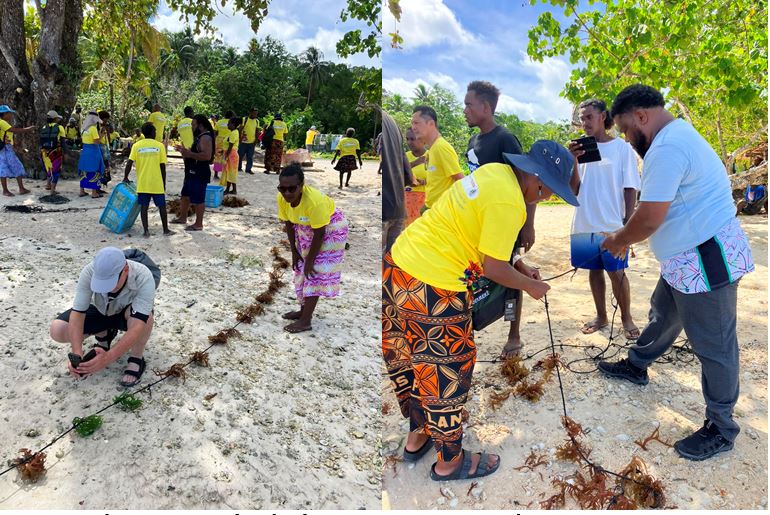
Delegates engaged in the demonstration activity at the community
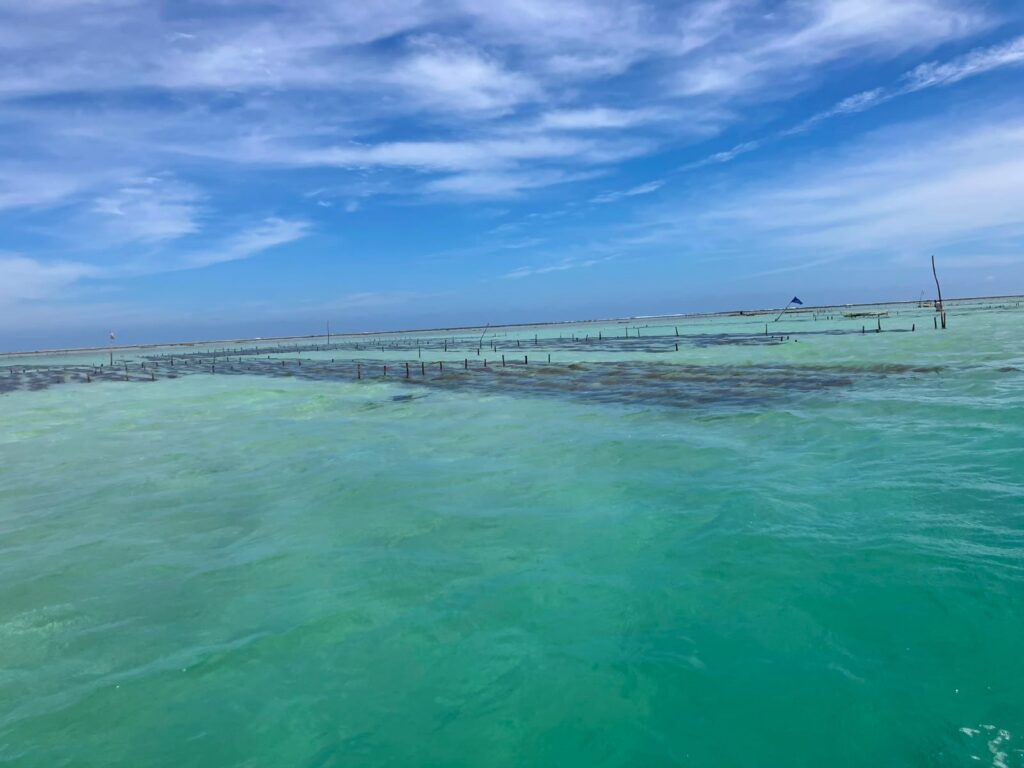
Delegates visit the Seaweed farms located outside the Rarumana Community in Vonavona lagoon, Western Province
The delegates and partners have appreciated the organized visit to the community. The Rarumana community was commended for their commitment to safeguarding marine biodiversity and strengthening traditional knowledge systems. The engagement highlighted the vital role of communities in achieving the CTI-CFF’s collective vision of sustainable seascapes and resilient coastal livelihoods.
The field visit was seen as successful as it provided an opportunity for delegates and partners to not only interact with the community but also learn firsthand the seaweed farming techniques. One of the key outcomes from the field visit is that it will inform the government and regional strategies to reinforce the importance of integrating community perspectives into policy frameworks, ensuring that conservation and development efforts remain inclusive and effective.