

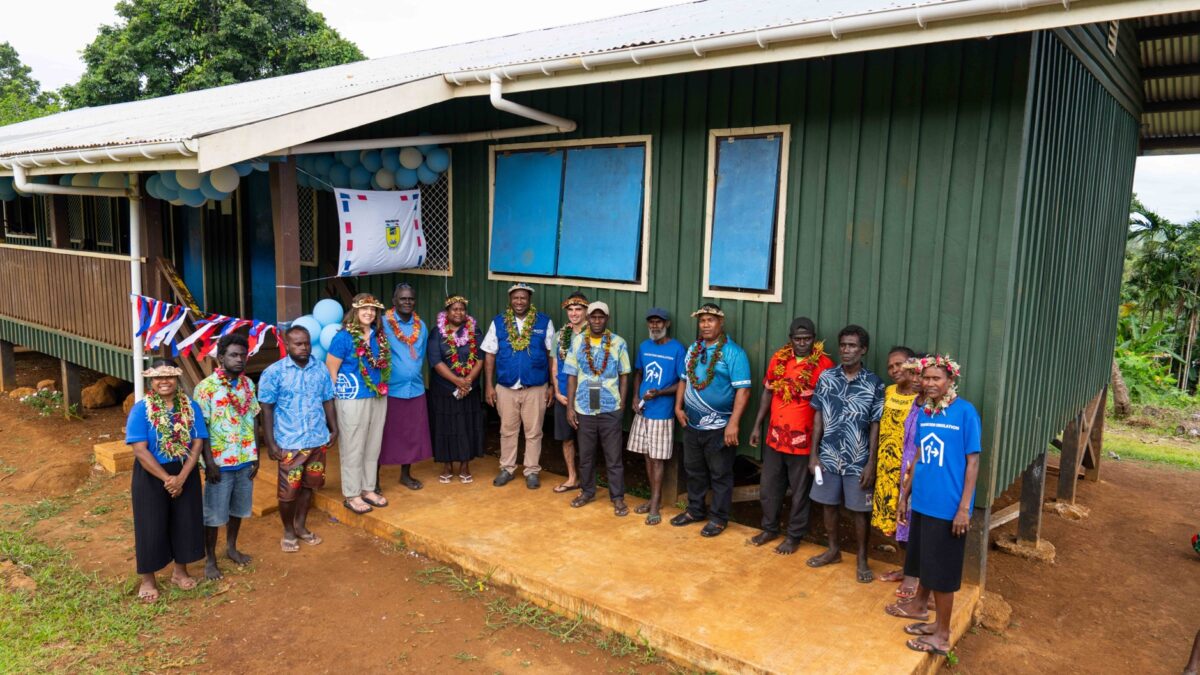
Residents of Kinamara community join representatives from IOM and the Government of Solomon Islands for a group photo outside the upgraded evacuation centre following its official handover.
New Evacuation Centres Strengthen Disaster Preparedness in Solomon Islands
Honiara, Solomon Islands, July 2026 – The International Organization for Migration (IOM), together with the Government of Solomon Islands and the Korea International Cooperation Agency (KOICA), marked the successful completion of the project “Strengthening Resilience Against Disaster and Climate Change Related Fragility in the Solomon Islands” through the handover of improved community evacuation centres and a reception celebrating the project’s achievements and partnerships.
Earlier this month, IOM Solomon Islands joined the Ministry of Environment, Climate Change, Disaster Management and Meteorology (MECDM), the Western Provincial Government and community leaders to officially hand over three upgraded multi-purpose evacuation centres in Kinamara, Rawaki and Canaan in Western Province. The handover ceremonies brought together government officials, community representatives, women and youth leaders to celebrate investments that strengthen preparedness and reduce vulnerability in communities most exposed to disaster and climate risks.
Speaking at the handover ceremonies, Deputy Secretary Technical of MECDM, Agnetha Vave-Karamui emphasized, that resilience begins with communities. She highlighted the collective efforts that strengthened disaster plans, established disaster committees, conducted simulation exercises and improved local emergency infrastructure.
“Today, as we hand over this evacuation centre, we are not only opening the doors to a building, but a place of refuge, safety and unity,” said Vave-Karamui. “A place that belongs to the community, built for the community and to be sustained by the community.”
Western Provincial Government and community leaders also welcomed the new facilities and the partnerships that made them possible.
“Together we are building communities that are better prepared, more resilient and safer for the future,” said the Honourable Redfern Alesina, Minister of Planning for the Western Provincial Government.
“This project has demonstrated what can be achieved when partners work together with communities. This evacuation centre is a symbol of hope, safety and partnership,” said the Principal of the Rawaki Community High School.
A women’s committee representative from Kinamara added, “This evacuation centre means a lot for us. It is a place for shelter, a place for protection and a place for safety. Thank you very much.”
To commemorate the conclusion of the project, IOM hosted a reception in Honiara on 24 July, bringing together government counterparts, KOICA, provincial representatives, civil society organizations, community leaders and development partners. The event highlighted key achievements through stakeholder remarks, a photo exhibition and the premiere of videos documenting the project’s impact across Solomon Islands.
“These achievements represent much more than completed activities. They represent stronger institutions, better-prepared communities, and greater confidence that Solomon Islands is becoming more resilient to future risks,” said Seoyeun Bang, Deputy Country Director, KOICA Fiji Office. “For KOICA, this project demonstrates the importance of investing not only in infrastructure, but also in people, institutions and partnerships that help communities prepare, adapt and thrive in the face of future challenges.”
“Resilience is often discussed in terms of plans, systems and infrastructure, but resilience is ultimately about people,” said Solomon Kantha, Chief of Mission, IOM Coordination Office of the South Pacific. “It is the confidence of parents who know their children will be safe during a cyclone, the assurance of community leaders who know how to organize support, and the determination of communities that continue to adapt and prepare despite facing significant climate and disaster risks.”
The project strengthened disaster preparedness, climate resilience and climate mobility governance across Solomon Islands. It supported vulnerability assessments in nine at-risk communities, improved seven multi-purpose evacuation centres, strengthened disaster response and displacement management capacities, and helped community preparedness for emergency preparedness measures.
The project also advanced national policy and public awareness on planned relocation and climate mobility, integrating climate change into education and reached more than 1,500 people through awareness campaigns and innovative learning resources. These efforts are supporting informed decision-making and building community resilience.
Funded by KOICA, the project was implemented by IOM in close partnership with the Government of Solomon Islands and local communities to strengthen preparedness, reduce vulnerability and support climate resilience across Solomon Islands.
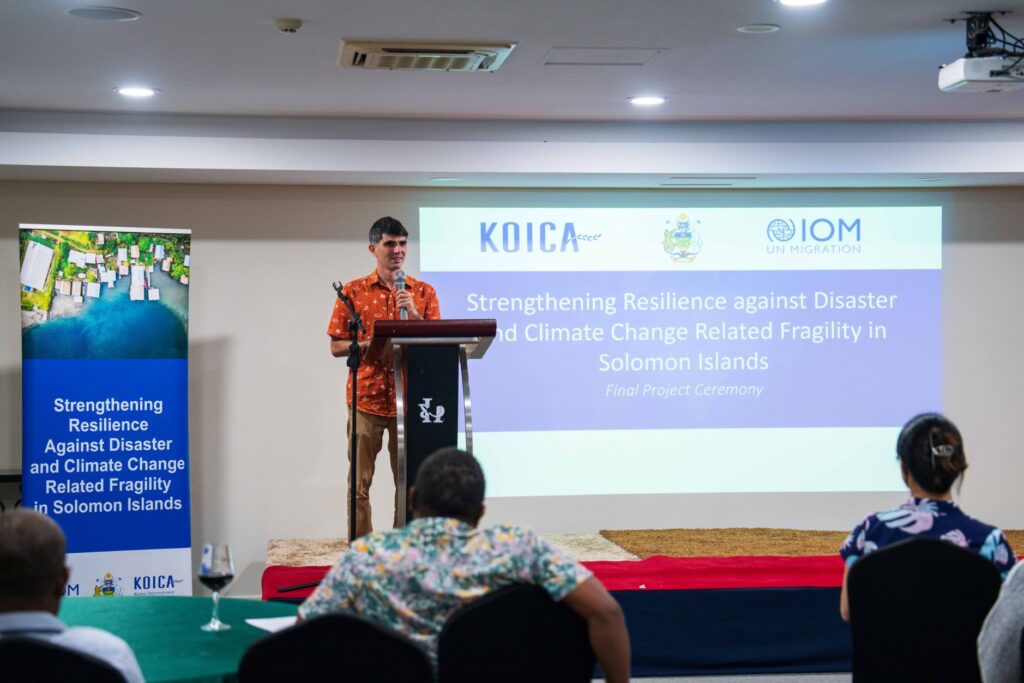
Harut Sarian, Project Manager at IOM Solomon Islands, delivers remarks at the closing reception of the KOICA-funded resilience project, celebrating strengthened disaster preparedness and climate resilience across Solomon Islands.
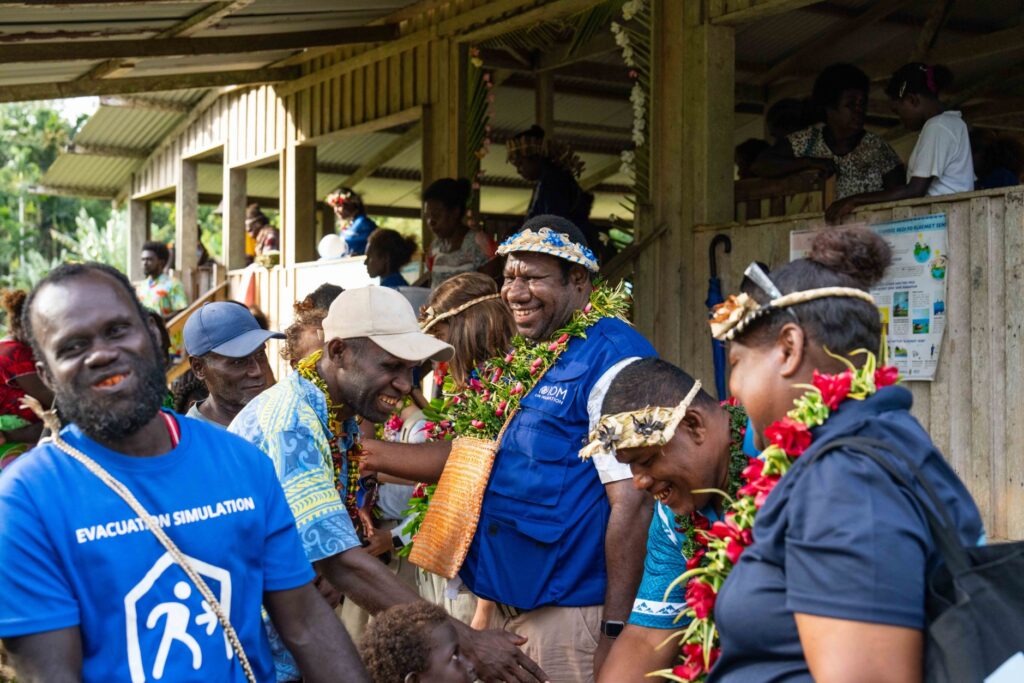
Community members from Kinamara community greet representatives from IOM and the Government of Solomon Islands following the handover ceremony, expressing their appreciation for the partnership and support in strengthening local disaster preparedness and resilience.
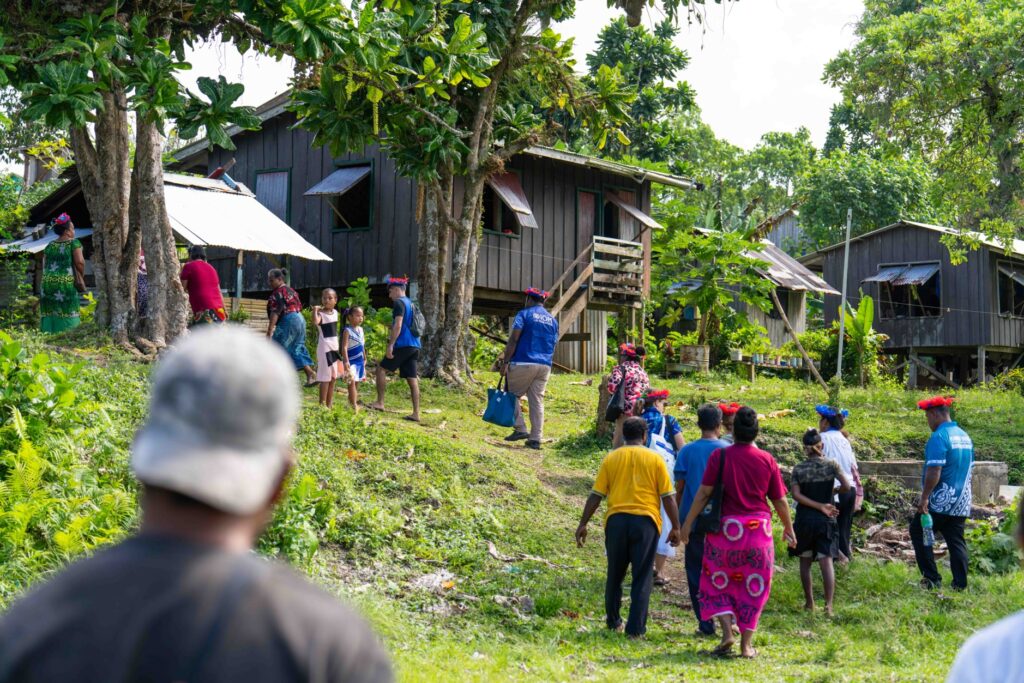
Solomon Kantha, Chief of Mission of the IOM Coordination Office for the South Pacific along with representatives from the Solomon Islands Government make their way to Rawaki community for the official handover of the upgraded multi-purpose evacuation centre.
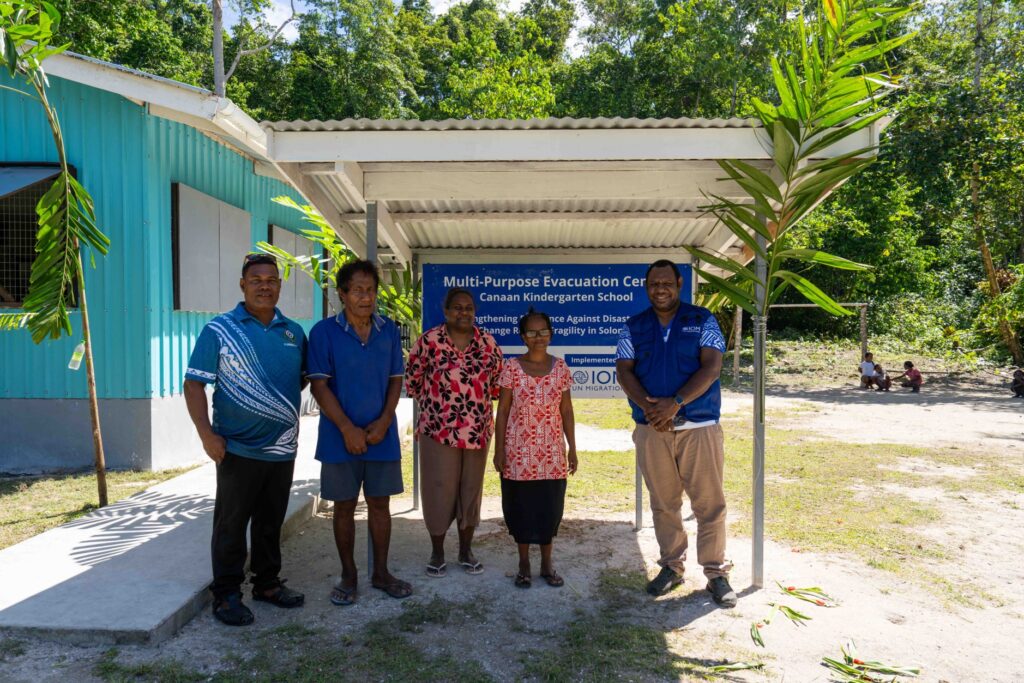
Representatives from IOM, the Solomon Islands Government and the Canaan community pose in front of the upgraded multi-purpose evacuation centre following its official handover, marking an important milestone in strengthening community safety and preparedness.