

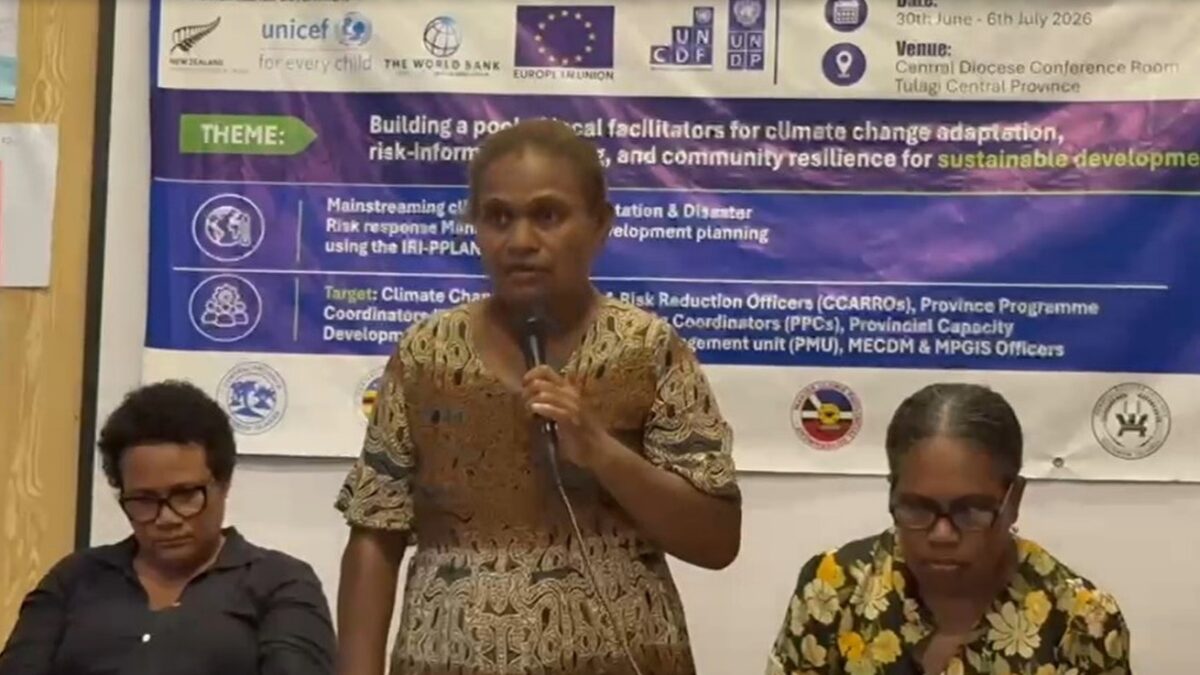
Provincial Treasurer of Central Province, Jenny Tura delivering her closing remarks to mark the end of the TOT in Tulagi on 6th July 2026
Provincial Project Planners Equipped with Tools to Drive Community Climate Resilience
A major Training of Trainers (TOT) initiative has successfully equipped provincial officers with the advanced planning methodologies needed to protect vulnerable Solomon Islands communities from rising sea levels, coastal erosion, and extreme weather.
The intensive training, which officially concluded in Tulagi on 6th July 2026, focused on integrating climate change adaptation and disaster risk management into local development planning. Officers from across the nine provinces mastered the Integrated Risk Informed-Planning Tools (IRI-PLANT) and how to use UNCDF tools such as ‘’Assessing Climate Change Adaptation Framework (ACCAF)’’. These toolkits allow provincial governments and Ward Development Committee (WDCs) planning to pinpoint high-risk zones and direct funding to the less risky and less disaster-prone areas.
Sponsored under Component 2B of the World Bank-funded Integrated Economic Development and Community Resilience (IEDCR) project and United Nations Capital Development Fund (UNCDF) funded Local Climate Adaptive Living Facility (LoCAL), the program was jointly delivered by the Ministry of Provincial Government and Institutional Strengthening (MPGIS) and the Ministry of Environment, Climate Change, Disaster Management and Meteorology (MECDM). The sole aim was to train provincial officers as trainers to deliver further training in the communities. A similar TOT was successfully conducted in Auki in 2024 on participatory planning and social accountability.
This intensive TOT program was delivered through seven resilience strategic modules designed to transition provincial officers from foundational theory to practical field deployment. Module One – IEDCR Project, Policies & Training Overview: grounded the officers in the legal and policy frameworks guiding the IEDCR project and the Provincial Capacity Development Fund (PCDF) criteria, project eligibility conditions, and their shared responsibilities in building community resilience.
The second module – Climate Change & Disaster Risk Management Awareness: built a foundational understanding of climate drivers and the Disaster Risk Management (DRM) cycle (prevention, preparedness, response, and recovery) using localized DRM response checklist for ward-level disaster preparedness planning. The third module – Introduction to the IRI-PLANT Methodology: delved into community-level vulnerability and risk assessments where the officers mastered the seven-step IRI-PLANT methodology, gained the practical skills to craft risk statements, prioritized community vulnerabilities, and developed localized climate risk profiles.
The fourth module – Mainstreaming Climate Change & DRM into Ward Development Plans: integrated risk planning directly into local government policy, budgeting, and decision-making where participant’s capacity was advanced using the complementary strengths of IRI-PLANT for planning and LoCAL’s ACCAF tools for monitoring and evaluating climate-responsive projects.
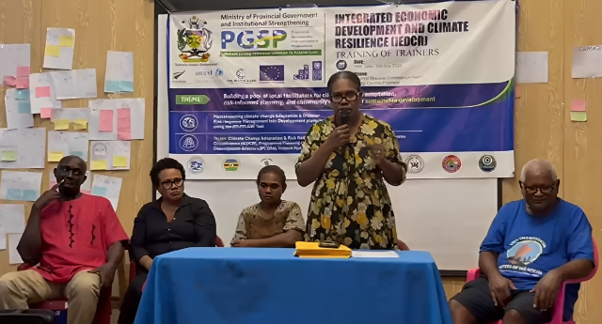
Curriculum Development Specialist, Dr. Christian Fidali, making her closing remarks at Diocese of Central Conference room, Tulagi, 6th July 2026
In the fifth module – Environmental & Social Safeguards: officers applied the World Bank’s Environmental and Social Framework (ESF) directly to local sub-projects, while module six – Inclusivity & Equity: embedded Gender Equality, Diversity, and Social Inclusion (GEDSI) principles into community development. And the final module, Resilient Leadership: utilized systems thinking to solve complex, evolving climate challenges.
Closing the training on behalf of Central Province Premier, Hon. Kenneth Sangupari, Provincial Treasurer, Jenny Tura, challenged the participants to immediately translate the certificates they were awarded into community action. “You now carry the responsibility to raise awareness and inspire action in your provinces and communities in the wards,” Tura told participants. “Success will be measured by the positive impact on lives and communities, not by the certificates you receive”, she added.
Climate Change Consultant – LoCAL, Dr. Morgan Wairiu emphasized that the training combined local expertise with external tools to create global solutions. “The capacity within each province is a critical asset. Sharing this knowledge through training enables us to better support communities worldwide,” Dr. Wairiu noted.
IEDCR Curriculum Development Specialist Dr. Christina Fidali praised the energetic, two-way collaboration during the sessions. She expressed absolute confidence in the participants’ readiness to lead the next phase of the project, pointing to the IEDCR project’s recent World Bank award as proof of their operational capability.
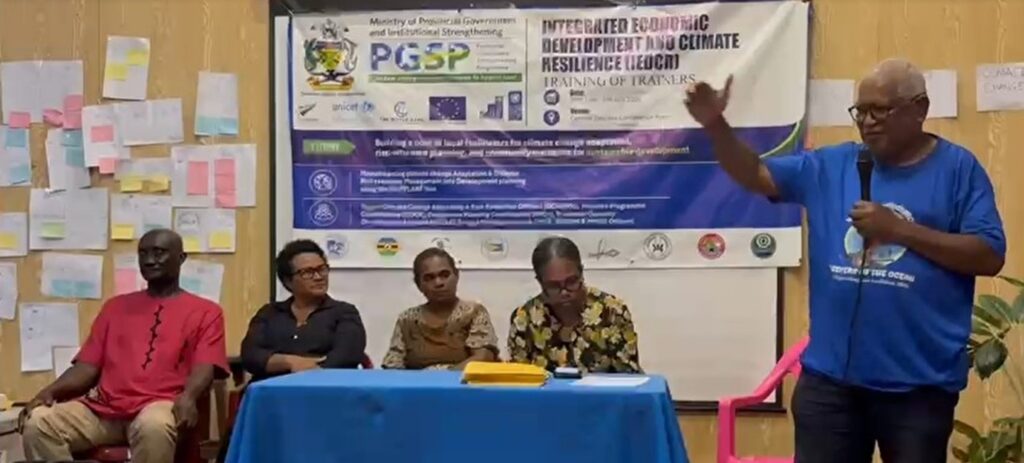
Climate Change Consultant – LoCAL, Dr. Morgan Wairiu, making his closing remarks during the closing of the TOT in Tulagi on 6th July, 2026
Speaking on behalf of all participants, Ethel Frances, PCDA for Guadalcanal Province, expressed sincere gratitude to the IEDCR PMU-MPGIS and the consultants for the opportunity to strengthen local capacities. “We recognize the urgent need to integrate climate resilience and disaster risk reduction into all aspects of development planning to safeguard our communities and ensure sustainable progress. Throughout the training, we have gained valuable insights, practical tools, and collaborative strategies that we are committed to applying within our respective provinces.”, she stated.
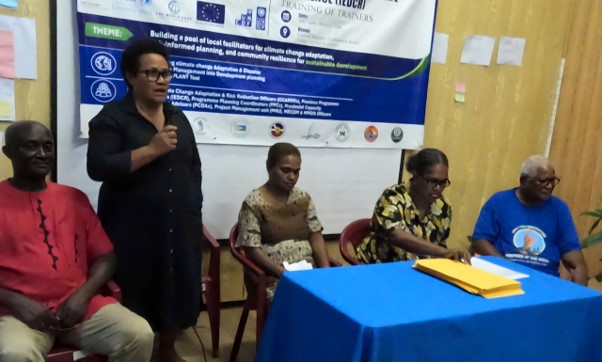
PCDA for Guadalcanal Province, Ethel Frances, delivering closing remarks on behalf of the participants at Tulagi, on 6th July 2026
Speaking on behalf of the MPGIS, Momodou Lamin Sawaneh (CTA-PGSP/PM-IEDCR) thanked the MPGIS for his leadership and for encouraging SIG and donors to continue to fund provincial development plans through PCDF mechanisms. He also expressed appreciation to World Bank and UNCDF for their confidence in provincial government to channel their development funding for rural development. It must be recalled that since the start of PGSP and its PCDF component in 2008/9, over SBD325 million has been transferred to the nine provinces by SIG and donor partners producing over 1,700 complete projects with over 10,000 young people employed. The PCDF funding which started with SBD5.8m from SIG and SBD5.8m from EU and RAMSI annually has now reached an annual allocation of SBD62.1m to qualifying provinces because of the confidence the SIG and donor partners have in the accountability and governance mechanisms of the model. Minister Rina has assured the participants the GREAT Coalition government’s continued confidence in PCDF as the new government would like to have accountability strengthened across all levels of governments.
Momodou also thanked the Central Province host and high-level facilitators Dr. Wairiu and Dr. Fidali. “The implementing Ministries look forward and reaffirm our commitment, teamwork, and expert guidance to advance climate resilience across the Solomon Islands through IEDCR and towards sustainable development goals by 2030,” Sawaneh stated.
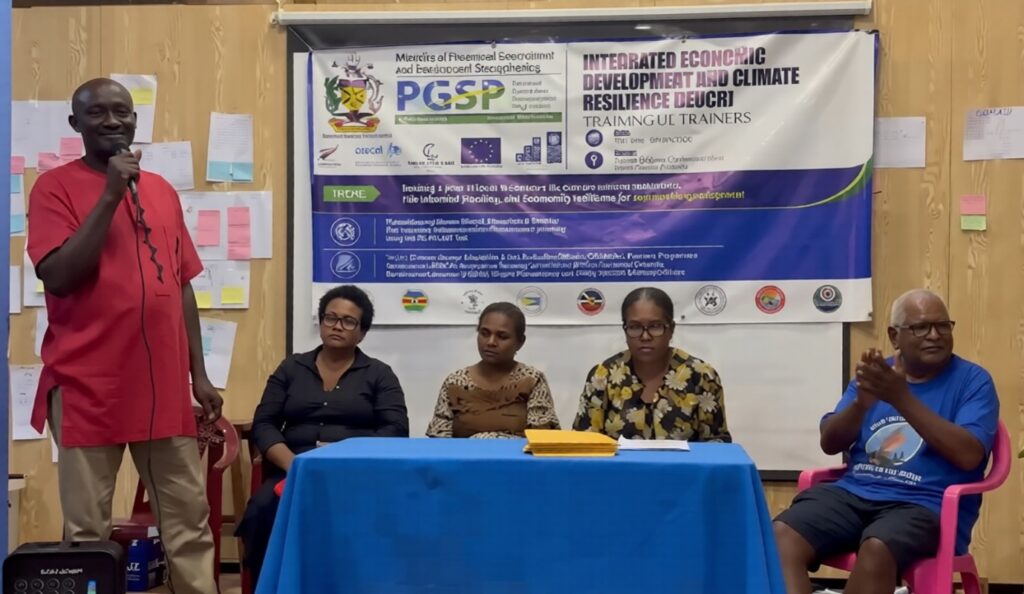
CTA-PGSP/PM-IEDCR, Momodou Lamin Sawaneh during the closing of the TOT Training at Diocese of Central Conference room, Tulagi on 6th July 2026
Momodou said, the success of the rollout was attributed to the technical support of Chief Climate Change Officer Malachi Bate’e, GIS expert Edmond Kiva, and frontline provincial engineering and social safeguard teams. He also paid special tribute to the foundational leadership of former Premiers Jackson Kiloe (Choiseul) and Peter Ramohia (Malaita), whose historic advocacy helped secure the critical funding, engineering personnel, and PCDF expansion that made this national capacity-building framework possible.
The training culminated in the launch of synchronising plans, compliance to climate change resilience and a network of informed leaders ready to face future challenges with renewed commitment and a hopeful vision for the provinces. This network through the activities of IEDCR a project of the PGSP is expected to play a crucial role in improving community preparedness and response strategies across the wards in the provinces.
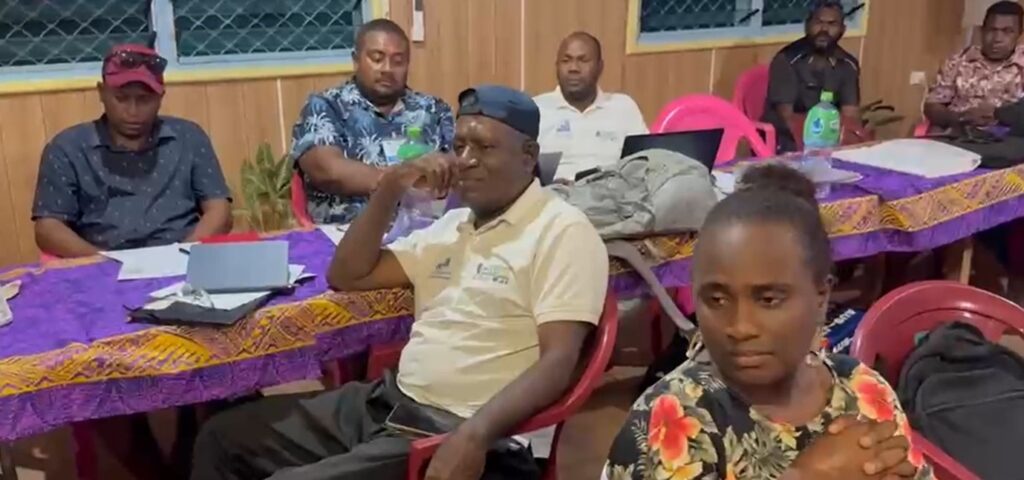
(L-R) Procurement Specialist of Rennell Bellona, Patrick Waisiraro, Project Implementation Officer IEDCR PMU (MECDM), Frank Odona, CARRO – Central Province, Peter Ramohia, CARRO – Guadalcanal Province, Chris Wagatora, PPC IEDCR Malaita Province, Sharon Rua, PPC Provincial, Malaita, Chris Totorea, CCARRO – Malaita, George W Gulioa
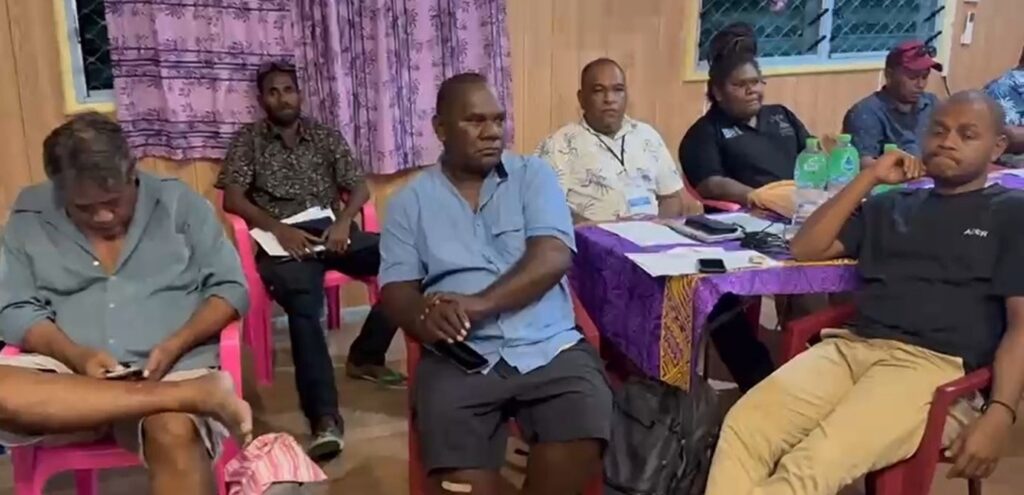
(L-R) PCDA Central, Metcalfe Puia, CCARRO Choiseul, Bervis Kimisi, PPC Central, Jacob Piturara, Malachi Bate’e, Climate Change Officer, MECDM, IT Assistant Central, Jill Supo, Procurement Specialist Rennell Bellona, Patric Wasiraro, Climate Change Officer MECDM, Edmond Kiva
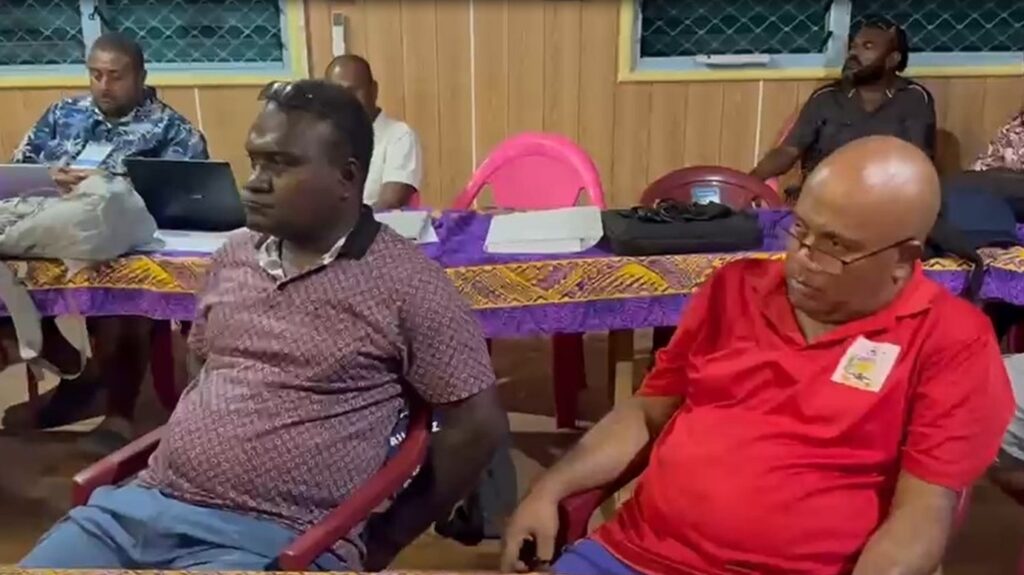
(Front row, L-R) Environment and Safeguard Specialists – IEDCR PMU-MPGIS, John Paranga and Edward Danitofea
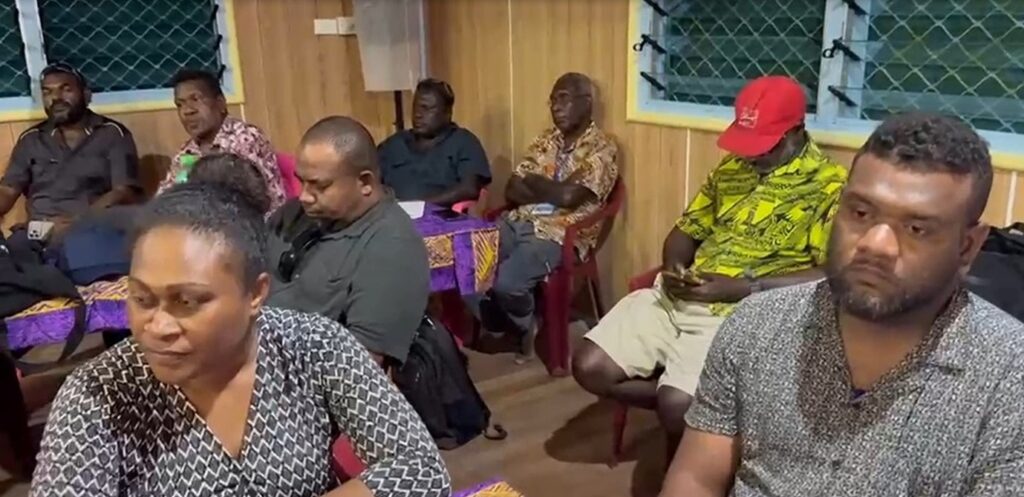
(L-R) PPC Malaita, Chris Totorea, CCARRO Malaita, George West Gulioa, CCARRO Rennell Bellona, Grace Fanasia, PPC Rennell Bellona, Alfred Piri, Planning Specialist Choiseul, Gibson Vilaka, PPC Choiseul, Jackson Kiloe, PPC Malaita, Jather Maenua, PPC Isabel, Samuel Devi
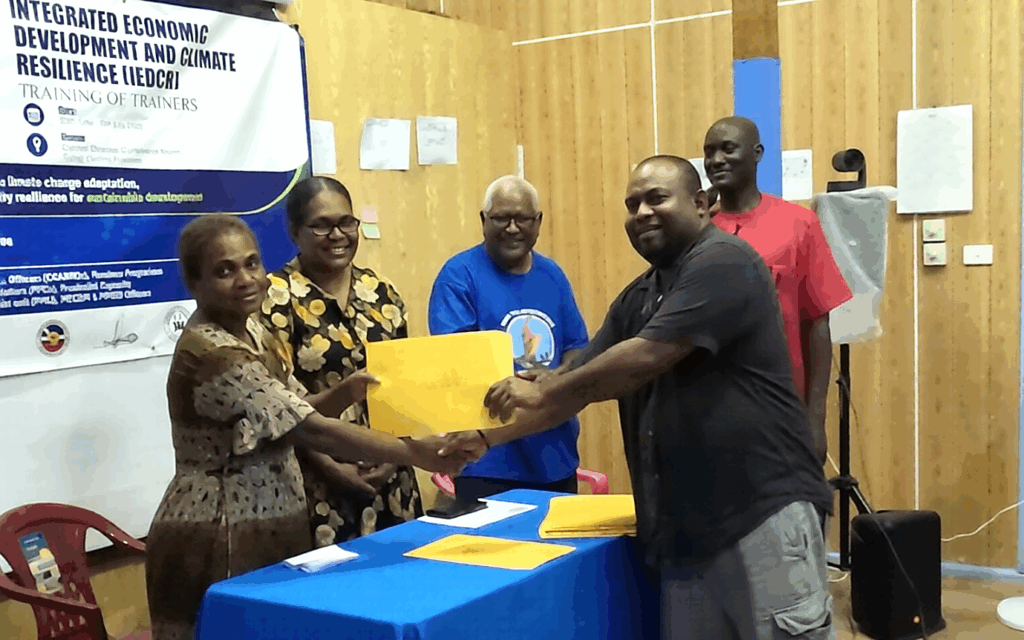
CCARRO for Renell Bellona Province, Alfred Piri receiving his certificate during the official closing of the TOT training
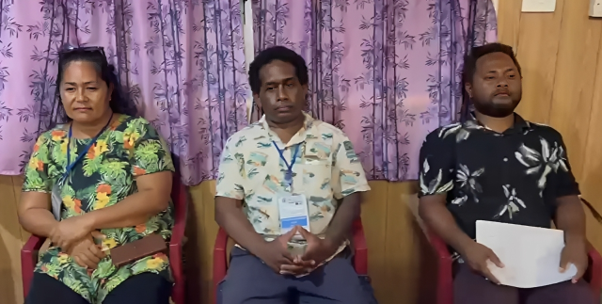
(L-R) Gender Inclusion Officer IEDCR PMU MPGIS, Stephanie Pugemoana, PCDA Choiseul, Vincent Tapidaka, Project Accountant IEDCR PMU MPGIS, Ben La’agonilamo
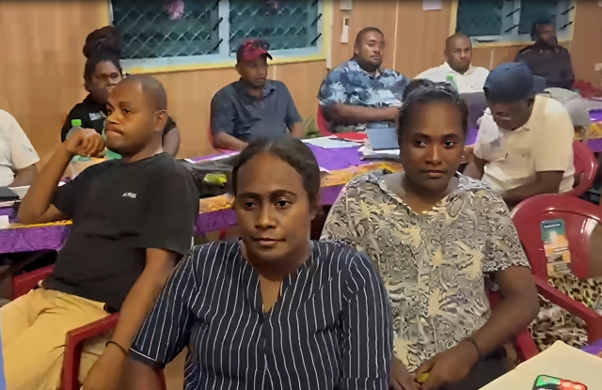
(Front row, L-R) IEDCR Geographical Information Officer, Inesha Mazini, and CCARRO for Isabel, Patrina Millie