

Ground-breaking Dual-endoscope Tech Solves Complex Stone Case
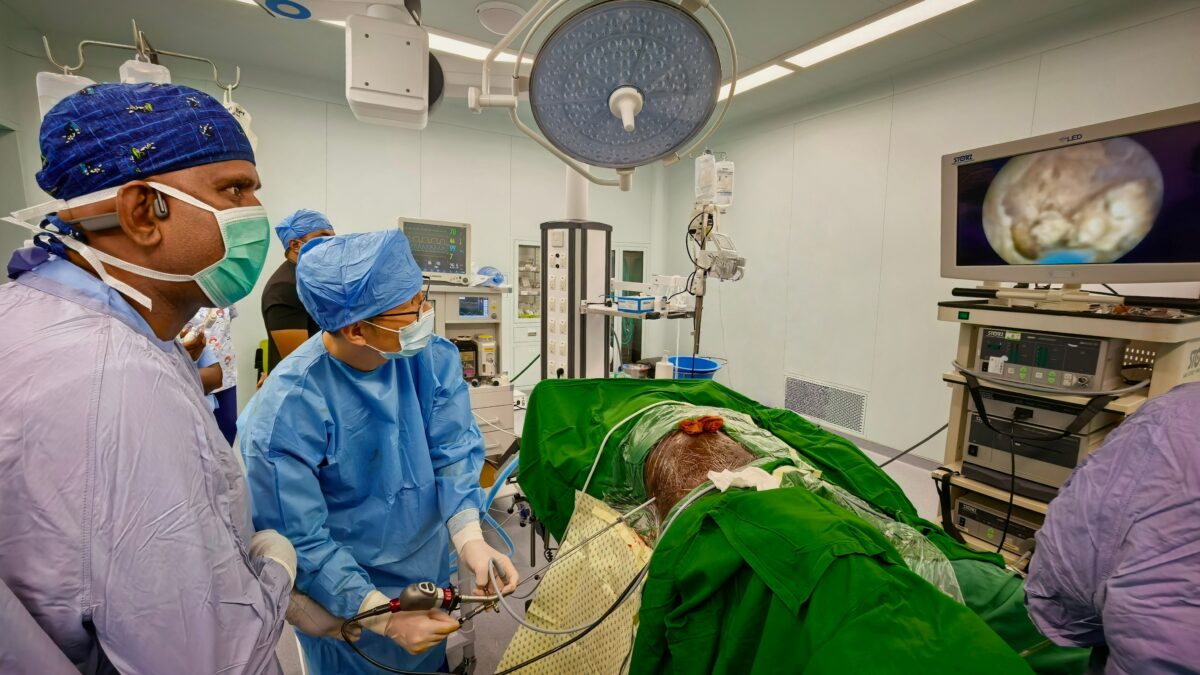
 June 11, 2026 — The 5th China Medical Team in Solomon Islands has successfully performed a complex percutaneous nephrolithotomy (PCNL) for a middle-aged woman with combined renal and ureteral stones and severe hydronephrosis at the Solomon Islands National Referral Hospital, ending her year-long agony from recurring stone pain. To deliver this landmark operation, the surgical team innovatively combined percutaneous nephroscopy and ureteroscopy to give full play to the advantages of the dual-endoscope minimally invasive solution.
The patient suffered repeated severe pain for 12 months due to her stones. PCNL is a globally preferred minimally invasive therapy for complex kidney stones, with less trauma and faster recovery, Dr. Zhang Faming noted.
PCNL requires high surgical skill and specialized equipment. Two weeks before radical stone removal, the team placed a double-J stent and discovered pyonephrosis during ureteroscopy. They conducted drainage and anti-infection treatment to stabilize her condition first. Before surgery, The team held a case seminar and remote consultation with urology experts from the Affiliated Hospital of Guizhou Medical University, who provided full guidance on surgical plans and perioperative care.
Groundbreaking Dual-Endoscope Minimally Invasive Surgery
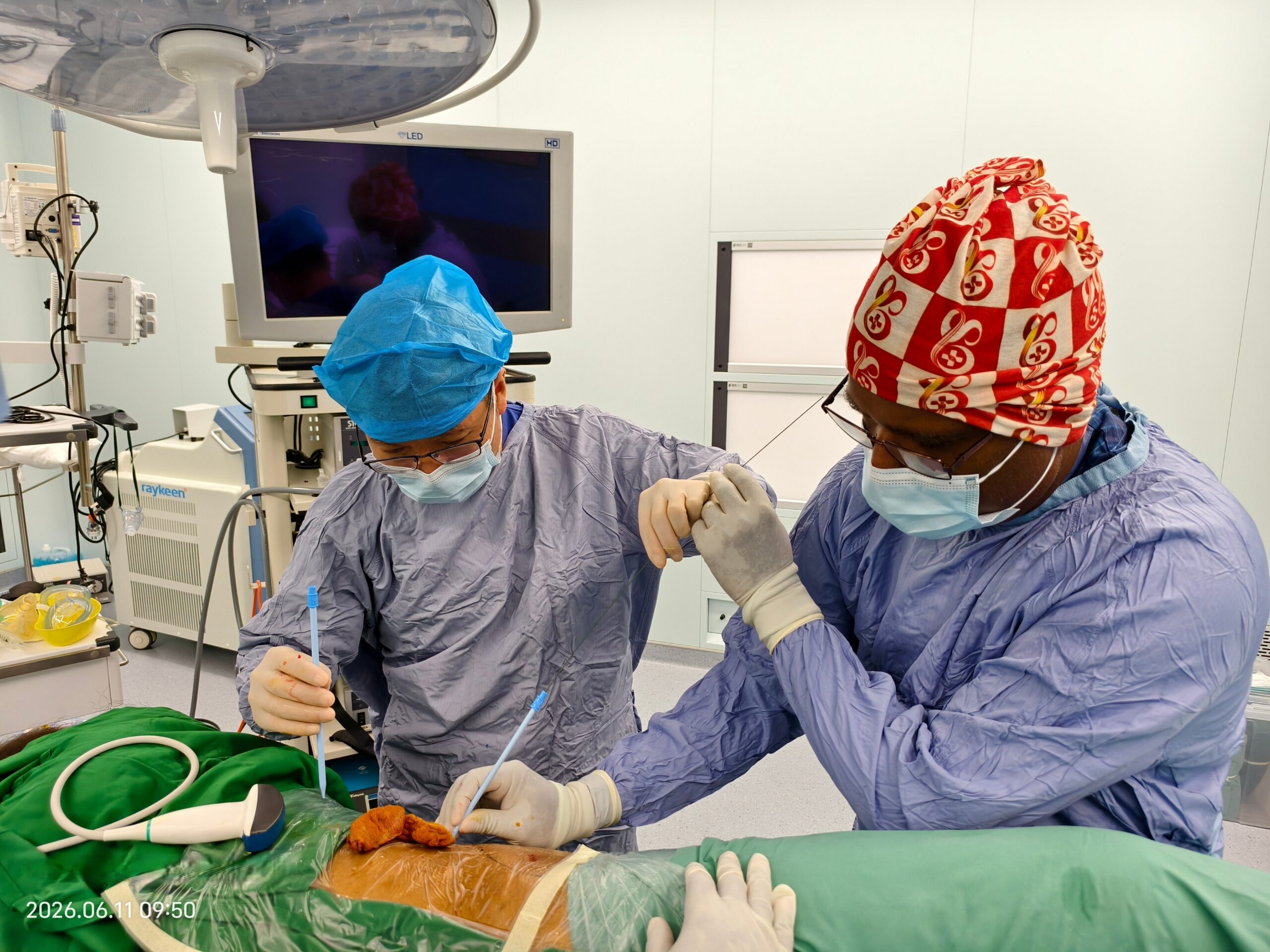
Led by urologist Dr. Zhang Faming from the China Medical Team, the surgery was completed alongside local surgeon Dr. Melly and Chinese nurse Xie Guofeng. Under ultrasound guidance, doctors established a percutaneous renal tract and used holmium laser to crush and clear all stones with dual endoscopes. The 90-minute operation had minimal blood loss and stable vital signs.
The on-site training throughout the surgery upgrades the local urology team’s ability to perform complex minimally invasive operations. The coordinated operation showcased that local surgeons have gradually mastered core minimally invasive lithotripsy skills, representing steady growth in the country’s capacity for minimally invasive urological care. Dr. Melly commented: “This patient waited one year for this procedure, and we are so glad we could deliver a successful surgery for her at last.”
The patient recovered without fever, bleeding or other complications, with clear urine drainage from the nephrostomy tube. She was discharged five days after surgery with complete stone clearance confirmed by scans.
Chu Liangzhao, leader of the 5th China Medical Team, said the surgery’s success highlights the value of medical technological innovation. The integrated dual-endoscope technique marks a milestone in local urological care. It not only cured the long-suffering patient, but also charts new paths for local minimally invasive surgery and deepens bilateral medical and health cooperation between China and Solomon Islands.