

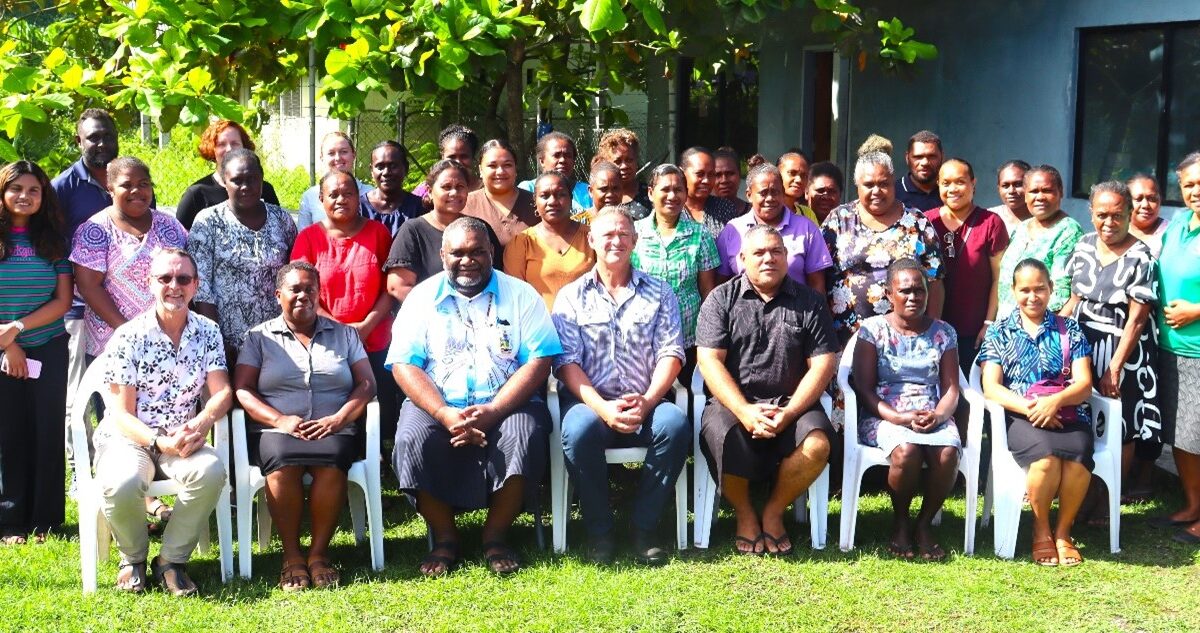
HPV DNA Testing and Treatment Training Completed
The Ministry of Health and Medical Services (MHMS) has successfully conducted its first training on Cervical Screening using HPV DNA testing and treatment from 5–10 March 2026., through its Reproductive, Maternal, Adolescent and Neonatal Child Health (RMANCH) Division, with support from the Australian Centre for the Prevention of Cervical Cancer (ACPCC), the Australian Government through DFAT, and the Solomon Islands Planned Parenthood Association (SIPPA),
The HPV DNA testing training is the first of its kind to be introduced in the Solomon Islands. The training aimed to upskill health workers previously trained in Visual Inspection with Acetic Acid (VIA), as well as other health workers, to provide the HPV screen-and-treat model at selected sites in Honiara. It also trained laboratory staff and health workers in GeneXpert testing of HPV samples.
Additionally, the training provided participants with adult learning principles to enable Master Trainers to train others, particularly in additional provinces. It also aimed to strengthen the skills and confidence of health promotion staff to educate communities about cervical cancer prevention.
Deputy Secretary Health Improvement (DSHI) at MHMS, Dr Nemia Bainivalu, said HPV DNA testing is currently the most effective method of cervical screening and is recommended by the World Health Organization.
He highlighted that the training marks an important milestone in the country’s efforts toward cervical cancer prevention and represents a significant step toward the ambitious goal of eliminating cervical cancer.
Dr Bainivalu also emphasized that vaccination of girls aged 9–14 years with the HPV vaccine is a key component in the journey towards elimination. A pilot program conducted in two provinces proved successful and led to the nationwide rollout of the HPV vaccination program in 2019.
However, HPV vaccine coverage was significantly affected by the COVID-19 pandemic and other programmatic challenges, dropping to as low as 11 percent. Last year, with support from GAVI and health partners, and alongside other countries around the world, MHMS conducted the HPV Big Catch-Up campaign. The campaign resulted in more than 80 percent of the target population of girls aged 9–14 receiving lifelong protection against the most common strains of the Human Papilloma Virus (HPV).
“With regards to cervical screening, since 2016 more than 15,000 women have undergone cervical screening using VIA, and more than 1,000 of these women have received treatment for pre-cancerous lesions,” Dr Bainivalu said.
He added that the coverage of cervical screening continues to increase each year. In 2025, VIA cervical screening services reached Makira and Choiseul provinces for the first time.
“This year we hope to reach our remaining three provinces – Central, Temotu and Renbel – while we establish HPV DNA testing in Honiara before expanding to other larger provinces.”
Despite these achievements, Dr Bainivalu noted that a large number of women are still not being reached.
“Sadly, we are still missing the vast majority of women. In 2025, the projected population of women aged 30 to 49 years alone was more than 90,000, and each year more than 5,000 women turn 30 years old,” he said.
Although accurate national data on the incidence and prevalence of cervical cancer in the Solomon Islands is limited, mortality data continues to show cervical cancer among the top ten leading causes of death among females of all ages in the country.
In the global context, the Melanesian region ranks fourth in the world, after three African regions, in terms of age-standardized incidence rates of cervical cancer and has the highest regional rates for both early-onset and late-onset mortality.
“Cervical cancer is one of the most preventable cancers. In fact, it is the only cancer to have a WHO global strategy for elimination and a World Health Day dedicated to its elimination,” Dr Bainivalu said.
The introduction of HPV DNA testing will significantly increase screening coverage due to several advantages, including the option for women to perform self-swabbing, a reduced need for cervical examinations, and the ability to provide the service through outreach programs.
“This will accelerate screening coverage. With the VIA screening program already in place, we will continue the same-day screen-and-treat model. Furthermore, health workers already trained in thermal ablation treatment will only require additional training to support HPV self-collected swabs and testing of samples using the GeneXpert machine,” he said.
Dr Bainivalu also acknowledged stakeholders and development partners for their continued support to the Ministry.
“At this milestone in our journey, I would like to acknowledge our partners, stakeholders, program and project officers, and staff—past and present—for their contributions in advancing cervical screening and treatment in the country,” Dr Bainivalu said.
Australian High Commissioner Jeff Roach welcomed the initiative as part of Australia’s commitment under the Partnership for a Healthy Region—and highlighted Australia’s global leadership.
“Australia is the world leader in HPV and cervical cancer prevention and elimination, and we want to share this expertise for the benefit of all Solomon Islands.”
“Australia continues to work in genuine partnership with the Solomon Islands Government. Our shared investments, research collaborations, clinical partnerships and capacity building reflect the strength of our longstanding relationship.”
High Commissioner Roach also acknowledged MHMS leadership on cervical cancer prevention and congratulated training participants for advancing cervical cancer prevention in the country.
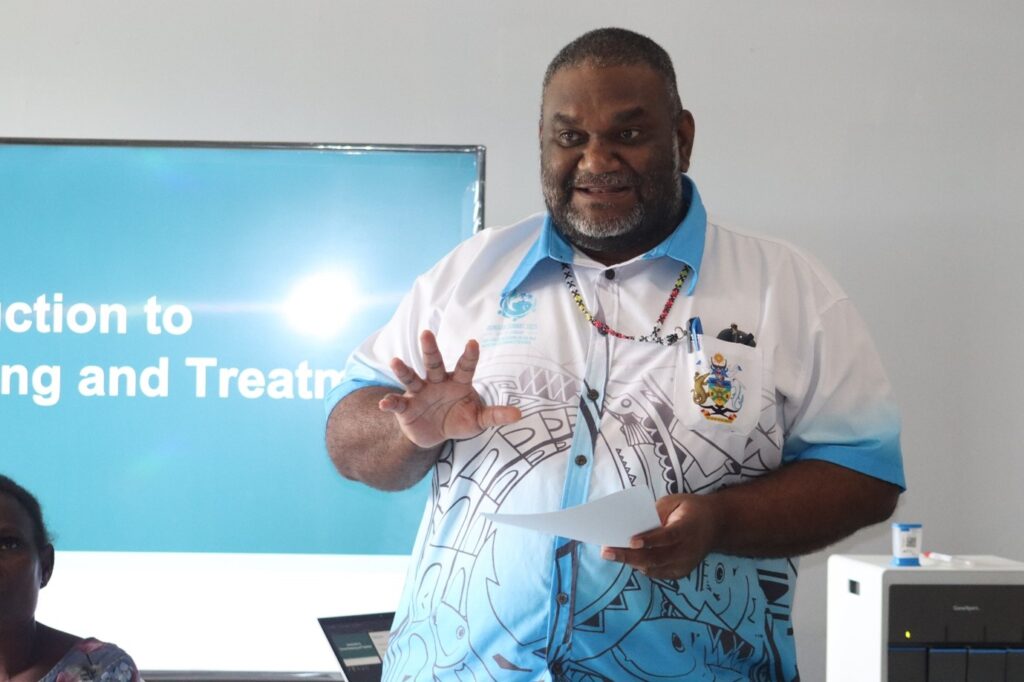
Deputy Secretary Health Improvement Dr Nemia Bainivalu sharing his remarks.

DAFT Human Development Counselor Dr. Tristan Amstrong speaking on behalf of Australia High Commission in SI.
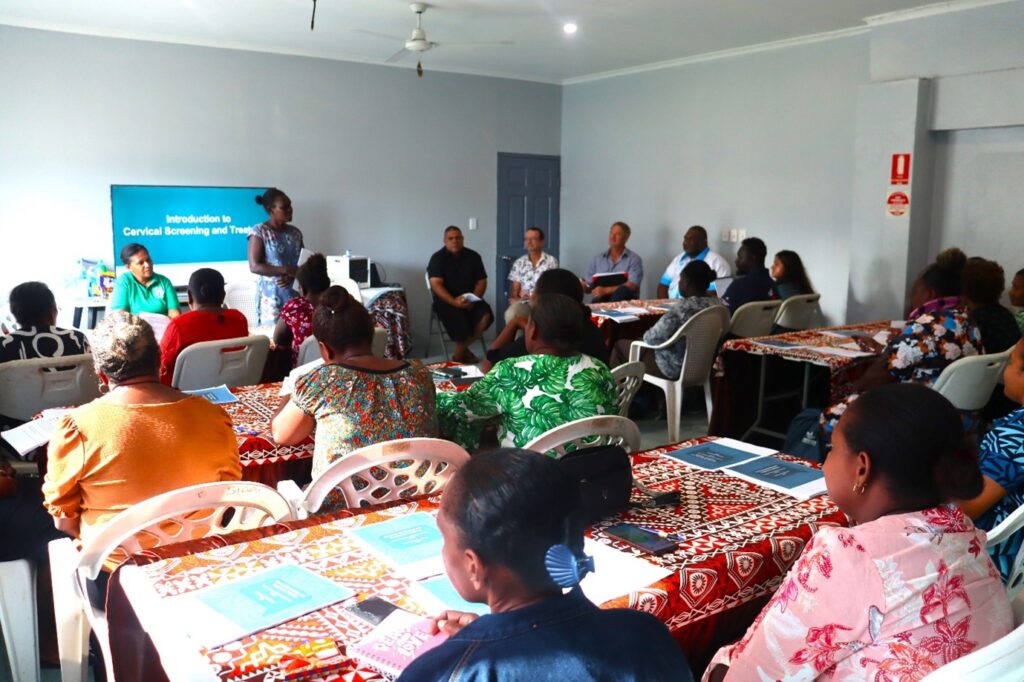
Participants and officials at the training.