

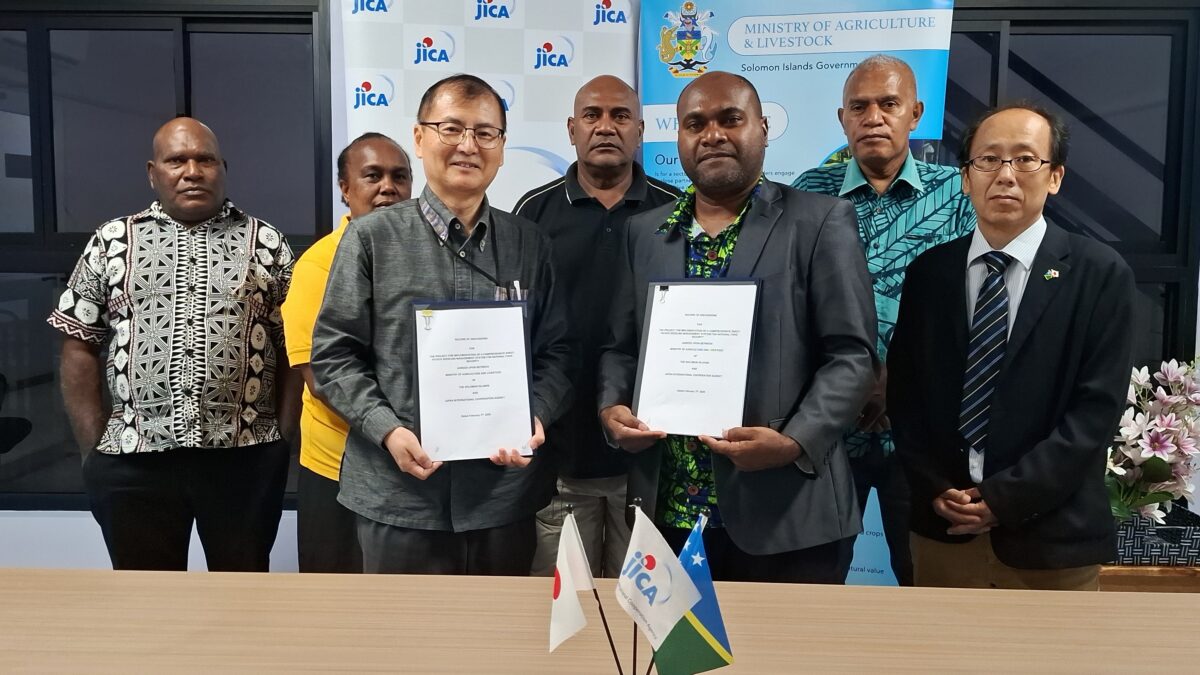
Group Photo
MALD and JICA Sign Technical Agreement to Strengthen Sweet Potato Seedling Management for National Food Security
The Ministry of Agriculture and Livestock Development (MALD) and the Japan International Cooperation Agency (JICA) today signed a Technical Agreement for the Science and Technology Research Partnership for Sustainable Development (SATREPS) project “Comprehensive Sweet Potato Seedling Management System for National Food Security.”
The signing formally establishes a technical cooperation agreement between the Government of Japan, through JICA, and the Government of Solomon Islands, through MALD, providing the framework for implementation of the SATREPS project over a five-year period.
The agreement was signed at MALD headquarters by Permanent Secretary Dr Samson Viulu and JICA Solomon Islands Resident Representative Mr Kawasaki Mitsuyoshi, and was witnessed by staff from both institutions.
Scheduled to be launched later this year following the signing of the final agreement, the Collaborative Research Agreement (CRA), scheduled for next month March, the project aims to modernise the sweet potato seedling system through science-based interventions. These include the establishment of a tissue culture facility to produce government-certified, disease-free sweet potato seedlings, as well as the development of a national seedling certification system.
The project will also strengthen pest and disease management, improve cultivation practices, and establish both tissue culture and field-based gene banks to conserve genetic diversity and support the development of climate-resilient sweet potato varieties.
Sweet potato is the most important staple food crop in Solomon Islands however, productivity remains low due to limited access to pathogen-free planting materials, weak seedling certification systems, and increasing pest and disease pressures.
In his remarks at the signing ceremony, Dr Viulu expressed gratitude to JICA and the Government of Japan for supporting what he described as a timely and vital project for Solomon Islands.
“We are very grateful to the Government and people of Japan, through JICA, for this new collaboration. Sweet potato is the major staple food of Solomon Islands and is deeply ingrained in our culture and traditions. Rice was only introduced during my primary school years before that, sweet potato was our main food.
“This collaboration is extremely important, as we are gradually losing some of our traditional root crops. Sweet potato research will help improve our germplasm and farm management practices, strengthen existing varieties, and allow us to take stock of our genetic materials. Ultimately, this will increase productivity and strengthen food security in Solomon Islands,” he said.
Meanwhile, JICA Solomon Islands Resident Representative Mr Kawasaki Mitsuyoshi said JICA was pleased to see the project reach the signing stage following extensive discussions and planning between the two parties.
“Without your reports, this project could not have been realised or progressed to this stage. Following the detailed planning survey conducted from 5 to 14 November 2025, JICA Headquarters approved the draft Record of Discussion, which serves as a mutual agreement for the implementation of the project,” Mr Mitsuyoshi said.
He added that the project aligns with the Solomon Islands National Development Strategy 2016–2035, particularly Medium-Term Strategy Five, which prioritises poverty alleviation, improved access to basic needs, and strengthened food security.
“In this regard, JICA is pleased to provide timely support to the Government of Solomon Islands in alignment with national policy priorities,” he said.
The project will involve researchers from MALD’s Research and Development Department, Extension and Training Department, Biosecurity Solomon Islands, and the Solomon Islands National University. Japanese partners include the University of Tokyo, Tokai University, and national agriculture and food research organisations.
Mr Mitsuyoshi emphasised that close and continuous communication among all key stakeholders will be essential to achieving the project’s objectives.
Implementation of the project will be led by MALD’s Agriculture Research and Development Department (ARDD) at MALD laboratories and experimental fields in the Honiara area, with technical support, funding, and expertise provided by the Government of Japan through JICA.
Through this partnership, the Solomon Islands Government aims to enhance national food security, increase farmer incomes, empower women farmers, and strengthen resilience to climate change through modern agricultural science and innovation.
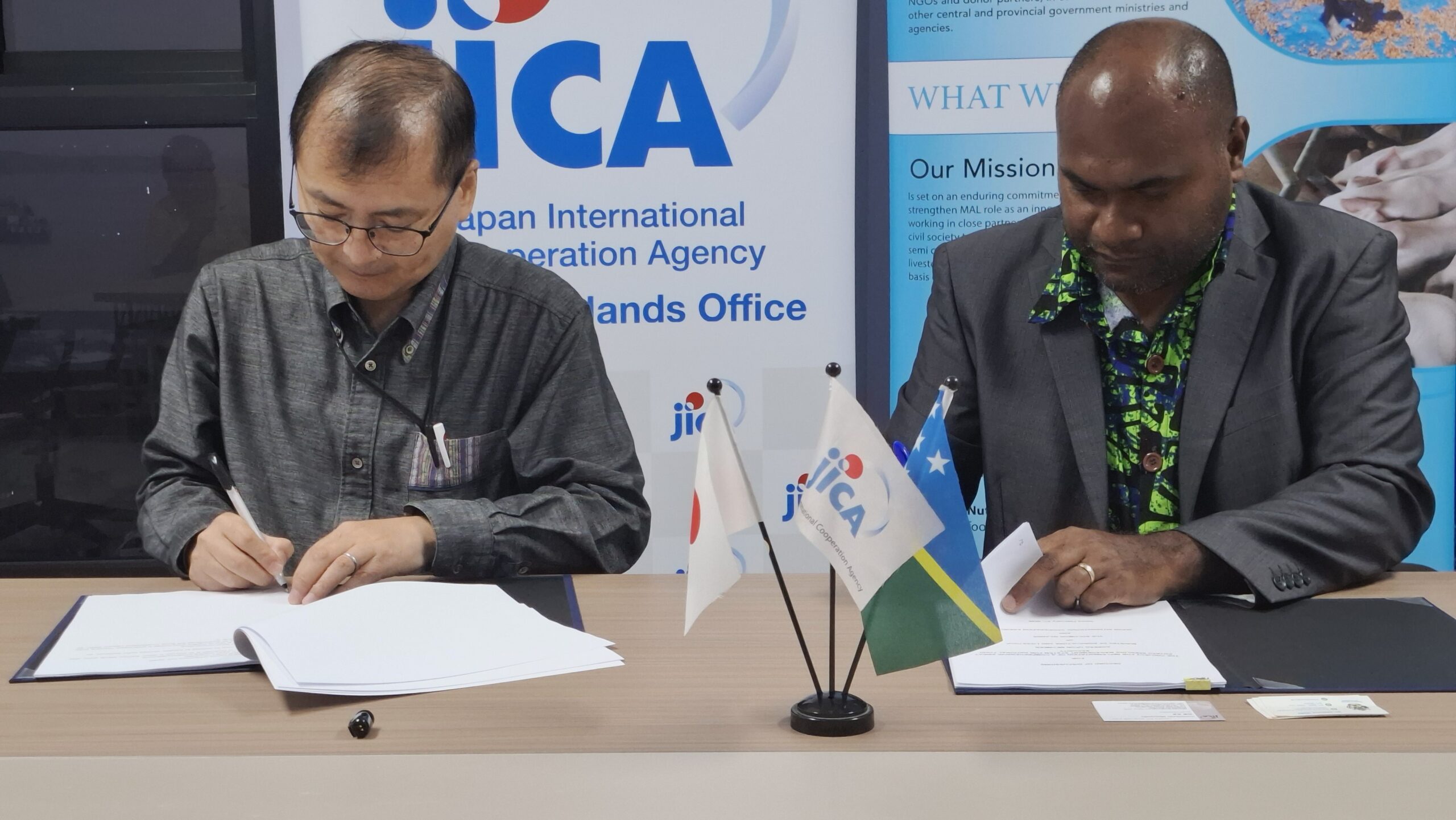
Mr Kawasaki Mitsuyoshi JICA Solomon Islands Resident Representative and Dr Samson Viulu MALD Permanent Secretary signing the SATREPS project Technical Agreement
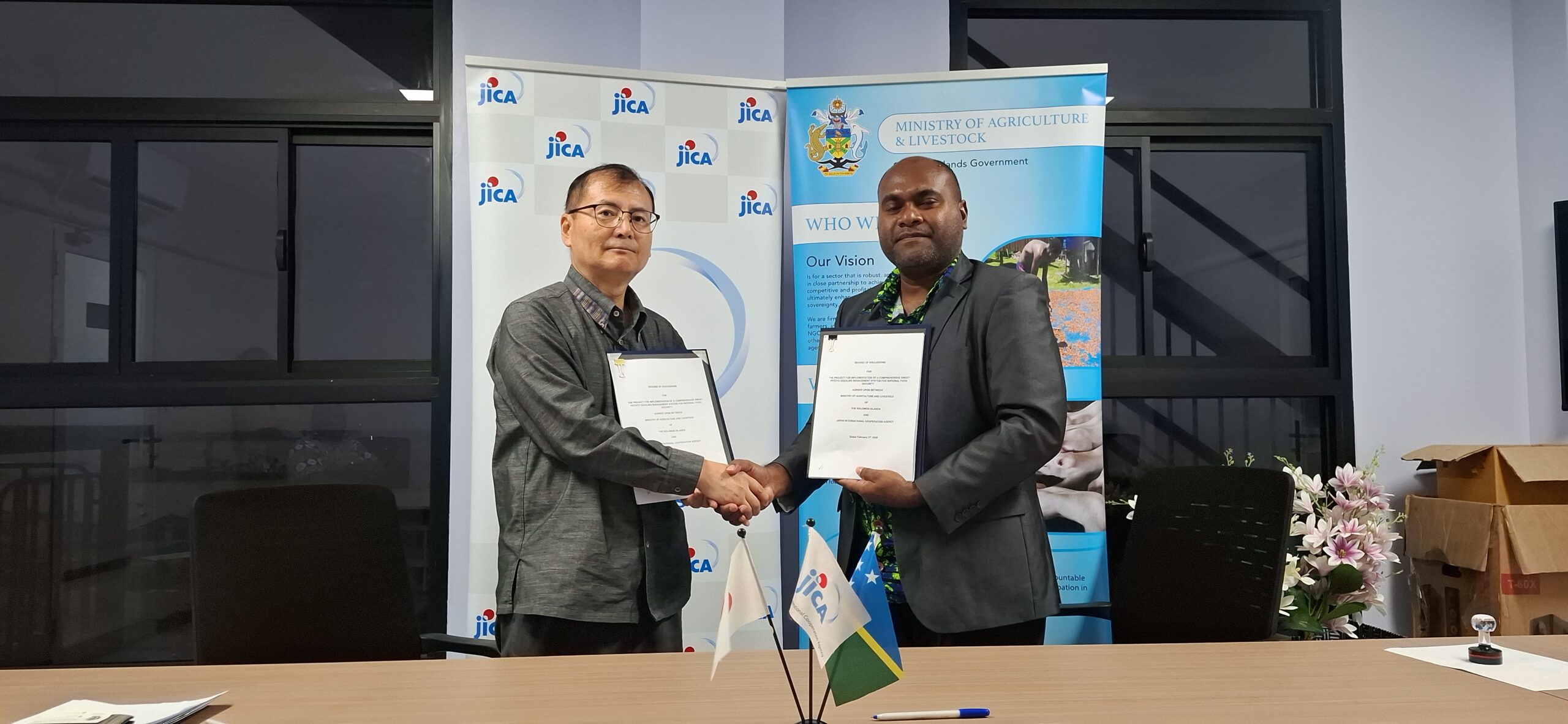
Mr Kawasaki Mitsuyoshi JICA Solomon Islands Resident Representative and Dr Samson Viulu MALD Permanent with the signed documents
Ends//
MALD Press Release